Two forecasters looking at the same Fed have arrived at opposite prescriptions, and the gap between them is the whole story.
ING's James Smith warns that if Kevin Warsh keeps paring back guidance at Jackson Hole, the reduced signal could "inject yet more volatility into an already febrile bond market." Wells Fargo, looking at the same silence, argues the opposite: that revealing a leaning now "risks boxing in the Committee," precisely because two more inflation and employment prints land before the September 16 meeting.
Both are right. That is the trap. And the price of that trap is now legible in a number that should not exist.
Both are right. That is the trap. And the price of that trap is now legible in a number that should not exist.
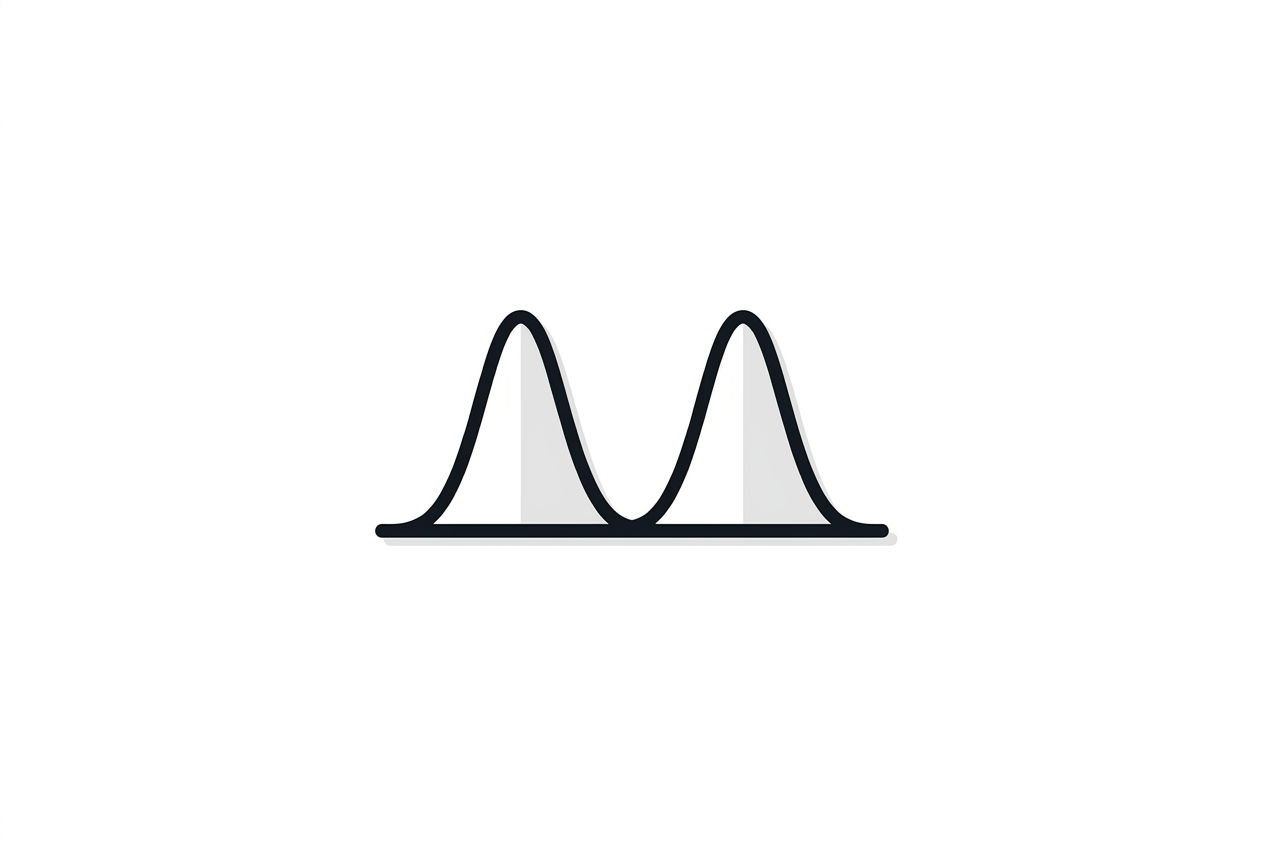
Start with the number. On a $2.3M prediction market with 2,269 participants and 73 days on the clock, the single most likely Fed action is an October rate hike, reportedly priced at 39 percent. September, also a hike, sits at 31 percent. Two peaks, no valley.
Read that shape carefully, because it is doing something strange. A market that expected a hike would concentrate on the nearer meeting or the later one, not split near-evenly across both. This is not one forecast with error bars. It is two competing theories of the Fed, each with roughly a third of the money behind it, refusing to converge.
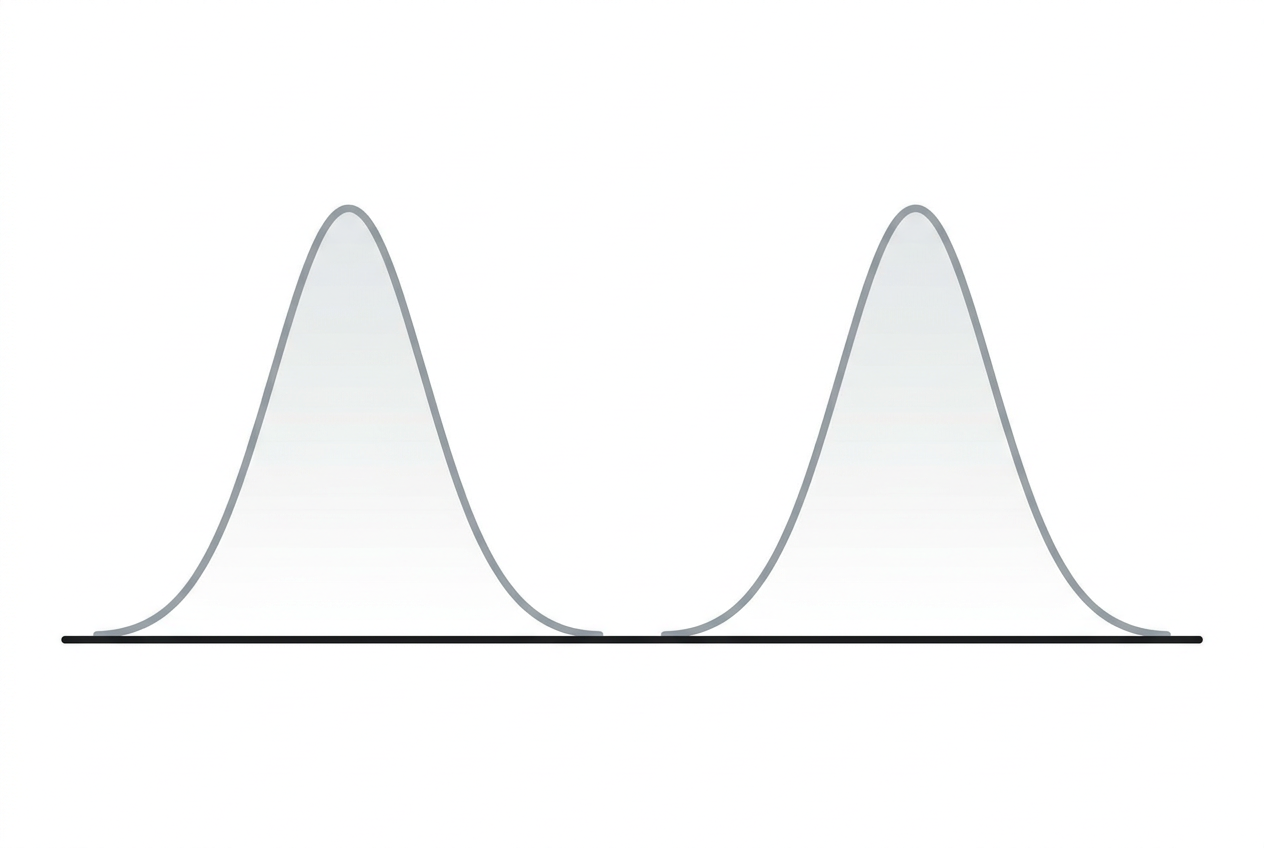
Last week, the open question was whether September or October would resolve that bimodal path. This week Warsh is finally on the record with his first keynote.
Here is the thing most readers get wrong. They see 39/31 and call it uncertainty about the economy. It is not. The incoming data is actually fairly benign: Wells Fargo reportedly reads July PCE at 0.1 percent headline, core at 0.2, the core annual rate grinding down to 3.3 percent. That is not a picture that generates a coin-flip between hiking in six weeks and hiking in ten.
The bimodality is not uncertainty about the data. It is uncertainty about the reaction function — about how this Fed will translate any given data into a decision. And that uncertainty has a specific author.
Warsh has said, in his own framing, that he does not want to "spoon-feed" markets. His stated doctrine is to say less, focus on internal debate, and refuse to publish a near-term reaction function. That would be a defensible posture at a unified Fed. This is not a unified Fed.
The July FOMC reportedly produced a 9-3 split — per Firstpost, the widest division among policymakers in roughly two decades. Three officials reportedly wanted an immediate 25-basis-point hike, per the July FOMC minutes described by MarketPulse. That is the committee Warsh is choosing not to explain.
Combine the two facts and the mechanism falls out. A wide committee split is the raw material; withheld guidance is what leaves it unresolved in public. When the Chair declines to say which faction is winning, the market cannot infer the decision rule. So it does the only thing it can: it builds its own Fed model, and it prices the two live factions as two separate peaks.
The 39/31 split is not a forecast of the economy. It is a forecast of a reaction function that has not been written down — the market pricing both halves of a 9-3 room because it has no way to weight them.
This is the quiet inversion at the center of the "say less" doctrine. Warsh's premise is that fewer words mean less noise. But noise is not the same as volatility of interpretation. By refusing to publish a reaction function into a divided committee, he has not reduced noise. He has outsourced his own guidance to a prediction market, and the market is now doing the Fed's forward guidance for it — badly, because it lacks the input only the Chair can supply.
We have already seen his words move markets, and move them the wrong way. After the July hold, Warsh said the Fed had "no magic wand" for inflation and stressed he had "no tolerance" for persistently elevated prices. Stocks fell, yields rose. His attempt to sound resolute read to the market as hawkish, and the bond market — 30-year yield reportedly near 5.2 percent per Firstpost — has no cushion for that kind of surprise.
So the trap tightens. Say something specific and he boxes in a 9-3 committee before two data prints (Wells Fargo's fear). Say nothing and he injects more volatility into a febrile market (Smith's fear). Say something imprecise and July shows it lands hawkish regardless of intent.
Which is why the likely move is neither. Warsh will probably dodge into task-force abstractions — the appropriate size and composition of the balance sheet, how the Summary of Economic Projections could be redesigned, how many meetings the FOMC should hold a year. Wells Fargo expects exactly this: a speech built to "buy the Committee time until the task force findings are released," while hoping the data cooperates.
The theme itself gives him cover. This year's official Jackson Hole topic is "Financial Innovation: Implications for Payments and Policy" — stablecoins, tokenization, AI in the plumbing. A Chair who wants to talk about the future of payments instead of the September decision has an institutional excuse pre-installed.
Here is the reframe, and it is the point of the whole piece: the dodge is not the absence of a signal. The dodge is the signal.
When Warsh retreats to balance-sheet composition and meeting counts rather than the near-term path, he is telling the market something precise about the reaction function. He is saying the Fed's next moves are endogenous — to the data prints, and to the bond market Warsh is speaking into — not to the Chair. He is declining to be the variable. He is announcing that the incoming numbers and the level of long-end yields will decide, not his guidance.
That is a coherent statement. It is just not the statement markets want, and it does not collapse the bimodal bet — it validates it. If the path really is a function of two more data releases filtered through a 9-3 split, then two near-equal peaks is the correct pricing. The market is not being irrational. It is being told, in effect, to keep running its own model.
There is one reason the committee can even afford to argue this openly about hiking rather than cutting. New York Fed research reportedly finds that, in a model comparing a low-participation economy at 25 percent with a high-participation one at 55 percent, the output response to an unexpected rate increase is 20 percent smaller — rate moves bite less than they used to. That muted transmission is why a 9-3 fight over tightening is a live option and not a crisis. But that is the equity channel's story, and it belongs to a different piece.
The narrow point stands. Warsh inherited a divided room and a doctrine of silence, and the two do not compose. Silence at a unified Fed clarifies. Silence at a 9-3 Fed forces the market to author the reaction function the Chair won't.
Watch the machine after the speech. If Warsh dodges as expected, the tell will not be a market crash — it will be the 39/31 split still sitting there, two peaks and no valley, a week later.
That persistence is the verdict. It means the market heard the Chair decline to be the input, and went back to pricing the only Fed it can see: not the one Warsh runs, but the one it has been forced to build for itself.