
The 30-year Treasury yield fell to 5.194% the moment Bessent's Treasury announced it would more than double its long-bond buybacks. It stayed there for exactly one day.
By Thursday's close it was back at roughly 5.24%. Nearly nine basis points of relief, erased in a single session.
That is the four-step sequence, and it is, per the reporting, the cleanest evidence yet that official intervention has lost its grip on the long end. Announce. Dip to 5.194%. Sell over the following day. Close higher.
Between the dip and the reversal, Bessent reportedly went on CNBC on August 20 and did what a bond salesman does. He floated buybacks exceeding $4 billion per transaction, invoked a "big toolkit," and reportedly expressed the view that current long-end yields do not accurately reflect the fundamentals of the U.S. economy.
The market listened and sold anyway. The speed of the round-trip is the datapoint, not the level. When a Treasury Secretary's own escalation cannot hold a bid past lunch, the tool is not being priced as a solution.
When a Treasury Secretary's own escalation cannot hold a bid past lunch, the tool is not being priced as a solution.
This week the story changes shape entirely: the intervention meant to fix it has visibly failed within hours. The question is no longer what pushed yields up. It is why the Treasury's own toolkit cannot push them back down.
The answer is arithmetic, not mood.
Start with the supply wall. Per the FT, the Treasury plans to issue $111 billion of 20- and 30-year bonds this quarter. Against that, the doubled buyback program moves net issuance of those maturities from about $103 billion to roughly $97 billion.
That is a $6 billion reduction against a $111 billion issuance schedule. ING called it "rearranging deck chairs on the Titanic," and the metaphor is generous—the deck chairs at least occupy visible space.
Peter Tchir of Academy Securities frames the scale problem in the raw stock. There are $7.5 trillion in T-bills outstanding and $21.7 trillion in coupon-bearing bonds. Buybacks of "at least $4 billion" roughly weekly are a rounding error against that base.
Doubling from $2 billion to $4 billion "sounds impressive," Tchir notes, but it "hasn't managed to sustainably move the market." His verdict is the sharpest in the evidence: this "isn't QE."
That distinction is the whole game. QE creates new money to absorb duration. Buybacks do not.
The Treasury has no printing press. To buy a long bond, it must first raise the cash by issuing something else—overwhelmingly short-term bills.
So the mechanism does not remove duration from the system. It relocates it. You retire a 30-year bond at the long end and finance the purchase with fresh bills at the short end.
The aggregate financing need does not shrink by a dollar. Tchir's phrase for this is "rearranging chairs on the deck." It is the same Titanic, viewed from a different lifeboat.
And here the mechanism becomes actively self-defeating, because the reason yields are high sits entirely outside the buyback's reach.
U.S. national debt just crossed $40 trillion, nearly double the level at the start of the first Trump administration. Annualized net interest already exceeds $1.2 trillion—more than the U.S. spends on national defense, the first sustained instance of that in the postwar era.
Net interest plus entitlements now, per Net Interest, consume 98.4% of government receipts in the twelve months to July, up from 96.2% a month earlier. That is the doom loop stated as an accounting identity.
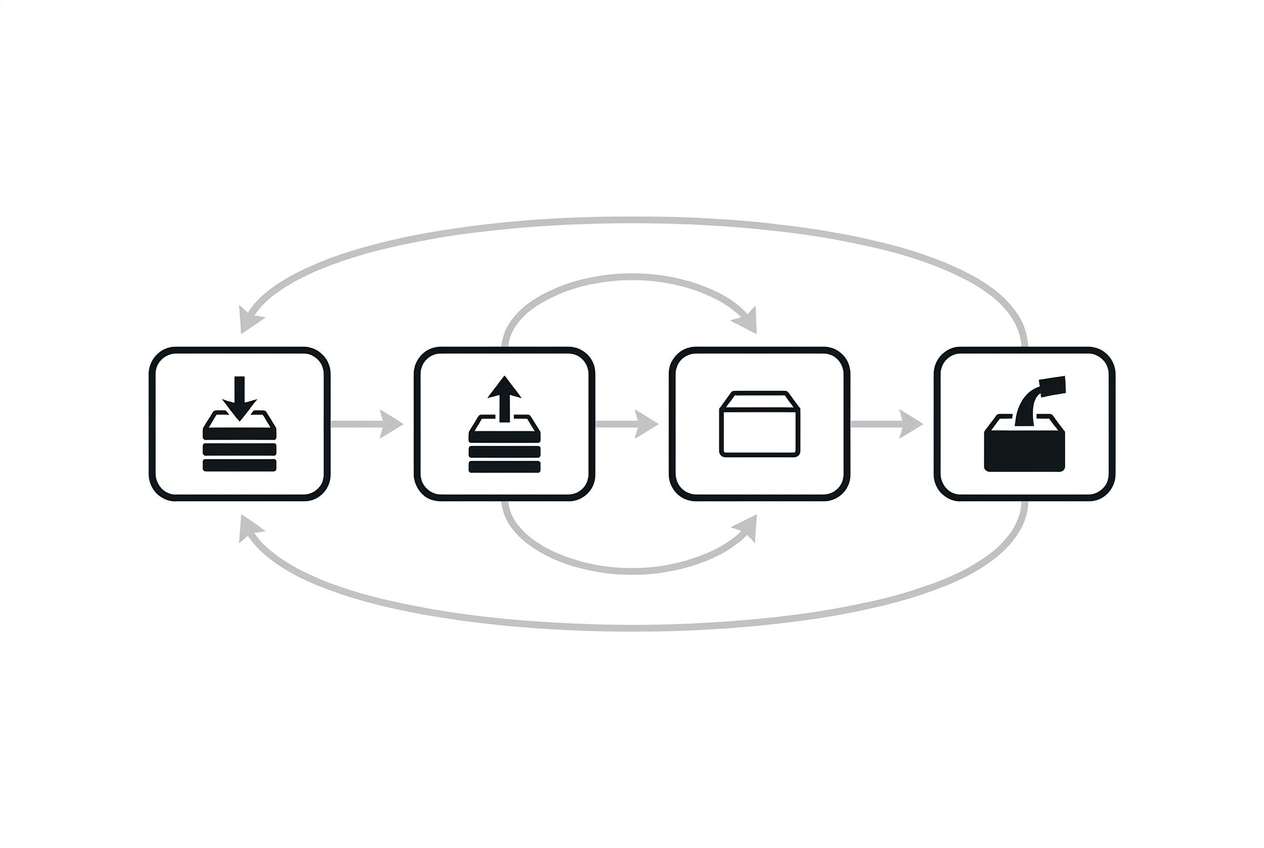
The loop runs like this. Higher long-end yields raise the rate at which maturing debt rolls over. Higher rollover costs widen the deficit. A wider deficit forces more issuance. More issuance pushes yields higher still.
Buybacks touch none of the four steps. They cannot lower the deficit, slow issuance, or reduce the $40 trillion stock. They can only shuffle where on the curve the pressure sits.
Worse, the FT notes the administration's budget projections assume Fed rate cuts and falling yields. If the long end stays elevated, the government refinances at costs its own math never planned for, and the fiscal outlook deteriorates from the baseline it was already struggling to hit.
Watch, then, what happens as the levers get bigger and the reprieves get shorter.
First came the doubling to $4 billion. One day of relief. Then Bessent's CNBC appearance reportedly floating an even larger program. Yields closed higher regardless.
Then, days later, CNBC reportedly reported the Treasury could tap its $1 trillion General Account to fund the buybacks. The 30-year dipped again, losing more than four basis points to 5.231%.
A bigger lever, a smaller and faster-fading response. The officials did not even specify how much of the TGA they would use—the market rallied on the mere floating of a trillion-dollar number, then resumed its posture.
Meanwhile the anxiety the intervention was meant to suppress leaked out sideways. Nomura's Charlie McElligott called it a "pressure release valve": while authorities pinned long rates, the fear escaped into other assets.
The dollar fell nearly 1% on the week, per Bitget. Gold broke $4,600. Under normal conditions, rising real yields should pull capital toward bonds and away from gold; the simultaneous move in both directions is the tell that this is a credibility problem, not a growth story.
Tchir's read is that these moves reflect an over-interpretation of a "currency depreciation" narrative rather than an actual expansion of money supply—because, again, the Treasury created no new money. But the direction of the leak is the point. Suppress pressure at the long end and it surfaces in the dollar and in gold.
So run the ladder to its end. Each rung—$4 billion, then "more than $4 billion," then the $1 trillion TGA—buys less time than the last. When you keep escalating and the market keeps fading you faster, you are not tuning a tool. You are demonstrating its exhaustion.
Which leaves exactly one lever that could actually move the long end, and the Treasury does not control it.
The Fed does. It reportedly holds over 50% of all Treasuries maturing in 10 to 15 years and close to 20% of long bonds. This is not a free market at the long end; it is a market where the largest holder is a central bank.
The specific mechanism the market has begun revisiting is Operation Twist. The Fed reportedly holds roughly $426 billion in coupon bonds maturing within a year at an average coupon of just 2.9%—a negative carry position against the 3.63% effective funds rate, per Tchir.
Sell that $426 billion of front-end paper, buy an equal notional of 20-year-plus bonds. Per Tchir, the Fed would take an upfront accounting loss but earn positive carry—roughly 5.25% versus 3.63% funding—and, decisively, absorb more than 15% of outstanding bonds maturing beyond 20 years.
That is duration actually removed from the market, not relocated. And because total notional holdings stay flat, it "isn't QE" either—which makes it more politically palatable to a Fed guarding its balance sheet.
Bloomberg's Michael Ball describes the Treasury's current posture as a "lite version of Operation Twist"—shedding long duration into bills while the Fed mops up the front end via reserve management. But the light version carries a fatal contradiction: the more the Treasury shortens its financing, the more its interest expense reprices with the policy rate, exactly the exposure it is trying to escape.
Tchir's conclusion is the destination this piece has been driving toward. If the White House genuinely wants the long end lower, it must abandon Bessent's "minor tinkering" and push the Fed into a full Twist.
That is what the quiet handoff means. The Treasury reportedly messed up last week; the baton passed to the Fed this week, with the market now waiting on Jackson Hole. It is an admission, in mechanics rather than words, that the Treasury's supply-side toolkit is spent and the only remaining instrument is the Fed's balance sheet.
Whether the Fed will pick up the baton—and what its reaction function even is—is the next question. But that question belongs to Jackson Hole and to Warsh's keynote, per Metapress, not to the Treasury.
The Treasury's part of the story ends here, at a specific, mechanical dead end: you cannot fix a $40 trillion fiscal problem by moving $6 billion of duration across the curve, and the Secretary in charge has now floated every lever he owns to prove it.