Edward Kawas started dancing.
The Vancouver software engineer had, per the Globe and Mail, been hoping Prime Minister Mark Carney would walk away from a trade deal with the United States, and on Friday night the negotiations collapsed. On Sunday, Kawas praised the decision. "I started dancing when I saw the news."
His household — two kids in New Westminster, B.C. — is now giving up cauliflower in wintertime and vinyl records from Target. "We offered everything and got nothing in return," he said of the talks. "Sometimes we'll just have to do without."
Carney used a heavier word. "You are at war when you get attacked," he said over the weekend. "We got attacked." Retaliatory tariffs on American exports begin September 8, answering US tariffs of 50 percent on US$20 billion of Canadian wood products and wine.
Sit with the strangeness of that. This is a software engineer in America's closest ally, celebrating the rupture of the continent's deepest trade relationship. The emotional texture here is not that of an adversary. It's a friend, mobilizing.
Last week in this space, the argument was that the tariff wall is porous and inflationary — that it leaks through arbitrage and drives up input costs at home. This week the story is stranger and more strategic: the wall isn't just leaky. It's an alliance-sorting machine, and it's sorting exactly backwards.
Here is the machine's logic. The tariffs the Trump administration built were shaped, as Gary Hufbauer reportedly lays out, "more by military alliances than by trade logic." Countries negotiated their rates according to how badly they needed American protection.
The European Union set the template in July 2025, swallowing a commercially disadvantageous deal to keep Washington engaged in Ukraine. Then the Philippines, South Korea, Japan and Taiwan followed — acquiescing to tariffs and making investment pledges to preserve US defensive alliances against China.
So the countries most dependent on American security guarantees folded fastest. Rational, individually. Each capital cut its own deal to protect the one thing it couldn't replace.
Now watch what that produced in the numbers.
China — the one actor that retaliated — saw its average applied tariff rate fall from 28.8 percent in 2025 to 24 percent across January–May 2026, as exemptions were carved out, per Hufbauer. It fought, though Hufbauer attributes the lower effective wall to those exemptions rather than to the retaliation itself.
The allies got the opposite. New Zealand, the Philippines and Malaysia won reductions of less than a single percentage point, landing at 7, 6.2 and 4.9 percent. And the countries with no leverage and no alliance to protect — Cambodia and Myanmar — saw their rates climb past 22 and 26 percent.
The overall applied tariff burden, meanwhile, ticked up from 7.4 percent in 2025 to 7.5 percent in early 2026. Most countries paid marginally more. China paid nearly five points less.
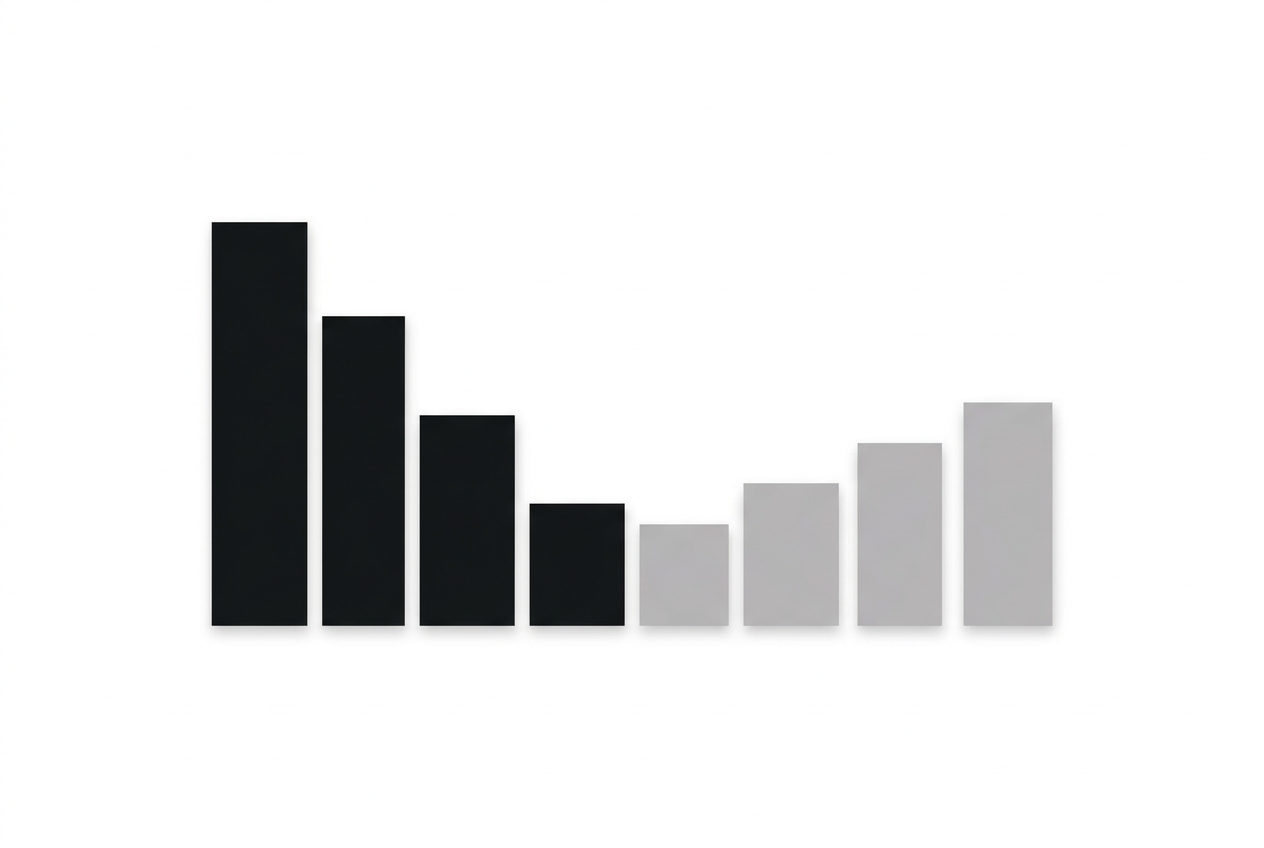
Read that sequence again. The wall was sold as a tool to contain China. China is the only major economy whose position under the wall improved.
The wall was sold as a tool to contain China. China is the only major economy whose position under the wall improved.
Why doesn't the acquiescence isolate Beijing, as intended? Because isolated capitulation is historically more durable than retaliation — and that durability is the trap.
Hufbauer reaches back to the 1930s. Beggar-thy-neighbor tariff spirals required near-simultaneous adoption to bite. When countries folded one at a time instead of coordinating, the walls hardened rather than collapsed. Isolated acquiescence proved more stable than a united front ever would have.
Japan in the 1980s is the cleaner case. It absorbed enormous US trade pressure — quotas, "voluntary" restraints, the lot — without ever building a coalition to push back. The pressure worked precisely because Tokyo faced it alone.
That is what's happening across the Asia Pacific right now. No Asian country has retaliated except China. None has formed a united front. Each moved unilaterally, and each unilateral move made the next capital's surrender look more sensible and the wall more permanent.
The result is a coalition that fractures at the exact moment it would be needed. Any serious strategy to contain China depends on allies acting together — pooling markets, aligning standards, presenting Beijing with a bloc it can't pick apart. The tariff wall does the opposite: it teaches Korea, Japan, Taiwan and the Philippines to negotiate against Washington individually, and to view each other as competitors for exemptions rather than partners.
You cannot assemble a China-containment coalition out of countries you have just taught to bargain alone.
And Canada shows who absorbs the cost. Since 1994, the US has generally run auto trade deficits with its North American partners. But the US–Canada auto balance flipped from deficit to a minor surplus in 2021 — and has stayed there.
That flip quantifies the ally bearing disproportionate cost. The integrated auto supply chain that was supposed to be the reward for being America's neighbor has instead become a lever pulled in America's favor. Kawas dancing in New Westminster is what that feels like from the other side of the border.
The tariffs themselves keep mutating to survive. The "Liberation Day" tariffs, imposed under the 1977 emergency-powers act, were reportedly ruled unlawful by the Supreme Court in February 2026 — struck down partly by justices Trump appointed.
The response was not retreat but statute-shopping. The justification shifted to "balance of payments" authority under Section 122 of the 1974 Trade Act. When those expired in July 2026, they were replaced by "forced labour" tariffs under Section 301 of the same act.
Those, too, face court challenges likely to fail — but not before the end of 2027. And behind them waits Section 338 of the 1930 Smoot–Hawley Act, which permits tariffs up to 50 percent against countries that "discriminate" against US exports. There is always another statute.
The forced-labor rationale is threadbare on its own terms: the 10–12.5 percent Section 301 tariffs reportedly run roughly 40–50 times larger, per the Peterson Institute, than what the actual trade impact of forced-labor goods could justify. The legal theory is a costume. The wall is the body underneath.
Which means the acquiescing allies aren't buying protection from a temporary policy. Tariffs in the 7–11 percent range reportedly look durable through at least 2029, per Hufbauer, and probably outlast Trump himself, per East Asia Forum, because the domestic constituency for free trade has largely evaporated in Washington.
So the settlement Korea and Japan and the Philippines accepted to preserve the alliance may well be permanent, while the alliance it was meant to preserve keeps eroding underneath it.
Add it up and the paradox is complete. The United States has walled itself in behind more expensive inputs, alienated its closest ally into a self-described trade war, taught its Pacific partners to negotiate alone, and handed its principal rival a rate cut.
China emerges as the structural beneficiary of a wall built nominally to contain it — not by outmaneuvering Washington, but by being the only one that pushed back while everyone else folded.
There's a logical endpoint worth naming, one this column will take up properly another week. If the wall's real function is to redirect trade flows toward Beijing, the question hanging over the next wave of US auto plants is whether they end up running Chinese-owned or CATL-derived battery chemistry.
A wall that makes the adversary the cheapest partner tends, eventually, to get built out of the adversary's bricks.