Article — "Tightening Without a Hike: Warsh's Fed, a 5.19% Long Bond, and the Passive-Overtightening Risk": Article — "Tightening Without a Hike: Warsh's Fed, a 5.19% Long Bond, and the Passive-Overtightening Risk": Bill Campbell's line is the cleanest statement of the trade of the year: "If no new inflation factors emerge that we are not currently aware of, this policy credibility itself is equivalent to a tightening measure."
DoubleLine's logic is seductive because it is almost free. Kevin Warsh can claim victory over inflation without ever touching the policy rate, because the market is doing it for him.
The 30-year Treasury just hit 5.19%, reportedly the highest since 2007, per AInvest. The two-year sits near 4.2%, roughly 75 basis points above the 3.50-3.75% policy rate.
Read that curve carefully: the policy rate is now below every other point on it. The Fed has, in effect, been repriced from the outside. Jeffrey Sherman calls it plainly — "the bond market is doing its job; it is sniffing out the data."
The policy rate is now below every other point on the curve. The Fed has, in effect, been repriced from the outside — the bond market is doing its job.
So DoubleLine adds shorter-duration paper and bets on zero hikes in 2026. Warsh gets his tightening delivered by the long end, keeps his powder dry, and never has to spend political capital voting for a hike into an oil shock.
A free lunch this clean usually has a bill attached.
Last week the question was whether Warsh would hike — the story of his hawkish debut and the dollar anchoring on a credibility-first regime. This week the FOMC minutes reveal the internal split, and the long end has repriced to 5.19%, which flips the question entirely.
The new question is not "will he hike." It is "is the curve overtightening for him, and does he have any way to stop it if it is."
Start with why the hike would be useless in the first place, because the same fact makes the passive tightening dangerous.
Campbell nails the supply-side point: "Faced with a supply shock, the Fed cannot solve the problem by raising rates." You cannot cut crude oil supply with the funds rate. Iran-driven WTI reportedly testing $80 is not a demand story a central bank can lean against, per Hasegawa.
This is correct, and it is why standing pat looks so reasonable. Rate hikes suppress demand; they do not conjure barrels. Raising into a supply spike that is already reversing risks overtightening after inflation naturally recedes.
But here is the turn. The exact argument that makes an active hike counterproductive makes the autonomous long-end tightening equally counterproductive — and nobody is treating it that way.
A 5.19% thirty-year is not a neutral instrument. It pushes up mortgage rates, corporate financing costs, every long-dated borrowing cost in the economy. That is a demand shock, delivered by the curve, arriving on top of an inflation impulse the Fed cannot touch.
Think about what the household actually faces. Durable goods prices flipped from falling as much as 3% year-over-year to rising 2-3% as the effective tariff rate more than quadrupled to over 11%. Energy spiked on the war. Neither of those is interest-rate-sensitive inflation.
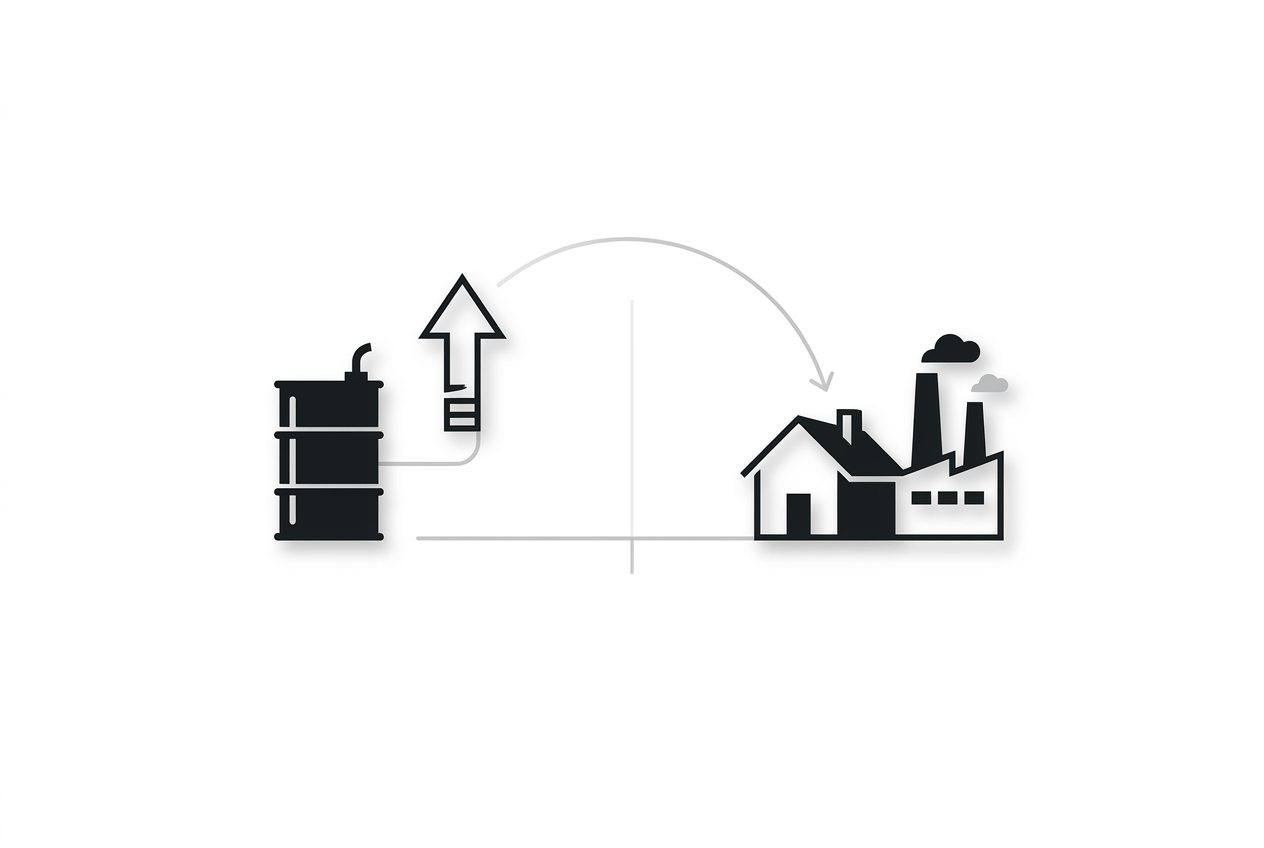
Meanwhile the 5.19% long bond squeezes the interest-rate-sensitive part of the economy — housing, capex, credit. So the curve is tightening exactly where rates bite and doing nothing about the prices that are actually rising.
That is the trap inside "the bond market is doing the Fed's work." The market is tightening against inflation it cannot address, by suppressing demand it can. If Campbell is right that a hike would overtighten, the curve at 5.19% is already overtightening — it is just doing it without a vote.
And crucially, the supply shock is fading. Campbell himself notes "the supply shock from the previous month has already largely reversed." Effective tariffs reportedly appear to have peaked in late 2025 and started declining, per the St. Louis Fed. June CPI printed its first monthly decline since 2020.
So the inflation case for elevated yields is weakening while the yields stay elevated. That is the definition of passive overtightening: the tightening persists after its justification recedes, biting demand into a disinflation the Fed did not engineer.
Now the governance problem, which is where this stops being an accident.
If the curve is doing too much, a central bank's tool for saying "enough" is forward guidance. You signal the path. You tell the market the funds rate is not going where the two-year now implies, and the long end drifts back down without anyone selling a single bond by decree.
Warsh has deliberately disarmed himself of exactly this. Per the reporting, he has not provided clear guidance on rate-hike timing and actively downplays forward guidance, arguing that explicit guidance "could put policymakers in a passive position and make flexible adjustments difficult."
Read that objection again in light of the curve. Warsh rejects guidance because he fears it makes the Fed passive. But refusing guidance is precisely what makes the Fed passive — it hands the setting of financial conditions to a bond market that is pricing "maybe the Fed will raise rates at some point in the next 12 months."
The market cannot see a ceiling because Warsh refuses to draw one. So it prices the tail. The two-year runs 75bp above policy, the thirty-year runs to 5.19%, and there is no mechanism — no dot, no statement, no signal — through which the Fed can lean against the overshoot short of an actual policy move it does not want to make.
This is the anchor shift worth naming. The dollar-anchor thread has moved: the anchor is no longer the dots, because there effectively are none. The anchor is the long end. And an anchor set by the market, with no communication counterweight, drifts wherever the last data point and the last headline push it.
The minutes show why this is not hypothetical. The vote was reportedly 8-4, and many participants preferred to remove the easing bias from the statement entirely, per the FOMC minutes. The internal center of gravity is hawkish, and hawkish repricing is already driving dollar strength.
That combination — a committee leaning hawkish, a chair who refuses to cap the path, a market pricing hikes that may never come — is a machine for letting conditions tighten past the point of usefulness. Every hawkish signal without a guidepost reads as room for more.
The counterargument, from the BofA camp, is that inflation is still well above target and the Fed should just hike — Ed Al-Hussainy asks whether, doing nothing, you are confident inflation returns to 2%, and answers no. Fair. But that is an argument for active tightening you can reverse, delivered with a signal you control.
The DoubleLine path is the opposite: tightening you did not vote for, justified by a shock that is reversing, with no lever to unwind it because you refused to build the lever.
The asymmetry is the whole point. If the curve overtightens and demand cracks, Warsh cannot quickly reverse it — a rate cut into a still-elevated headline inflation print would torch the very credibility the whole regime is built on. He would be trapped by his own posture.
Chi Chen at BlackRock is quietly betting on exactly this outcome: that the market's path is more hawkish than warranted if growth slows in the second half. If she is right, the demand shock is already in the pipe, priced into a 5.19% long bond that Warsh has no clean way to talk down.
"Passive overtightening" is the wrong phrase, then. There is nothing passive about it. Refusing the brake is a choice. Warsh has chosen to let the curve decide how tight is tight enough — and the curve has no reason to stop.