Sixteen of the twenty-one ships that crossed the Strait of Hormuz on July 14 hugged Iran's coast, taking the channel Tehran approves. Five went dark or found other routes. Not one followed the US-backed passage close to Oman that Trump had promised the Navy would protect.
That single detail tells you the blockade is real, the safe passage is fiction, and the price floor under oil is structural. Brent reportedly sat near $90, up from about $70 at the start of the month.
And yet the tape that opened the week made no sense by the textbook. The US was reportedly bombing Iran for a ninth straight night, Bahrain's air-raid sirens were going off, and the US had reportedly confirmed its seventeenth military death—and gold was falling toward $4,000. The world's reserve currency refused to rally. The euro climbed.
That's a broken instrument reading. In a shooting war, the needle is supposed to swing toward safety. It moved backwards. Here's why.
Last week, this was reportedly a scenario: the Hormuz chokepoint as a thing that might happen. This week it's realized. Trump declared the June 17 US–Iran memorandum of understanding null and void, reinstated the blockade lifted under that deal, and the shock stopped being a headline risk and became a priced-in fact. So we drop the diesel-scarcity thread and look at the strange part—the cross-asset inversion.
Start with gold, because gold is the loudest anomaly.
The metal had already lost 14% in the second quarter, its worst quarter since 2013. Falling toward $4,000 during a war is not the behavior of a haven. It's the behavior of a yield-less asset getting mugged by real-rate expectations.
The mechanism is simple and unsentimental. Traders read the oil spike as inflationary, not merely risky. Inflation that won't quit means the Fed stays higher for longer—and CME FedWatch had a 61.4% chance of a September hike.
Gold pays no coupon. When the market prices rate cuts, its lack of yield costs nothing; when it prices hikes, the opportunity cost of holding a shiny non-yielding bar rises against every Treasury that suddenly pays more. War-driven inflation, paradoxically, is bad for the classic war hedge.
This is the load-bearing inversion. The same event—Iranian missiles hitting Bahrain, Jordan, Kuwait, Iraq—that would normally send gold vertical instead reinforced the hike narrative that pins it down. The haven bid never showed up because the inflation read ate it.
The haven bid never showed up because the inflation read ate it. War-driven inflation, paradoxically, is bad for the classic war hedge.
Now the euro, which is the second anomaly and the confirming one.
The single currency rallied against the dollar into an energy shock that, on paper, hurts Europe more than America. Europe imports its oil; a Hormuz disruption is a straight tax on the euro area's terms of trade. It should have been euro-negative.
It wasn't, because of where the marginal rate move sat. Euro-area markets were almost fully pricing two more ECB hikes by year-end, lifting short-term euro rates back near their highs for the year.
The ECB was reportedly expected to hold at 2.25% on Thursday and hike in September, with even hawkish Bundesbank chief Joachim Nagel favoring a pause this week. But the currency doesn't trade the level—it trades the guidance. Commerzbank's strategists argued the euro benefits precisely if the ECB signals willingness to keep raising as energy prices climb.
So higher energy became a hawkish tailwind for the euro instead of a growth drag. Rising oil pushed euro-area rate expectations up, and the yield spread moved the euro's way.
Meanwhile the US side of that spread softened. Cooler-than-expected US consumer and producer inflation—June core CPI printed essentially flat month-over-month—tempered the Fed hike bets at the margin even as oil ripped.
Put those together and you get the quiet part said out loud. As the FX desks framed it, softer US inflation moved yield spreads in the euro's favor, "explaining why the dollar has not strengthened further despite rising energy costs."
Read that sentence twice, because it's the whole thesis. The dollar failed to catch a flight-to-safety bid during a live shooting war. That is not a small technical footnote.
The reserve currency rallies in a crisis when the crisis is exogenous—when the risk is out there, somewhere else, and dollars are where you hide. It fails to rally when the market has quietly decided the destabilizing variable is domestic.
Traders are pricing US policy itself—the Fed's reaction function, the inflation path—as the thing to fade, not Iran. Iran is the input. The response to Iran is the risk. When the source of instability is read as sitting in Washington rather than in Hormuz, you don't run into the dollar; you let it drift and take the euro on the yield spread.
That's the inverted haven trade in one move: gold down on real rates, euro up on the ECB, dollar flat because the safety bid has nowhere obviously safe to go.
But an inversion this clean needs a reason to persist. Sentiment can price a shock as inflationary for a day. What keeps the framing alive for weeks is a transmission layer that converts the blockade from a news event into a hard cost floor. That layer is war-risk insurance.
Marine war risk has always been a separate coverage tier from hull and cargo—systemic, politically driven, priced voyage by voyage. Under the strain of Hormuz and the Red Sea, that separation is doing real economic work.
The market runs on a two-tier model: a baseline premium for calm trading, and voyage-specific additional premiums for designated high-risk zones. After the Joint War Committee's March 2026 expansion of those zones, the high-risk map got bigger, and additional premiums for the Persian Gulf and Red Sea rose sharply versus pre-crisis levels.
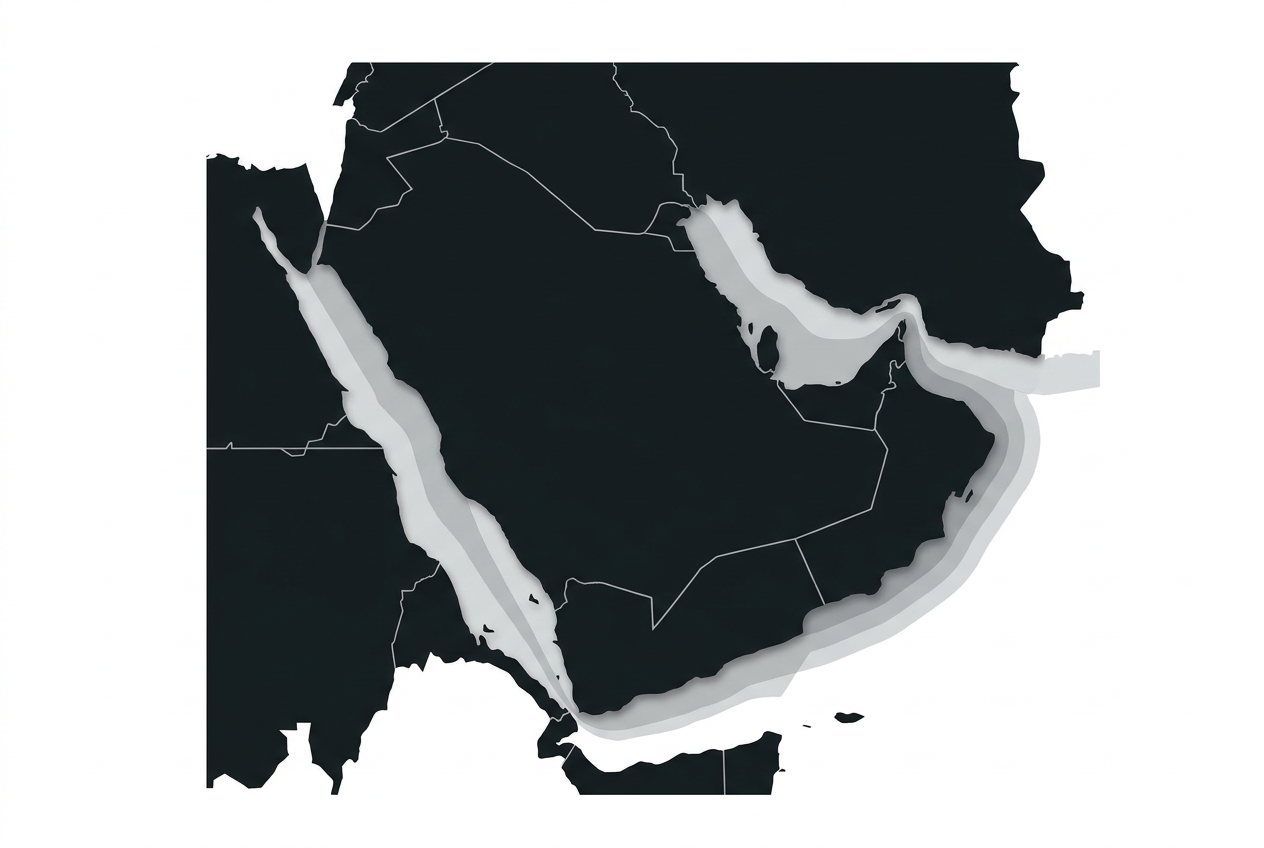
Then there's "touch point" risk—vessels merely linked to certain countries facing higher rates, with no consistent market definitions, which means disputes and a premium for ambiguity itself. Risk is no longer priced by destination alone but by geography, affiliation, and perception.
Crucially, the market didn't withdraw. IUMI confirmed capacity remains available across hull and cargo—but on selective, case-by-case terms, with notices of cancellation used not to exit but to reset pricing higher.
That's the mechanism that makes the inflation read structural rather than a spike. Every cargo that crosses now carries a higher, stickier insurance cost baked in. Rerouting adds weeks to transit and congests alternative ports, building accumulation risk that pushes premiums up again.
Go back to the ships. Only five of twenty-one avoided Iran's channel; traffic fell from an average of thirty vessels a day the prior week. Route diversion isn't a temporary detour—it's a permanent tax on tonnage that moves through the region, and it shows up in every good those ships carry.
That's the floor. As The Overshoot put it, supply disruptions don't have to cause faster inflation, but faster inflation "tends to be the best response compared to the alternatives," because forcing the price level back down means business failures and unemployment no central banker will tolerate.
So the insurance channel is what makes the higher-for-longer bet rational, which is what mugs gold and lifts euro-area rates, which is what inverts the whole haven complex.
The needle didn't break. It's reading a different quantity than the textbook assumes. In this shock, war means inflation, inflation means rates, and rates—not fear—are pricing every asset on the board.
Watch the insurance premiums. As long as the war-risk map stays expanded and Iran's channel stays the only real route, the cost floor holds, the inflation framing holds, and the inverted trade holds with it.