Article — "AI's binding constraint is power: doubling forecasts, 270 GW of new gas, and flexible-load fixes": Article — "AI's binding constraint is power: doubling forecasts, 270 GW of new gas, and flexible-load fixes": Two numbers arrived at PG&E's forecasting desk this year that should not be able to coexist.
The first: between March and June, the utility's projection of data center demand more than doubled.
The second number is the tell. Two-thirds of that pipeline—8,200 megawatts—is holding its place in the interconnection queue on the strength of a $500,000 study fee.
Half a million dollars sounds like a serious commitment until you remember who is writing the check. For a hyperscaler, $500,000 is a rounding error. As one observer put it, it's a check plenty of Bay Area AI Series A startups could write without blinking.
So here is the contradiction at the heart of the AI power panic: the demand forecast driving a national infrastructure scramble is, in large part, made of refundable deposits on maybes.
The demand forecast driving a national infrastructure scramble is, in large part, made of refundable deposits on maybes.
And the scramble is enormous. Right now, 472 gas-fired power plants totaling 270 gigawatts of combined capacity are under development across the United States.
That is not a rounding error. That is a generation of fossil infrastructure being sized, financed, and permitted to serve load that may never show up.
To understand why the gas industry is moving this fast, you have to understand why power—not silicon—became the thing everyone waits on.
The economics are counterintuitive. A good rule of thumb puts AI capex at roughly $50 billion per gigawatt of data center power, all-in. GPUs alone are about two-thirds of that.
Power itself? Just 5 to 10 percent of the total cost. It is the cheapest major input in the whole stack.
But it is also the bottleneck. You can buy chips faster than you can energize them, and a data center full of idle Vera Rubin racks earns nothing. With payback times around 3.5 years even when you're burning expensive on-site gas, every month spent waiting for an interconnection is money set on fire.
So the constraint isn't cost. It's speed-to-power—how fast a given site can get electrons flowing. And gas, for all its permitting friction, promises a firm number: build the plant, get the megawatts, skip the queue.
That's the logic driving 270 gigawatts of proposed turbines. It treats the doubled forecast as real, treats data centers as immovable loads, and concludes that the only answer is to pour concrete.
Now the turn. Every part of that chain rests on a single assumption—that a data center is a rigid load, demanding continuous high power every hour of every day, including the handful of hours a year when the grid hits its peak.
That assumption is why interconnection takes so long. When a new load asks for continuous power through peak hours, it raises the peak. Raise the peak, and the utility has to build new capacity to serve it—then everyone argues about who pays.
But the grid is built for those peaks, which materialize only a few hours a year. The rest of the time, an enormous amount of capacity just sits idle.
What if the data center could simply step back during those hours?
A 2025 study from Duke's Nicholas Institute ran the numbers and found something that has since become famous in the industry. If new loads curtail their demand for just half a percent of their uptime, roughly 100 gigawatts of new load could be added to the existing grid—with no new generation built at all.
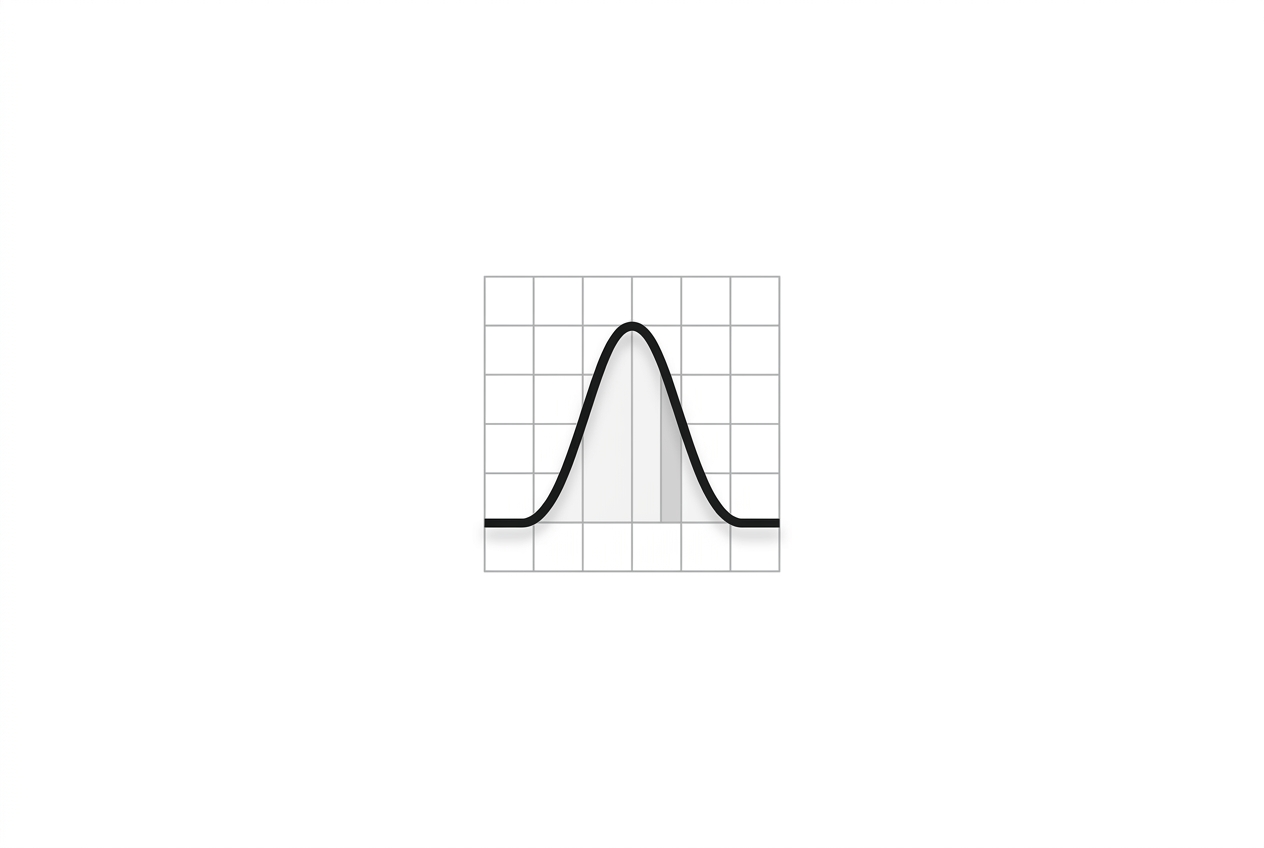
Half a percent—which, by one calculation, would work out to about 44 hours a year. In exchange for tolerating that, you unlock the equivalent of a third of the entire proposed gas buildout, on wires that already exist.
The catch was always that data centers didn't know how to flex. That is the problem Varun Sivaram set out to solve when he founded Emerald AI in late 2024.
Emerald's software, called Conductor, sits between the grid and the data center. When the grid says "drop 20 megawatts for two hours," Conductor orchestrates the compute—slowing some jobs, deferring others, downclocking GPUs, forcing checkpoints, or shifting work to another site connected at the speed of light.
The company just raised a $150 million Series A at a valuation north of $1 billion, and NVIDIA has reportedly signed on to integrate the approach into its DSX Flex platform—a partnership reportedly pitched at unlocking up to 100 gigawatts of grid capacity.
The number is not a coincidence. It is reportedly the Duke number, and it reframes the entire crisis: the 100 gigawatts everyone assumed required new gas turbines may instead require a software layer that makes AI a cooperative citizen of the grid.
Flexibility is the lowest-hanging fruit, and it is the fruit almost no one is picking, because rigid load is the default and gas is the reflex.
Meanwhile, the supposedly indispensable firm-power alternative is quietly getting competition. Amazon has begun construction on one of the largest solar-and-storage projects in America—1.2 gigawatts / 7.2 gigawatt-hours of solar and storage in Eastern Oregon.
Not the sun-drenched Southwest. The Pacific Northwest. If that same plant sat in the desert, it would function as roughly a 250-megawatt round-the-clock "baseload solar" facility—the kind of 24/7 profile the industry insists only gas can deliver.
We are entering an era where solar plus batteries is a genuine alternative to natural gas for continuous load, and data centers, which can site themselves wherever the energy is, are exactly the customers positioned to use it.
Stack these facts and the shape of the choice comes into focus.
The demand forecasts are inflated by queue-holding on refundable fees. Power is the bottleneck but a small fraction of cost, so the industry over-buys firm generation to buy speed. And the peak those gas plants are sized to serve could be flattened by curtailing demand less than one percent of the time.
None of this means AI power demand is fake. Data center consumption was already 4.4 percent of U.S. electricity in 2023, and the long-run direction is up. Some of those 472 plants will be needed; many, as one industry veteran predicts, will stall, cancel, or re-sequence rather than get built on the timelines developers now quote.
The point is narrower and sharper. A large share of the 270 gigawatts is a hedge—fossil insurance against a peak that flexibility could erase and that speculative forecasts have exaggerated.
And a gas plant is not a hedge you can unwind. It is a 30-to-40-year carbon commitment, financed on the assumption that the load is rigid and the forecast is firm.
That is the fork. On one path, the industry treats a three-month forecast doubling as gospel and locks in decades of emissions to serve queue positions worth a $500,000 deposit.
On the other, it re-architects the grid it already has—making the loads flexible, pairing them with solar and storage, and discovering that much of the concrete was never necessary.
The cheapest, fastest fix is already here, and it's mostly software. The question is whether an industry conditioned to build its way out of every constraint can recognize that the binding one, this time, might dissolve without a single new turbine.