Larry Fink says it flat: "We don't have enough power in the United States."
Not chips. Power. And the maddening part, in his telling, is that the fuel exists. "We have plenty of power through natural gas, but we can't distribute it in a proper way." The bottleneck isn't generation. It's the wires.
That's the reframing everyone repeats now — the constraint on AI has moved from silicon to electrons. But treat it as settled and you miss the more interesting fact, which is that the money already moved, and it moved faster than any of the fixes can be built.
The money already moved, and it moved faster than any of the fixes can be built. The constraint on AI has shifted from silicon to electrons.
Investor-owned utilities have raised their five-year capital plans by more than 27%, to at least $1.4 trillion through 2030, up from $1.1 trillion a year earlier. That is the largest coordinated utility investment in American history, and the leading driver is data centers.
Here is the problem the number doesn't solve: you cannot pour a $1.4 trillion grid on demand. Transmission takes years. The load is here now.
So watch what the industry is doing rather than what it is announcing, because the two have quietly diverged.
The announcements are nuclear, and they are clean, and they are late. Google and the startup Kairos Power are building a 50-megawatt reactor in Tennessee, commissioning around 2030, scaling to 500 megawatts by 2035. Microsoft has its own reactor targeting 2028.
Now hold that against the demand it is supposed to serve. Foxconn's Young Liu puts the cost of a single gigawatt-scale Nvidia Vera Rubin data center at $47 billion. A gigawatt.
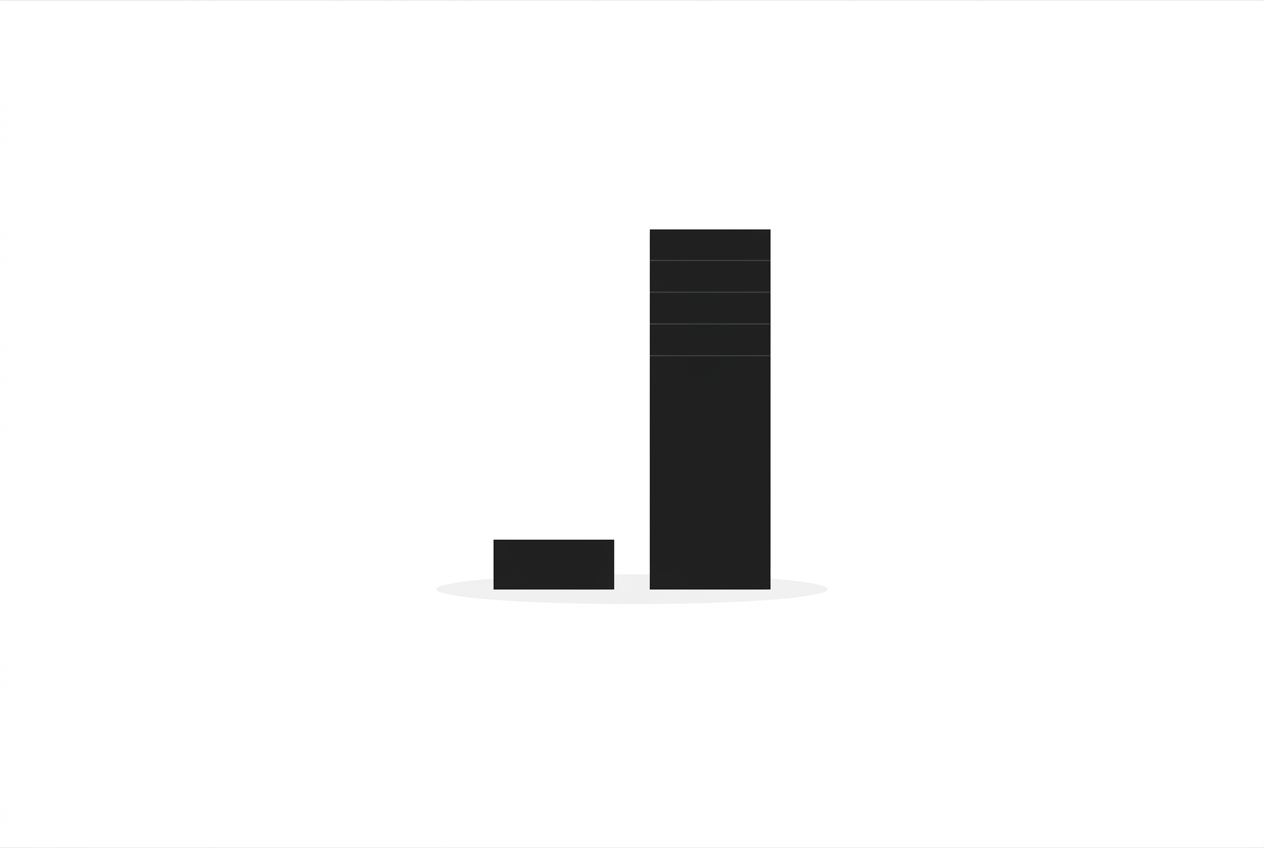
Kairos delivers 50 megawatts in 2030 — one-twentieth of a single such campus — and reaches 500 megawatts, half a gigawatt, five years after that. The demand curve is not waiting until 2035. The average newly-proposed data-center project hit roughly 2 gigawatts in the first quarter of 2026 and keeps climbing.
So the reactor timelines aren't a solution to the power wall. They arrive four-plus years after the demand, at a fraction of the scale required. They are a press release about the decade after the crunch, issued during the crunch.
What is actually turning the chips on is gas, and it is dirty, and it is expensive, and hyperscalers are paying for it anyway.
Developers have stopped waiting in the interconnection queue. Digital Realty's global head of energy described signing an energy-services agreement in 20 days built entirely on bring-your-own generation — while a separate ERCOT grid study left him waiting two years.
The generation is overwhelmingly gas, because the big three heavy-duty turbine makers are sold out, pushing developers toward reciprocating engines from Caterpillar, Cummins, and Wärtsilä, plus fuel cells. Bloom Energy dropped 50-plus megawatts of fuel cells into an Oracle data center in Utah in 55 days.
And the premium is the tell. Speed-to-power runs roughly 80% over retail — $140 to $150 a megawatt-hour against about $80 — and developers are paying it, explicitly, as "a ten-year bridge until the grid shows up."
A ten-year bridge. Read that against the 2030 and 2035 reactor dates and the two things finally rhyme: the nuclear announcements aren't the plan, they're the far end of a gas-powered bridge nobody wants to describe out loud.
The grid, meanwhile, is starting to show stress the operators can't hide. NERC issued a rare alert in May — only the third in its history — after clusters of data centers spontaneously severed from the grid during minor line faults and flipped to on-site backup, threatening cascading failures.
Data centers now swing 50-plus megawatts within minutes. PJM has already been handed emergency DOE orders letting it curtail them as a last resort. When the load can vanish from the grid in seconds, the utility underwriting a decade of capex to serve it is exposed to a question it can't answer.
Which brings us to the part that lands on people who will never run an inference query.
Utility bills are up about 40% since 2021, "with no signs of slowing down." In 2025, utilities requested a record $31 billion in rate hikes — more than double what they sought in 2024 — and those costs are already flowing to the 56 million Americans hit by approved increases.
The abstraction becomes concrete in Virginia, home of Data Center Alley, where one homeowner watched a monthly electricity bill climb from about $100 to $281 as hyperscale demand rose around them. Roughly tripled, for a boom they don't consume.
That is the default outcome: the grid gets built, the ratepayers pay, the load may or may not ever show up. Because two-thirds of the utility pipeline is still early-stage — forecasted load, not contracted load — and the money flows regardless.
So the real fight isn't about generation. It's about who signs for the bill before the concrete is poured.
American Electric Power built the counter-model. In July 2025 it established a data-center tariff in Ohio requiring developers to make financial commitments — minimum bills, collateral — before grid connections are approved. Other utilities are studying it. There are now 75-plus large-load tariffs across 36 states.
The template, done well, looks like an Iowa deal where a 500-megawatt-to-gigawatt load funds the incremental build itself, and existing customers get a five-year rate freeze. The developer pays for the demand it creates. The homeowner is held harmless.
The alternative is Virginia — the developer gets its megawatts, the transmission bill socializes onto the rate base, and a household's power bill triples.
Both structures are live right now. The distributional question of the AI buildout is simply which one becomes standard before the $1.4 trillion is spent.
And underneath sits the harder question the bulls haven't answered. If developers are paying an 80% premium for temporary gas because the grid is a decade behind, that is front-loaded bridge economics — not a permanent annuity for the utilities whose ratepayers are being asked to underwrite the buildout.
The gigawatt math may simply never pencil. Kairos's half-gigawatt in 2035 does not close a gap measured against $47 billion, 2-gigawatt campuses arriving today. The gas bridge is a confession that it can't be closed in time.
And the on-site pivot carries a quiet threat to the whole rate-base thesis: if the load learns to build and run its own power at 80% over retail because that beats waiting, some of it may never touch the grid the utilities are spending $1.4 trillion to expand.
In which case 56 million people pay for a boom that walked off the rate base — leaving the wires, and the bill, behind.