Here is a contradiction worth sitting with. JPMorgan, in a June report, reportedly projected that hyperscaler operating cash flow could surpass $900 billion by 2027 — proof, the bulls say, that the AI buildout is self-funding. In the same report, the bank reportedly projected $4.1 trillion of AI-related debt through 2030.
If these companies are drowning in cash, why are they borrowing trillions?
The answer is that cash flow is no longer the engine of this buildout. Debt is. And the machinery being assembled to move that debt is not a financing innovation — it is a mechanism for laundering a risk nobody can price.
The machinery being assembled to move that debt is not a financing innovation — it is a mechanism for laundering a risk nobody can price.
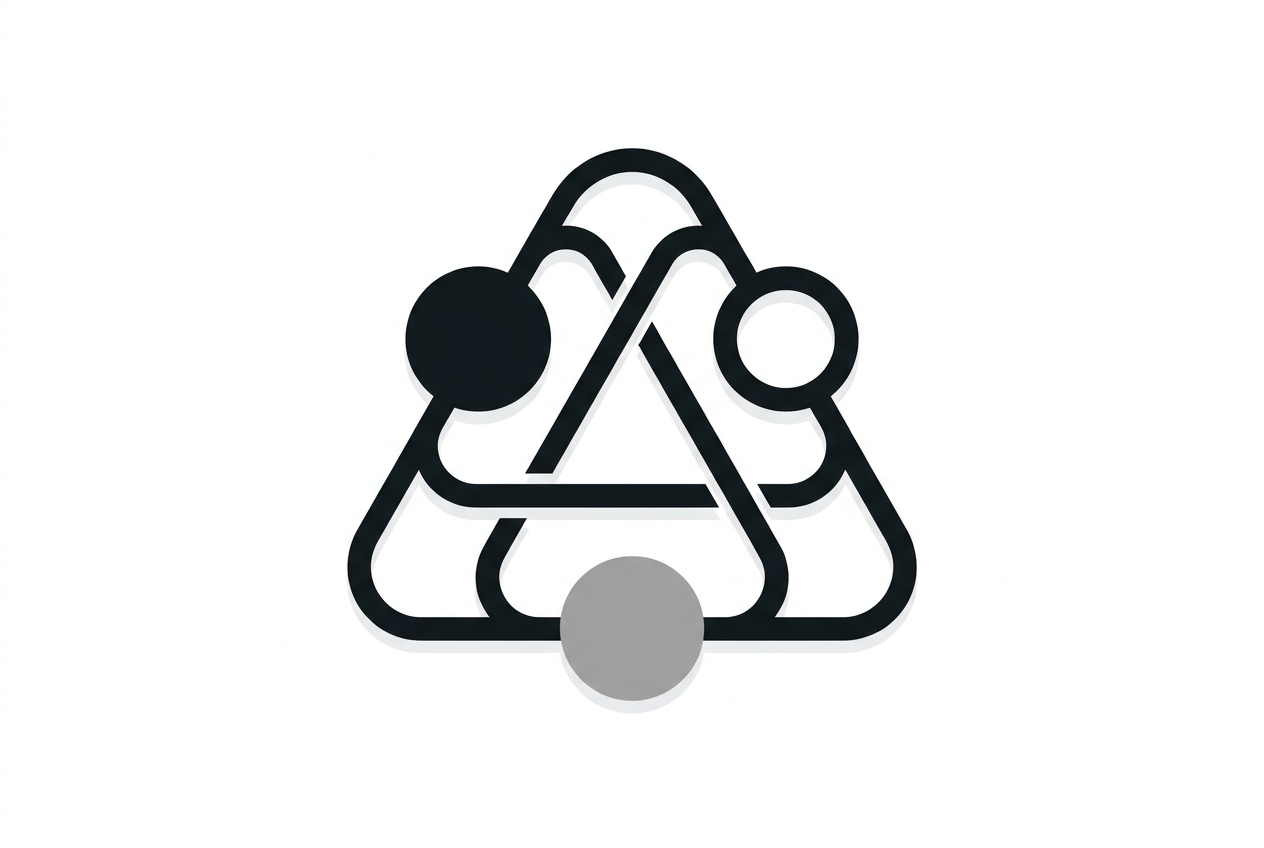
Start with the mechanics, because they are genuinely elegant. To build a large GPU cluster, a neocloud — a Crusoe, a TeraWulf — must assemble what SemiAnalysis calls the AI Project Trinity: capital, offtake, datacenter. Each leg depends on the others in a way that should be impossible to bootstrap.
A lender won't provide debt without an offtake contract or an investment-grade backstop. To win an offtake, you need equity capital to place deposits on the GPUs. To raise that equity, you need to show you already have an offtaker and lenders lined up. And a datacenter operator won't rent you colocation until it sees both funding and demand.
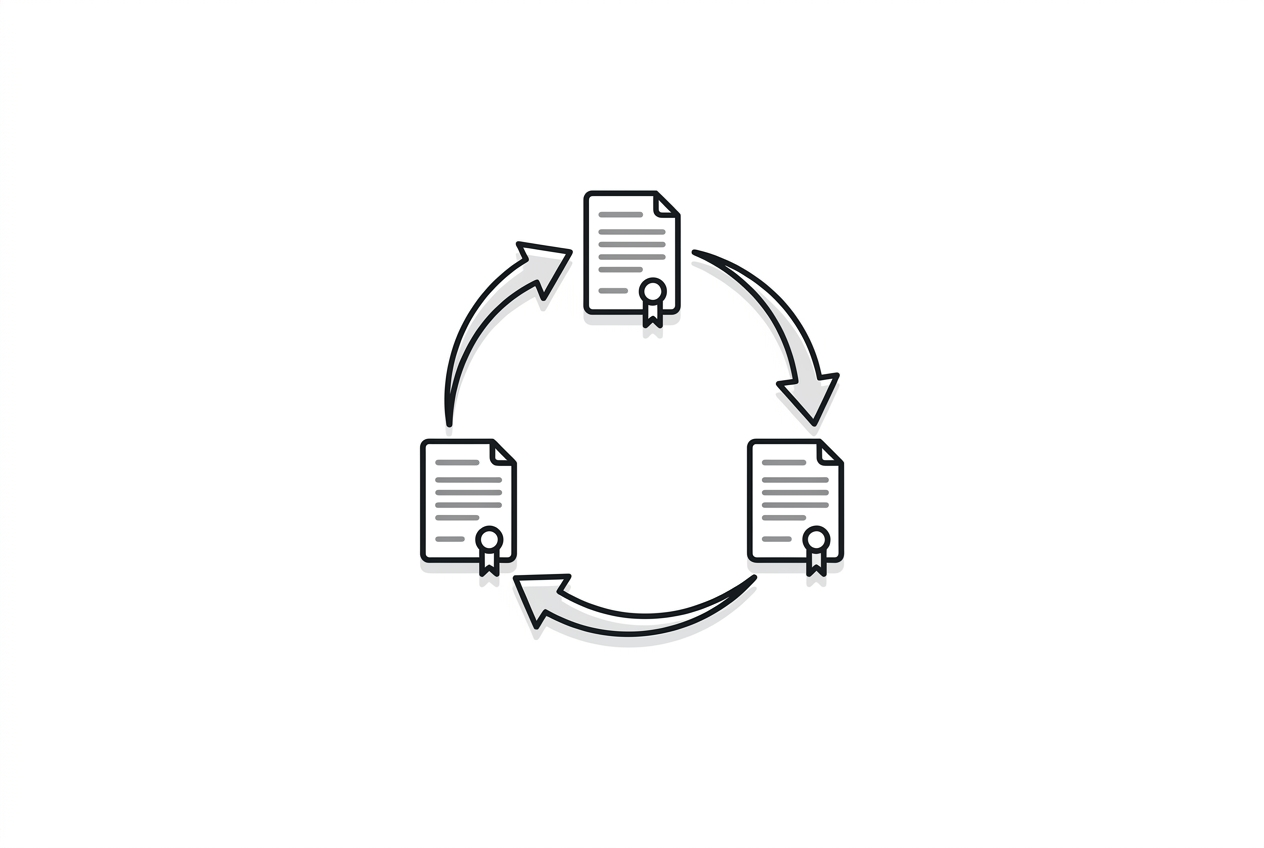
Everyone wants proof the other party has committed first. It is a circle with no obvious entry point.
Yet the deals keep closing. They close because clever structuring papers over one or more legs — and because one party has quietly stepped behind the whole arrangement.
That party is Nvidia. Per Data Center Dynamics, Nvidia now acts as a financial backstop for some neocloud customers in exchange for a share of cloud revenue. If a neocloud can't rent out its compute, Nvidia supports the unused capacity.
Read that again. The company selling the chips now guarantees the revenue on the chips it sells. It sells the hardware, helps finance the cluster, and participates in the rental income from the same GPUs.
For a lender, this is intoxicating. The primary fear in GPU lending is that expensive capacity sits idle. Nvidia's backstop makes that fear disappear — which is exactly why it makes lenders comfortable underwriting an asset whose residual value they cannot otherwise price.
And they genuinely cannot price it. As SemiAnalysis notes, GPU rental transactions happen bilaterally, off the public record. There is no active derivatives market, no reliable reference for GPU residual value. Lenders are underwriting a five-year cash flow on a depreciating asset with no market signal for what it will be worth in year three.
So they don't underwrite the asset. They underwrite the backstop. Outside the four corners of a five-year, hyperscaler-backstopped deal, SemiAnalysis observes, the appetite to lend "drops off almost entirely."
This is the risk-laundering machine. The credit doesn't get priced on the collateral — the GPUs — because nobody can. It gets priced on the credit rating of whoever signed the offtake or the backstop. The whole $7 trillion structure, which SemiAnalysis reportedly projects will be the second-largest asset-backed market after US mortgages, rests on a short list of investment-grade names continuing to sign five-year contracts.
Now watch what happens when the names signing those contracts aren't investment-grade at all.
In July, TeraWulf — reportedly a bitcoin miner turned AI landlord — reportedly signed a $19 billion compute deal with Anthropic. Sit with that pairing. A former crypto-mining company is being financed on the strength of an offtake from an AI lab that spends far more than it earns.
This is where the laundering gets exposed. Oracle, per its own June filing, reportedly flagged customer defaults as a top risk, with companies like OpenAI and Anthropic reportedly characterized as spending significantly more than they bring in.
Oracle would know. Its capex reportedly leapt from $21.2 billion to $55.7 billion in the fiscal year ending May 2026, with $90–95 billion planned next year. Its shares reportedly fell 40% in a month.
The offtakers propping up the credit structure are themselves cash-burning entities. The backstop that makes lenders comfortable is, in many cases, a promise from a firm that hasn't demonstrated it can pay. The investment-grade veneer is thinner than the deal documents suggest.
Then there's the finite-balance-sheet problem. Hyperscaler balance sheets cannot backstop trillions. SemiAnalysis is explicit: once hyperscalers exhaust their capacity to backstop deals, and if the lending market hasn't evolved beyond that template, "there will be no further projects to lend to."
Nvidia's backstop capacity is finite too. It is one company, however rich, absorbing the tail risk of an entire asset class it also happens to manufacture. That is concentration masquerading as diversification.
Loan-to-cost ratios show how little cushion sits beneath all this. JPMorgan reportedly reports disclosed projects frequently financed above 85% of development cost, some exceeding 90%. The bank reportedly estimates more than $3 trillion of financing will be needed for GPUs and accelerators alone over five years — and calls finding "the right silicon financing paradigm" the billion-dollar question. Translation: nobody has solved it yet.
Add a supply-side twist that lands directly on these borrowers. SK Hynix, reportedly controlling 56–58% of the HBM market, is reportedly ripping up its price caps in favor of uncapped, spot-linked five-year contracts to capture every won of upside — which, by the article's own inference, pushes memory price risk downstream onto exactly the neoclouds whose credit is already stretched thin.
The final piece is reflexivity, and it is what turns fragility into cascade.
The same features that made this boom financeable make the bust self-reinforcing. There is no derivatives market to signal distress early — so the first real signal will be a missed payment, not a widening spread. Distress won't be priced in gradually; it will arrive all at once.
And regulators are moving to raise the cost of precisely this credit. The Basel III Endgame would force banks to hold more capital against large, complex technology loans, making AI financing costlier and harder to obtain. The Bank for International Settlements warns that risk migrating into private credit doesn't reduce systemic danger — it merely hides it.
The BIS spells out the loop. Tighter financing slows capital spending. Slower spending weakens revenue across the AI ecosystem. Weaker growth compresses valuations, making new capital harder to raise, forcing further spending cuts. A cycle that "can accelerate surprisingly quickly."
Here is the structural punchline. Every feature engineered to make the boom safe — the backstops, the take-or-pay offtakes, the five-year terms — is a feature that transmits failure. When one marquee offtaker can't pay, the backstop is called. When enough backstops are called, capacity exhausts. When capacity exhausts, no new deals close. When no new deals close, utilization and rental prices fall, and the residual value nobody could price turns out to be lower than anyone assumed.
The Project Trinity inverts into a default cascade, each leg pulling down the next.
The question was never whether AI demand is real. Demand may be enormous. The question is whether a financing structure built on unpriceable collateral, cash-burning offtakers, and a finite set of investment-grade signatures can survive its first missed payment.
Credit cycles, as 24/7 Wall St. notes, have a long history of ending far more abruptly than technology cycles. This one has arranged its own machinery to make sure of it.