Article — "Memory Sold Out Through 2027: Capex Surge Meets a Chinese Wildcard at the DRAM Bottom": Micron committed ¥1.5 trillion — $9.3 billion — to a Hiroshima plant two trading days after its stock logged its sharpest slide since the AI rally began.
Read that sentence twice, because the two halves point in opposite directions. The company just watched roughly 15% of its market value evaporate over two sessions, reportedly closing down 5.5% at $975.56 after Michael Burry disclosed a short. Then it broke ground anyway on one of the largest single memory investments in Japanese history.
The stock chart says fear. The groundbreaking says the opposite: that HBM demand runs so far ahead of supply that adding capacity in 2028 is still a rational bet in 2026.
Memory has become simultaneously the AI buildout's profit engine and its tightest chokepoint — and the people who control the chokepoint are the ones printing the profits.
Both readings are correct, and holding them together is the whole story. Memory has become simultaneously the AI buildout's profit engine and its tightest chokepoint — and, crucially, the people who control the chokepoint are the ones printing the profits.
Last week the theme was scarcity as a fact. This week it's scarcity as a choice, with two fresh data points: Micron's subsidized Hiroshima axis, and CXMT's DDR5 modules clearing DDR5-8200 on retail boards.
Start with the sold-out sign. All three HBM makers — SK hynix, Samsung, Micron — are booked through 2027, with TrendForce reporting 2027 supply contracts being finalized as early as the first quarter of 2026. The three are also, per TrendForce, raising HBM prices for next year outright.
That should be the end of the analysis: demand outran supply, prices rose, everyone builds. Except the supply side isn't behaving like an industry racing to fill demand.
IDC puts it precisely: "the picture is more controlled than constrained." Major producers, IDC writes, are "exercising deliberate capacity discipline, prioritizing advanced nodes and HBM over legacy products, managing bit output carefully, and letting pricing reflect scarcity rather than racing to fill every wafer."
The market, in IDC's phrase, "is not absent. It is being managed."
What management looks like in numbers: module makers are receiving only 30–50% of their originally requested chip volumes, per TrendForce, while conventional DRAM contract prices are forecast to rise 55–60% quarter-over-quarter in 1Q26 and server DRAM more than 60%.
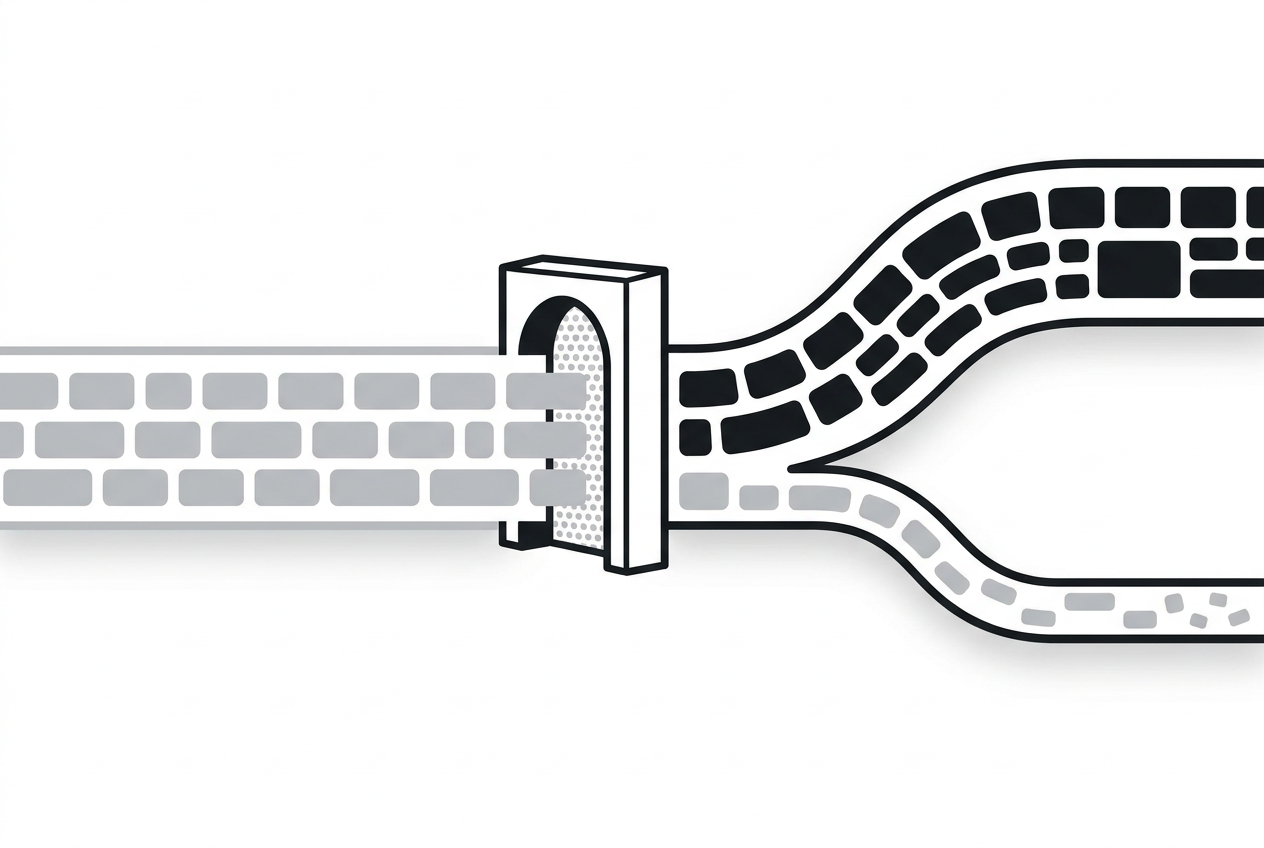
Notice which segment eats the rationing. Smartphones and PCs get "pushed further down the allocation queue," leaving brand vendors able to secure only 50–70% of planned supply. The commodity tier is being starved on purpose so wafers flow to HBM.
This is the pivot the memory industry has quietly executed. IDC's framing is blunt: "Memory is no longer a cyclical commodity. It has become a strategic infrastructure input." For decades the business ran on a rhythm — demand surges, prices spike, supply catches up, prices correct. That reflex is gone.
The old playbook rewarded whoever built fastest. The new one rewards whoever locked allocation first. Supply agreements are longer, allocation is tighter, and the gap between buyers who have secured supply and those who haven't is widening into a moat.
And here is the part that should make every buyer nervous: the incumbents have no financial reason to break their own tightness. Discipline is the strategy. Rationing conventional DRAM while prices climb 55–60% a quarter is not a bug the Big Three are working to fix — it's the source of the margin.
Which is exactly where the story turns dangerous for them.
A price umbrella held high enough, for long enough, does something predictable: it invites entry. When the three dominant makers deliberately deprioritize the commodity tier and let its prices run, they hand a deprioritized-but-lucrative market to anyone who can build "good enough" DRAM.
Enter CXMT. This week MSI China released beta BIOSes across its AM5 lineup validating CXMT-based modules at DDR5-8200 on dual-DIMM boards — up from a prior ceiling around 6,800 MT/s. Quad-DIMM support rose to DDR5-7200.
The retail detail matters more than the frequency. MSI tested region-bound kits from Lexar and KingBank — parts an actual consumer can buy — not lab samples. A banned entrant is now clearing speeds that put it in credible contention for the exact tier the incumbents have chosen to abandon.
One tell hangs over the whole thing: the validation came from MSI China, with, as Tom's Hardware notes, "no announcement on global channels for some reason." A capability real enough to ship, quiet enough not to provoke. That's the posture of a wildcard that knows export controls are watching.
IDC lists "What is China's effective memory supply capacity?" among the five questions the industry should be tracking, noting YMTC and CXMT are "reaching significant production milestones in 2026" even as technology restrictions limit node access. DDR5-8200 on a retail board is what a milestone looks like from the outside.
So stack the logic. The incumbents ration the commodity tier to feed HBM. Rationing keeps commodity prices high. High commodity prices are precisely the margin CXMT needs to fund its climb up the ladder — and there's no incumbent incentive to lower the umbrella that shelters the entrant.
That's the crack. Not that CXMT can beat SK hynix at HBM4E; it can't, and doesn't need to. It only needs the Big Three to keep pricing conventional DRAM as if scarcity were permanent while an unsanctioned competitor validates real product against real consumers.
Now return to Hiroshima, and the awkward money.
Japan's Ministry of Economy, Trade and Industry is reportedly covering roughly a third of Micron's build — up to ¥500 billion, with UPI citing a figure as high as ¥536 billion in total support for investment and R&D. Total Japanese government support committed to Micron now stands at roughly ¥775 billion, about $4.8 billion, sitting inside a ¥101.6 trillion national tech roadmap Tokyo unveiled last month.
Micron's revenue tells you why the state wants in: fiscal 2026 third-quarter revenue of $41.46 billion, reportedly up from $9.3 billion a year earlier. Former Prime Minister Kishida attended the groundbreaking; CEO Sanjay Mehrotra called it a meeting of "American boldness" and "Japanese craftsmanship." Mass production isn't slated until summer 2028.
Follow the risk. A subsidized third HBM axis lets Micron "move faster without straining its own balance sheet." Tokyo absorbs a third of the downside on capacity that comes online in 2028 — into a market whose entire premise is that scarcity holds.
That premise is exactly what Burry is shorting. He calls the rally "Fear of missing out, greater fool theory, [and] public commitment bias." Whatever you think of the man who bet against subprime, his position names the risk cleanly: the whole edifice assumes tightness persists and no one credible cracks the commodity tier.
Set his short beside the METI subsidy and you get the real transfer. Micron de-risks its balance sheet. Tokyo takes on a third of the bill. And the bet they're jointly underwriting — with state money — is that engineered scarcity outlasts CXMT's ability to scale.
Micron shares are still up about 698% over the past year, and the company crossed a $1 trillion market cap in May. The margins are spectacular precisely because the tightness is chosen.
But chosen tightness is a policy, not a moat. It persists only as long as the incumbents want it to — and it produces the one thing every discipline strategy eventually meets: a competitor happy to sell into the umbrella you're holding up.
The DDR5-8200 screenshot isn't a curiosity. It's the first drop of water finding the crack the Big Three are financially committed never to seal. State balance sheets are now betting it doesn't widen fast enough to matter.