A sixteen-year-old boy arrives in his first psychotic episode. He also washes, checks, and repeats. His clinicians spend months in disagreement, and the eventual diagnosis is not schizophrenia but OCD.
That case, published in early 2026 by a team at Vanderbilt, is titled "OCD or Psychosis? Yes." The answer is a joke and also the whole problem.
Because the fork in front of that clinician is not merely intellectual. If you call it OCD, you reach for a serotonin reuptake inhibitor. If you call it schizophrenia, you reach for an antipsychotic. And the evidence says each of those drugs can conjure the other disorder's symptoms.
Clozapine and olanzapine measurably increase obsessive-compulsive symptoms — 38.9 percent versus 20 to 23 percent with other antipsychotics. SSRIs, per one systematic review, risk worsening psychotic symptoms in 16.7 percent of cases.
So the choice of label is a choice of iatrogenic risk. Treat the psychosis with the wrong antipsychotic and you may manufacture the obsessions. Treat the obsessions with an SSRI and you may inflame the psychosis. The diagnosis is a prescription, and the prescription can produce the competing diagnosis.
The diagnosis is a prescription, and the prescription can produce the competing diagnosis.
This week the same failure moves upstream, into classification itself — the place where the labels that select those treatments are drawn.
Here is the move that made the bedside choice unwinnable. Insight was the traditional hallmark distinguishing an obsession from a delusion: the person with OCD knows the thought is excessive, the person with a delusion does not. DSM-5 removed that criterion and added a specifier, "with absent insight/delusional beliefs."
As the Vanderbilt authors put it, this change was "blurring this distinction and facilitating a diagnosis of OCD in situations where a schizophrenia spectrum disorder may have otherwise been given." The manual erased the one feature that told the two apart, then asked clinicians to keep telling them apart.
And poor or absent insight is not rare in OCD. It runs somewhere between 9 and 36 percent of cases. That is a large population sitting precisely on the line the manual just smudged.
This is not an edge case dressed up as a crisis. Around 25 percent of patients with schizophrenia carry clinically significant obsessive-compulsive symptoms; roughly 12 percent meet full OCD criteria. The pooled prevalence of OCS in first-episode psychosis is 26.8 percent — a 3.6-fold increase over the general population.
The timing is the part that should unsettle anyone committed to clean categories. In first-episode psychosis, 65 percent of patients develop obsessive-compulsive symptoms before or concurrent with the psychosis, typically emerging 8 to 12 months prior to frank psychotic symptoms.
Read that again. In most of these patients the "OCD" arrives first, sometimes nearly a year before the psychosis it will later be judged against. At the moment those symptoms appear, there is no psychosis to distinguish them from. The category is being applied retrospectively, once the outcome is known.
The published cases follow this arc with unnerving consistency. A 45-year-old man develops cleaning and checking rituals at 29, responds partially to fluvoxamine, and only at 43 arrives in hospital with grandiose delusions and aggression. A 32-year-old in Rio de Janeiro, per the case report, developed over the years an egodystonic obsession that hardened into over-valued, then delusional, ideation as his insight faded.
That last case names the mechanism directly: the transition from obsession to delusion is "modulated by the presence and extent of insight," though the source notes this transition is rare and describes it tentatively. Insight is a dial, not a switch. The symptom does not change; the patient's relationship to it slides along a continuum — which is exactly the continuum DSM-5 stopped measuring.
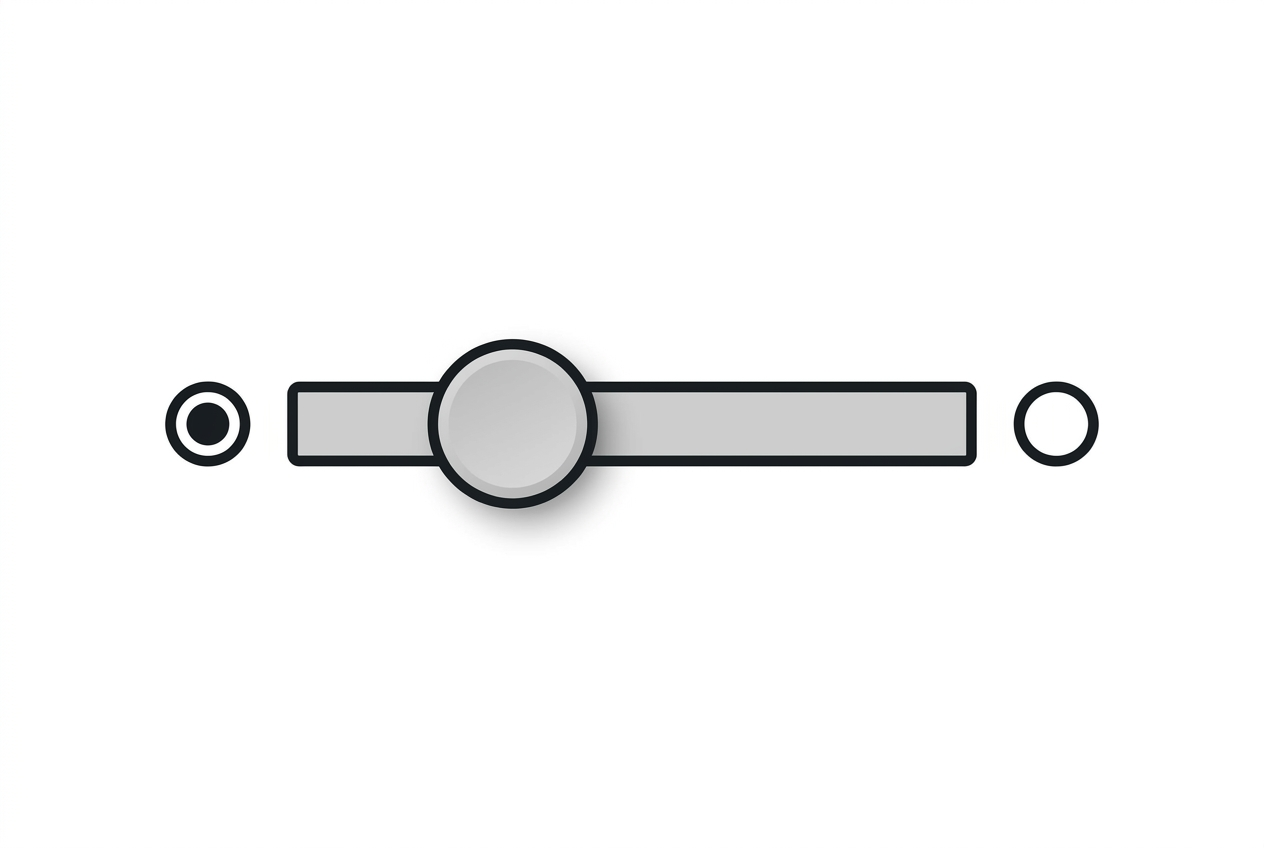
One theoretical framework makes this gradient explicit. It positions OCD along a spectrum "that spans from maintained insight to fading self-agency" to schizophrenia spectrum disorder, with OCD as a partial loss of the sense of agency over one's own thoughts and full psychosis as a deeper loss of both agency and ownership — though the source presents this only as a tentative, speculative neurodevelopmental model.
If that is even approximately right, then the boundary between obsession and delusion was never a wall. It was a region on a slope, and the manual drew a chalk line across it and called the line a diagnosis.
Catatonia tells the same story from the other direction, and here the manuals have already surrendered in print. Historically bound to schizophrenia, catatonia is now defined in both DSM-5 and ICD-11 as a transdiagnostic syndrome — one that can accompany mood disorders, autism, autoimmune encephalitis, metabolic derangements, and critical illness.
The manuals cut catatonia loose from its parent diagnosis and scattered it across the whole map. That was the correct call. It also concedes the principle: a syndrome once thought to define a disorder turned out to belong to no disorder in particular.
And catatonia, too, refuses to stay in its lane relative to the schizo-obsessive picture. In a 2025 study of 70 early-psychosis patients, 64.3 percent reportedly showed catatonic symptoms (defined as a Bush Francis Catatonia Rating Scale score of at least 3) and 40 percent scored above the cutoff for clinically significant OCS.
More striking: higher obsessive-compulsive symptoms independently raised the odds of catatonia, while positive psychotic symptoms were actually protective against it. The three domains — obsession, catatonia, psychosis — are not stacking neatly as separate comorbidities. They correlate, dissociate, and predict each other in ways the categorical labels cannot represent.
One review of catatonia across psychopathology puts the conclusion plainly: current diagnostic categories are "arbitrary divisions of what is essentially a continuous landscape." The disorders sit at "points of intersection between orthogonal dimensions" in a poly-dimensional space.
This is the tension worth holding. The manuals promise categorical clarity — distinct disorders, distinct treatments — while in practice they keep adding specifiers and transdiagnostic syndromes that erode the very boundaries they claim to enforce. They concede the continuum in the fine print and deny it in the chapter headings.
The clinician at the bedside pays for that incoherence, and pays in the one place it is measured: the prescription pad.
Consider what "categorical thinking" actually commits you to when the patient is genuinely ambiguous. It tells you to pick a box, and picking a box selects a drug, and the drug can generate the symptoms of the box you didn't pick. Clozapine, one of the most effective antipsychotics available, is documented to induce or worsen obsessions. SSRIs, the frontline for OCD, can destabilize a vulnerable patient into psychosis.
The categorical model performs worst at exactly the cases it exists to adjudicate. On the clear cases you barely need it. On the ambiguous ones — the 26.8 percent, the poor-insight third, the patient whose obsession is midway through becoming a delusion — it forces a false binary with pharmacological consequences.
Dimensional thinking, in this light, stops being a theoretical preference and becomes harm reduction. If you assess and track obsession, insight, catatonic signs, and psychosis as separate dials rather than collapsing them into one label, you can titrate to the whole picture — watch for emergent OCS when you start clozapine, watch for destabilization when you add an SSRI — instead of committing to a box and defending it.
The manuals already know the categories leak. They wrote the specifier. They de-linked the syndrome. What they haven't done is stop pretending, at the level of the treatment decision, that the lines they drew through continuous symptom space are anything other than lines they drew.
The patient who sits between two "distinct" disorders is not a diagnostic failure. The patient is the evidence. And treating one label as though it can iatrogenically manufacture the other is not a paradox to be resolved by better boundary-drawing. It is the argument for abandoning the boundary as the unit of decision at all.