Article — "Smart Rings Grow Up — and Oura's IPO Reveals the Category's Broken Economics": Here is a contradiction worth sitting with. The most successful smart-ring company ever built controls what is reportedly, per Bloomberg reporting, roughly 79% of its category, tripled revenue in two years, and just filed to go public at more than $16 billion. It also, for the nine months ended June 30, reportedly lost $924.3 million (per its filing).
That is not a typo, and it is not a rounding error. For the nine months ended June 30, Oura reported a net loss of $924.3 million on $1.21 billion in revenue — a loss that, per its filing, quintupled from $182.8 million on $697.6 million in the corresponding period a year earlier. The category's reported leader is torching close to a billion dollars while winning.
So here is the thing most readers get wrong about the smart ring: they think the current wave of new features is about ambition. It is about survival.
The most readers get wrong about the smart ring: they think the current wave of new features is about ambition. It is about survival.
Look at a single day. On September 3, 2026, three ring makers announced the future while Oura confessed its past.
Ultrahuman raised $70 million, with Qualcomm's venture arm backing a bet to turn the ring into a computer — a device that runs software on your finger, works as a game controller, a car key, an AI interface. Circular unveiled its Ring 3 series with NFC contactless payments, with the Pro model offering FDA-cleared ECG. And down the hall at the same IFA show, Motorola crawled back to the wrist with the $349.99 Moto Watch Ultra, its first Wear OS smartwatch since 2019.
Meanwhile, Oura quietly filed the paperwork admitting the nearly billion-dollar hole.
Pose the obvious question: why is everyone frantically bolting features onto a device that already "wins" — and still bleeds money? Strip away the press-release language about "personal AI devices" and "ambient computing," and every one of these announcements is really about the same trap.
Hardware margins don't pay for themselves.
The clearest confession is in Oura's own S-1. Roughly 80% of its revenue is hardware — rings sold once, for several hundred dollars apiece. Only about 20% is subscription. And that 20% is the entire investment case.
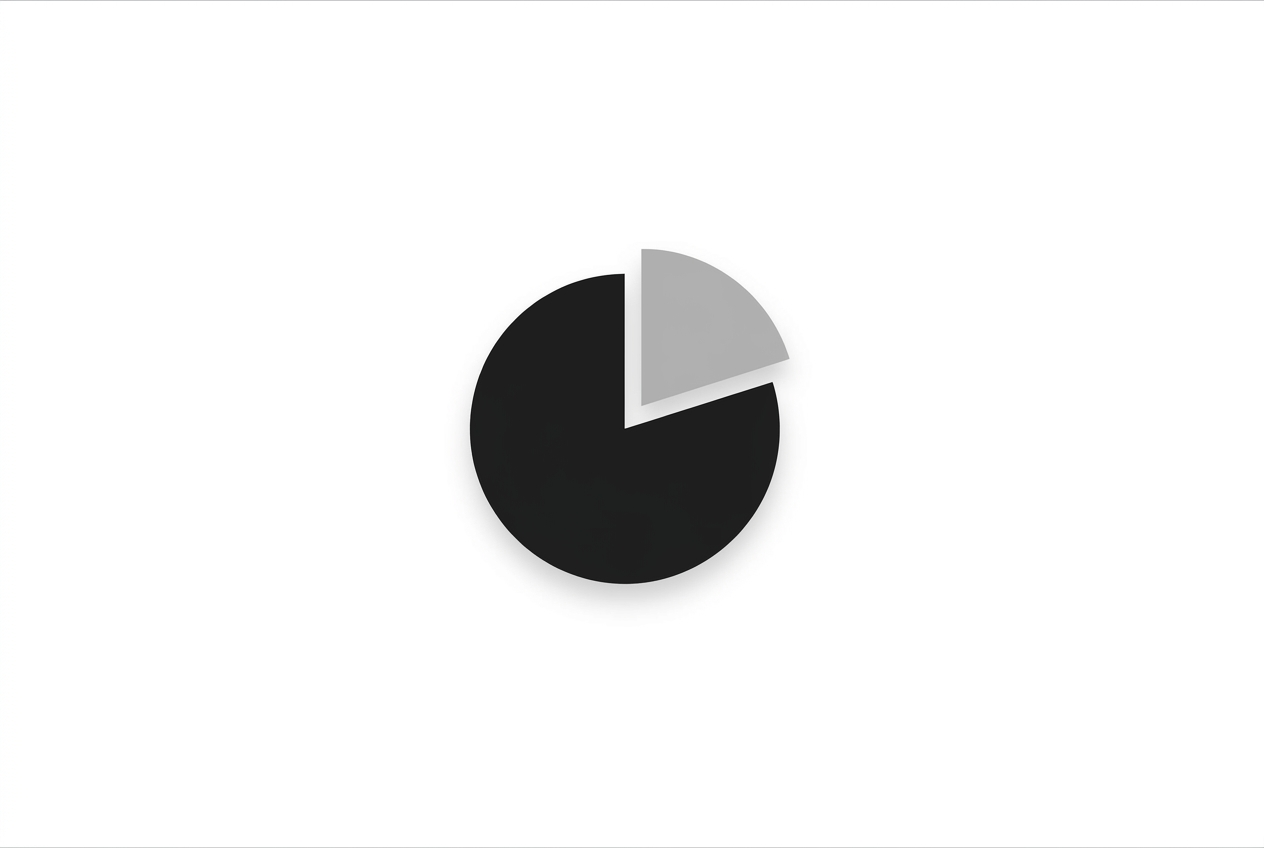
A gadget maker doubling revenue is impressive. A platform converting a locked-in base into high-margin recurring revenue is the kind of business that trades at 20 or 30 times sales. The $16 billion price tag is a bet that Oura is the second thing, not the first.
The problem is the customer experience underneath that bet. The membership runs roughly $70 a year, folded into the price of the ring, and it is effectively required after the first year to see the insights that make the device worth wearing.
Buy a $400 tracker, skip the fee, and — as one typical complaint runs — it shows "almost nothing useful."
Users resent this. Rivals sell no-subscription rings specifically to exploit the irritation. Which means Oura's real question isn't how many rings it sells; it's how many owners keep paying, year after year, indefinitely.
Now look back at the feature-creep with that lens.
Ultrahuman is trying to make the ring a computer, which may reflect that only about 12% of its users pay for PowerPlugs, its software layer. Qualcomm's Quinn Li can call it "a new generation of personal AI devices" all he wants, but the company itself admits it may not be profitable this year.
The ambition and the losses are the same story. You add software use cases because software is the only part of the business that recurs — and because hardware, left alone, commoditizes.
Circular is playing a different card of the same hand: payments and ECG make the ring stickier, harder to abandon, more like an everyday necessity than a sleep gadget you eventually leave in a drawer. Motorola's watch is the counterpoint that proves the crowding — a $350 device running a Snapdragon W5 Plus Gen 1 chip from 2022 and Wear OS 6 while Samsung and Google ship newer silicon and Wear OS 7, leaning on Polar's algorithms because Motorola has no health ecosystem of its own.
The wrist is contested. The finger is contested. Everyone is racing to own the recurring layer before the metal becomes a commodity.
Which brings us to the two decisions that actually matter to you.
Decision one: should you buy the ring? Only if you will genuinely pay the roughly $70-a-year annuity. That's the honest test.
The hardware without the subscription is a beautiful, expensive mood ring. If you already know you'll cancel after year one, you will resent the device, and you'll be right to. A ring is worth it when you treat the yearly fee as the actual product and the titanium as the delivery mechanism — not the reverse.
If that math doesn't appeal, a no-subscription competitor or a plain smartwatch will make you happier for less money. This is the same thread we pulled on August 28 around whether wearable health claims hold up: the real question was never the sensor, it's who pays for the data the sensor generates. Here's your answer — you do, annually, or the data barely exists.
Decision two: should you buy the stock? This is where the confidence of the price should not be confused with the certainty of the subscription.
Oura is a hardware company being priced as a software platform. The whole valuation rests on that 20% subscription slice growing fast enough to justify the multiple before the hardware behaves like consumer electronics always eventually do: cheaper, contested, hard to keep premium.
Most transitions of this kind never finish. Fitbit is the ghost at this feast — a fast-growing hardware hit that struggled once the novelty wore off. The 20/80 split is simultaneously the opportunity and the trap: it's the opening of a conversion, and conversions like this usually stall.
Then there's the insider tell. In January, Oura's board ran a tender that priced existing shares at roughly a quarter below the $10.9 billion valuation the company had carried since October — an internal, discounted mark set months before it turned around and asked the public for more than $16 billion.
And a significant portion of the IPO shares are expected to come from existing shareholders selling, not fresh capital for the company. Read that plainly: early backers cashing out at a premium the retail buyer then pays.
Even the bulls concede the crux. One VC watching the pipeline noted the single number he'd want before buying is subscription attach and renewal rate — precisely the line banks tend to bury deepest in the S-1. That's not a footnote. That's the whole thesis in one metric nobody gets to see clearly before pricing.
So here's the frame for both the device and the stock. Strip the "ring-as-computer" romance, and every September 3 announcement is one company after another admitting that selling health hardware, by itself, cannot pay for building health hardware.
The features are the tell. The subscription is the business. And the business, for now, is only 20% built.
Don't buy the ring as a health device — buy it as a $70-a-year habit you're confident you'll keep. And don't buy the stock as a category monopoly — buy it, if at all, as a wager on a conversion that hasn't finished, sold to you by insiders who priced their own shares lower and are heading for the exit.
The confidence is in the price. The certainty is not in the data.