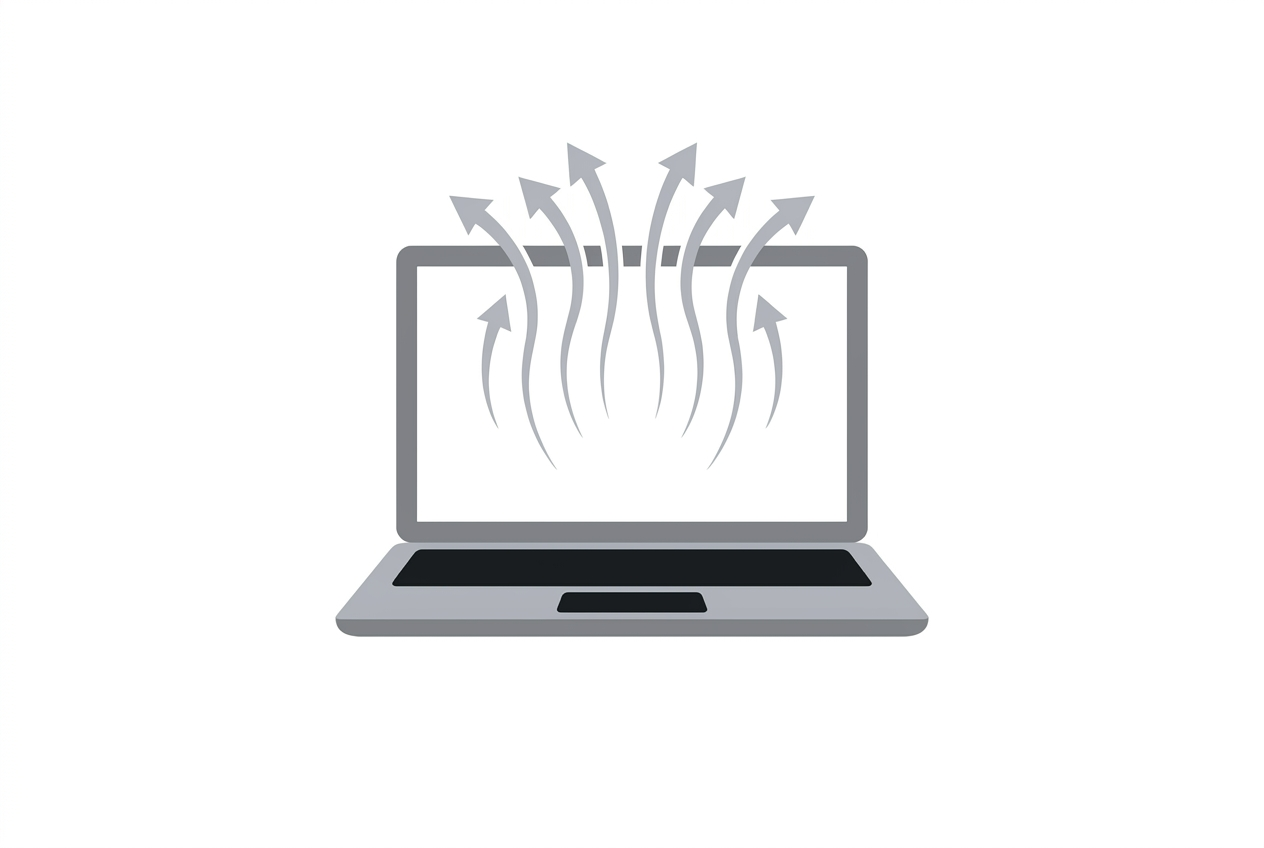
Eight hundred and thirty grams. Less than 10mm thick. That's the Lenovo Project AeroBlade, and at the company's IFA 2026 booth in Berlin, Wired's reviewer admits he "spent longer than I should have just lifting it up and down, and marveling at its portability."
That's the tell. When a machine makes you play with it like a fidget toy, something real is going on.
The AeroBlade reportedly makes the MacBook Air feel heavy. It reportedly makes the Asus Zenbook A14 feel heavy. And it does it while ditching the fan entirely.
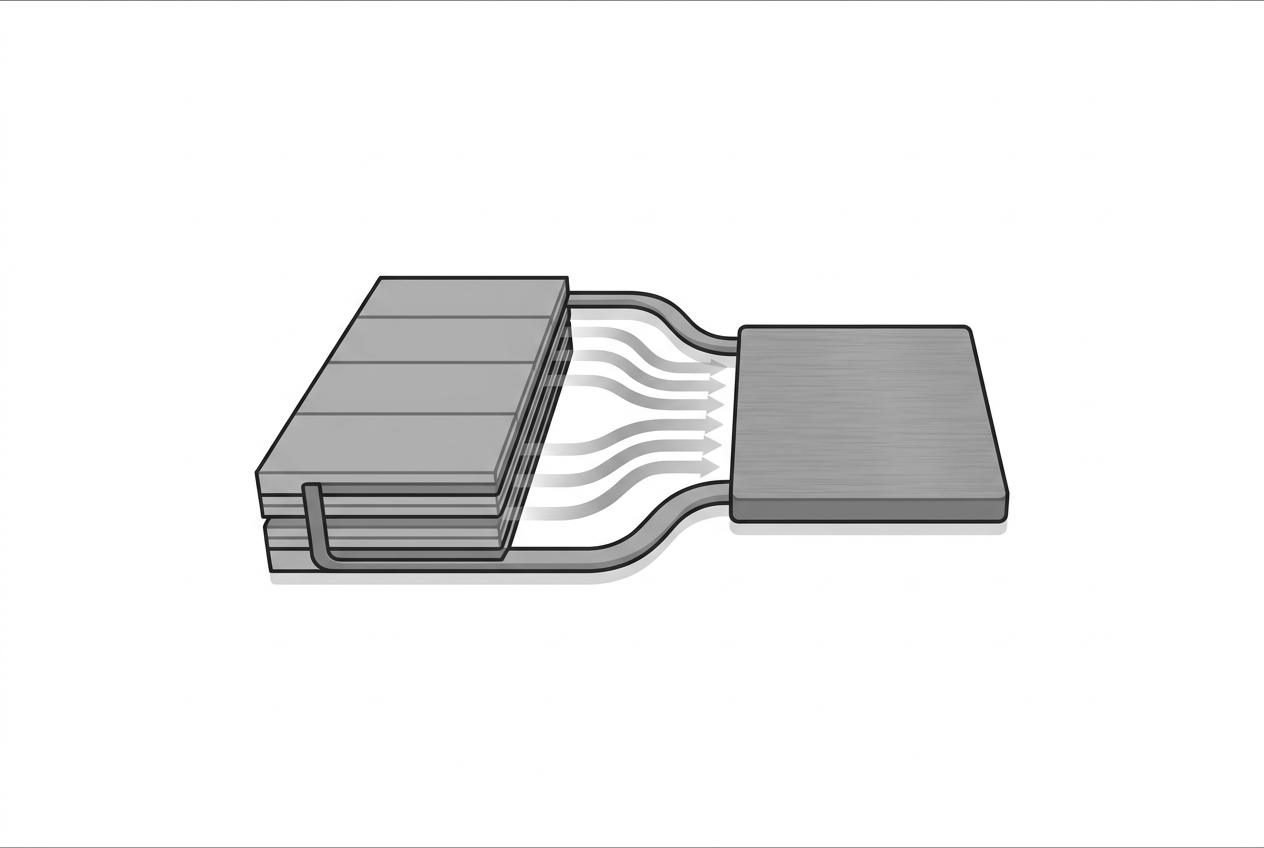
Here's how. Instead of spinning blades and heatsinks, the AeroBlade uses four embedded AirJet modules from Frore Systems, reportedly generating 2,000 Pascals of back pressure — around 124 miles per hour — and firing that air onto a copper base to blow away the boundary layer that causes throttling.
Frore claims each module produces ten times the back pressure of a normal laptop fan, and Lenovo says the system uses the same power as a traditional fan, with debris and water resistance thrown in. The magnesium-aluminum body has no fan grille to clog. It's genuinely clever engineering.
Now look up. Hanging over the AeroBlade, and over practically every other product at Messe Berlin, was one two-letter word: AI.
More than 1,800 exhibitors. Samsung and Qualcomm pushing on-device AI processors. Sonos with an "AI-driven audio operating system." A gfu spokesperson declaring at the closing briefing that "AI has moved from the cloud into the device in the hands of consumers."
Even the AeroBlade got the treatment. Per Android Authority, Lenovo says the fanless cooling "enables sustained AI performance."
But strip the AI sticker off and ask a simpler question: what actually got better here?
The answer is cooling. A solid-state thermal system that lets Lenovo drop the fan and shave a laptop down to 830 grams is a physical win — a mechanical-engineering win — that has nothing to do with neural networks.
Run the same test on Lenovo's other big IFA launch, the IdeaPad Vibe, and the pattern holds.
The Vibe is a colorful budget machine — Dreamy Violet, Spicy Gold, Zen Green — starting at $699.99. At that price it lands directly on top of Apple's MacBook Neo and Dell's XPS 13, which per PCMag also start at $699.
The marketing line is "enough RAM to make AI buffs drool." Per Lenovo and PCMag, the AMD Ryzen AI 400 version goes up to 32GB, and it's upgradable; the Snapdragon X version tops out at 24GB.
But the RAM story isn't an AI story. It's a memory-cost story.
As PCMag puts it plainly: "With memory costs up, budget laptops are in." The base Vibe ships with just 8GB and a 256GB SSD — not because 8GB is generous, but because it's "becoming a trend in the laptop market in response to rising memory costs."
This is where the memory squeeze we flagged in late August actually landed on the shelf. The MacBook Neo starts at 8GB. The XPS 13 starts at 8GB. The Vibe matches them because it has to.
So the "RAM-packed" pitch cuts two ways. The headroom to reach 32GB is real and useful — but it's a selling point only because memory got expensive, and the base configs got thinner to protect the $699 sticker. That's economics and supply chains, not artificial intelligence.
The same reframe works on the show's mini-PC standout. Acemagic's F9A "AI Mini Workstation" packs up to 192GB of unified memory, a 16-core Zen 5 chip, and Radeon 8065S graphics.
That's a genuinely impressive spec — a 192GB unified-memory pool in a small box is a real hardware achievement. The "AI" in the name is the garnish. The memory is the meal.
Notice the through-line. The AeroBlade earns its place on cooling. The Vibe earns its place on price and RAM headroom. The Acemagic earns its place on memory capacity.
Every one of them is sold as AI. None of them is exciting because of AI.
Every one of them is sold as AI. None of them is exciting because of AI.
Which brings us to the number that explains why the marketing has to work this hard.
According to a single opinion blog citing an unverified leak, the Snapdragon 8 Gen 6 Pro reportedly leaked with an AnTuTu score of 4.83 million, and its predecessor, the Gen 5, reportedly maxed out at 4.6 million. That's barely a 5% jump.
Five years ago, a new Snapdragon would crush the old one by 20 to 30%. Now the industry is "arguing over single-digit percentages." As one analysis put it, the leak "feels less like a revolution and more like a shrug."
That's the tell. The silicon has stalled. Even with rumored 2nm processes, the raw-compute gains that used to sell a new chip have, per that analysis, flattened out.
And here's the connection the show floor doesn't want you to make: when the horsepower stops climbing, you need a new story to justify the "premium" label. That story is AI.
The 5% leak and the AI-branded everything are the same phenomenon viewed from two ends. Marketing is accelerating precisely because the silicon isn't. When you can't sell a 25% speed bump, you sell a neural processing unit and a promise about local generative models.
None of this means on-device AI is fake. It means the "AI PC" label, right now, is a marketing category, not a performance guarantee — and the chips underneath are improving at a crawl.
So here's the buy guidance.
Pay for the physical wins. A fanless laptop at 830 grams, if the AeroBlade ships anything like its demo, is a real reason to spend money. Thermal engineering you can feel in your hands is worth it.
Pay for the RAM. On the IdeaPad Vibe, the base 8GB is, in my view, a trap for anyone doing more than email and YouTube — but 8GB genuinely suffices for web browsing and light office tasks, which is exactly the student-and-first-laptop crowd this machine targets. If you push it harder than that, buy the AMD version and the upgrade path. On the Acemagic, the 192GB pool is the entire point.
Treat every "AI" claim as free garnish. If a feature helps you, great — but don't pay a premium for the acronym, and don't assume the new chip is meaningfully faster than last year's. The 5% leak says it probably isn't.
And wait on the concepts. The AeroBlade has no price, no battery figure, and no release date, and Lenovo won't even commit to that chip class shipping. Project Swan, the 14-to-17-inch rollable, is a lovely idea burdened by moving parts and open questions about durability and battery life.
Concepts are promises. Cooling, memory, and price are products.
Buy the products.