
Under 0.15mm. That's the crease depth Apple is reportedly promising on its first foldable — the seam down the middle of the 7.8-inch inner screen that the company would prefer you not think about at all, quantified to a fraction of a millimeter, because the whole pitch depends on you not seeing it.
Hold that number. It's the entire argument for buying a first-generation foldable, and it's also a spec you cannot verify from a keynote stage.
Last week we were parsing a leaked lineup and a $2,200 rumor. This week the keynote is real, the device is real, and — the part nobody scripted eighteen months ago — the man selling it is on his first day in the job.
Picture the room on September 9, or September 10 if you're on Beijing time. John Ternus, about a week into being CEO of Apple, walks out to unveil the most fragile, most expensive, most manufacturing-hostile phone the company has ever attempted.
Ternus is a hardware lifer. He ran hardware engineering. He is soft-spoken, not a showman, and his first memo to staff was blunt about the stakes: "We have a huge launch next week that's going to be phenomenal."
Compare that to the last time an operations man took the stage cold. October 4, 2011: Tim Cook, six weeks in, according to the BBC opened with "this is my first product launch since being named CEO" and unveiled the iPhone 4S — same shell, faster chip, a new assistant named Siri.
The stock fell as much as five percent that day. The BBC called it "Tim Cook's dull debut." Ten days later the 4S had broken every Apple sales record that mattered.
That is the template Ternus is not following. Cook played it safe and won by boredom. Ternus is opening with the riskiest product Apple has ever shipped.
So let's do the buyer's math the applause won't.
You are paying a premium to join the test group that finds the failures. Every foldable's real question is the hinge — and hinges reveal themselves in months, not minutes.
The iPhone Ultra, per the leaks, folds open to a 7.8-inch inner display — roughly iPad mini territory — and closes to a 5.5-inch outer screen. Unfolded it's reportedly 4.5mm thick, which would reportedly make it the thinnest device Apple has ever built, slimmer than the iPad Pro.
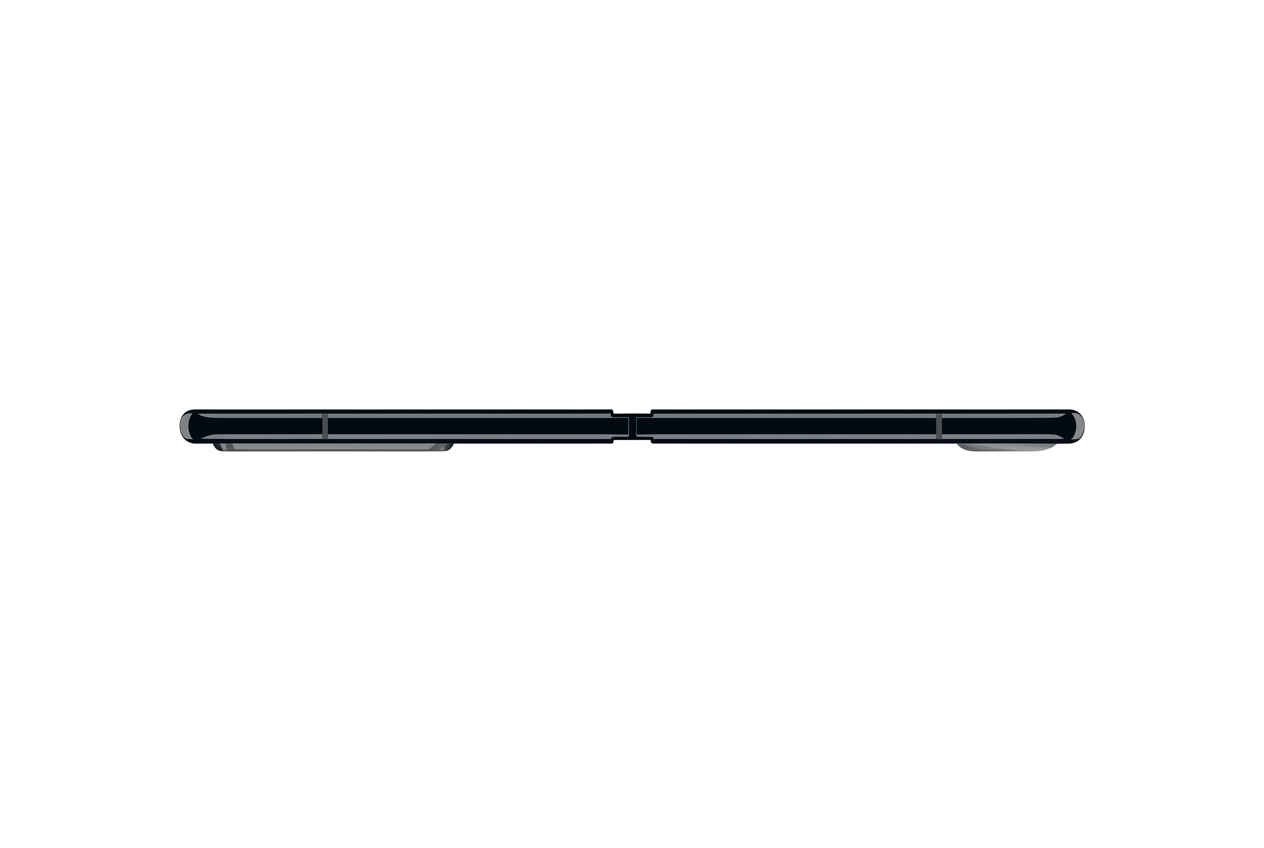
It reportedly runs an A20 Pro on TSMC's 2nm process, 12GB of RAM, a 24-megapixel under-display front camera. Impressive on paper. Now the subtractions.
There is reportedly no telephoto lens. You get 48-megapixel wide and ultra-wide, and that's it.
There is no Face ID. To save internal space, Apple reportedly drops the TrueDepth module entirely and moves to a power-button Touch ID, like the iPad. On the most expensive iPhone ever, you're stepping back a biometric generation.
The colors tell you how cautious this launch is. Reportedly two finishes: silver and dark blue, or space gray and silver depending on the leak. Either way, two timid options — the palette of a company hedging, not flexing.
And the price: Ming-Chi Kuo and Mark Gurman both reportedly peg it at $2,000 to $2,500.
Now the part that should actually settle the decision: you might not even be able to buy one.
The supply chain's own read is that if it ships in September, initial quantities and available regions will be "very limited." Kuo goes further — he expects an iPhone X-style rollout, with pre-orders not opening until the fourth quarter.
According to Hanyang Securities' assumption, initial shipments are modeled around 8 million units globally. For context, that's reportedly a rounding error against normal iPhone launch volumes. This is a trickle, by design.
Here's what a trickle-volume first-gen product means in plain terms: you are paying a premium to join the test group that finds the failures. Every foldable's real question is the hinge, and hinges reveal themselves in months, not minutes on a stage.
Which brings us to the device — Ternus is walking into a room Samsung already owns.
The Galaxy Z Fold 8 is reportedly on its eighth generation. Eight cycles of sanding down these exact compromises — crease, hinge, weight, pocketability.
And the most telling thing about the current reviews is that they're boring. One month-long review calls it "the best shape yet," reportedly praising a 5.5-inch cover screen perfect for one-handed use and a 201g body that "just slides in" to a pocket.
That review reads like a mature product because it is one. Nobody's holding their breath about whether the hinge survives the year. Samsung already paid that tuition, across eight generations, with early adopters who found the problems so today's buyers don't have to.
Apple is entering at generation one and charging generation-eight-plus money for the privilege. The 0.15mm crease may well be real and genuinely better than Samsung's. But "better crease, worse everything else, double the price, can't find one in stock" is not a buy recommendation.
Counterpoint reportedly projects the iPhone Ultra could take 25% of the foldable market in 2026, pushing Samsung's share from 40% down to 32%. That may happen. Brand power and pent-up demand are real. But market share is Apple's win, not yours — capturing a quarter of a niche says nothing about whether version one survives on your desk.
So don't buy it at launch. Not because it won't be impressive on stage — it will — but because a first-generation foldable in trickle volumes is a beta you're paying $2,500 to join. Let the early adopters map the hinge failures. Wait for the iPhone Ultra 2, when the crease is proven, the volumes are real, and the price has room to breathe.
That's the buyer's read. Now the more interesting one — what Ternus's choice signals.
Notice what he did not lead with. Apple was also expected to broaden its revamped Siri at this event, its chance to stand next to ChatGPT and Claude. That's a real story, and it's not this one.
But it's conspicuous that the debut Apple chose to headline is a piece of hardware, not an AI. A hardware engineer opened his reign with the industry's hardest manufacturing problem — not a safe chip bump, not an AI keynote, but a folding screen with a liquid-metal hinge and a sub-millimeter crease.
That is a statement of priorities. Cook, the supply-chain man, opened dull and let the numbers roar. Ternus, the hardware man, opened with ambition and let the risk sit in your hands.
For Apple as a company, that swing back toward hardware ambition is the real news out of September. For you as a buyer, ambition is the risk — and version one is where the risk lives.
Ternus made his bet. You don't have to make it with him.