Two things happened at MWC Shanghai that contradict each other, and the contradiction is the whole story.
vivo brought a foldable with a 200MP Zeiss main camera, a 7000mAh battery, and a chip it co-developed with MediaTek two years before launch. None of that stopped the crowd.
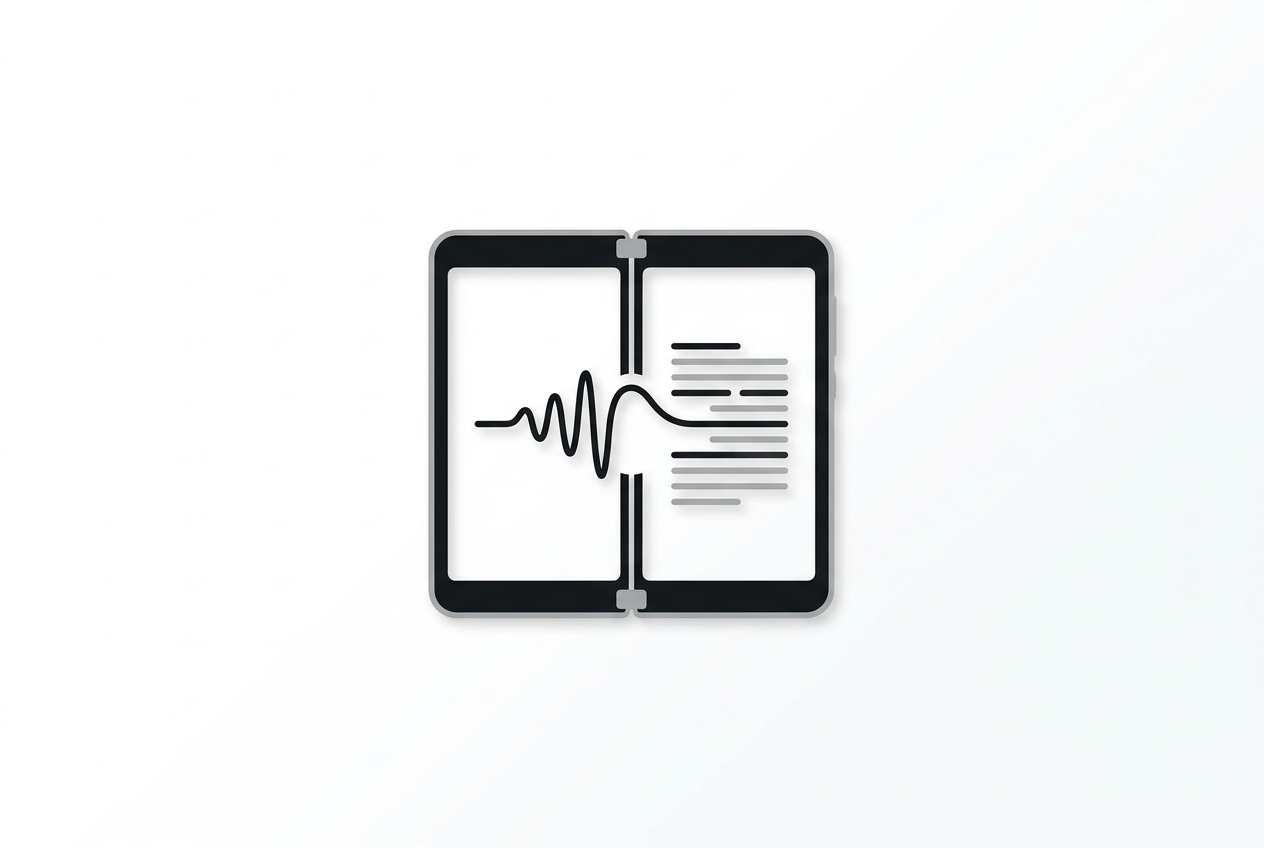
What stopped the crowd was the phone transcribing a live meeting with its radios switched off.
The most hyped foldable feature of the show wasn't thinner, wasn't a bigger sensor, wasn't more battery. It was software doing something useful while disconnected from everything.
That's the tell. The most hyped foldable feature of the show wasn't thinner, wasn't a bigger sensor, wasn't more battery. It was software doing something useful while disconnected from everything.
Which forces the real question for anyone thinking about a foldable in 2026: has AI actually made these big-screen phones more useful, or has a maturing category simply found a fresh thing to demo?
The honest answer is both, and the split runs right down the middle of the three companies making the biggest noise.
Start with vivo, because vivo is making the most aggressive version of the claim. Its framing at the show was explicit: stop competing on who shaves off another 0.2mm, start competing on whether the big screen is genuinely better to work on.
The X Fold6's headline feature is an AI meeting assistant that runs entirely on-device. Using an on-device speech engine and the phone's NPU and CPU together, it does real-time speech-to-text with no network at all.
It reportedly separates speakers as they talk. When the meeting ends, it hands you finished minutes.
Strip away the "AI+折叠屏" marketing language and ask what that actually saves you. If you interview people or sit in meetings all day, it kills the worst part of the job: scrubbing back through a recording to reconstruct who said what.
That's not a demo. That's an hour of your week, every week.
The second vivo feature is quieter and arguably better. Using something it calls Swift KV, you can query more than twenty files on your phone with a single spoken sentence — "summarize yesterday's meeting materials," "find last year's travel budget" — and it retrieves and summarizes for you.
Both share a trait that separates real utility from keynote theater: they solve a problem you already have, in a workflow you already run. You don't have to invent a reason to use them.
The rest of vivo's pitch is the OriginOS 6 Fold "atomic workspace," which runs multiple apps in serial or parallel, lets you drag files and copy content between windows, and behaves, in vivo's own framing, more like a small PC than a blown-up phone. On the show floor it ran four foreground apps at once with smooth drag-and-drop.
That matters only if you actually multitask on a phone. If you don't, it's a spec.
Now Motorola, which did something smaller and, for a specific person, more valuable.
The Razr Fold became the first Motorola phone to support AirDrop-style sharing through Android's Quick Share. Android Authority confirmed it working phone-to-MacBook.
Understand what this replaces. Until now, an Android user moving a file to an Apple device had a menu of bad options: upload to Drive, send it over WhatsApp, compress it through a messaging app, email it like it's 2014, or grab a cable and hate yourself a little.
The Razr Fold quietly deletes that entire tax. You share locally, the Mac or iPhone or iPad receives it over AirDrop, done.
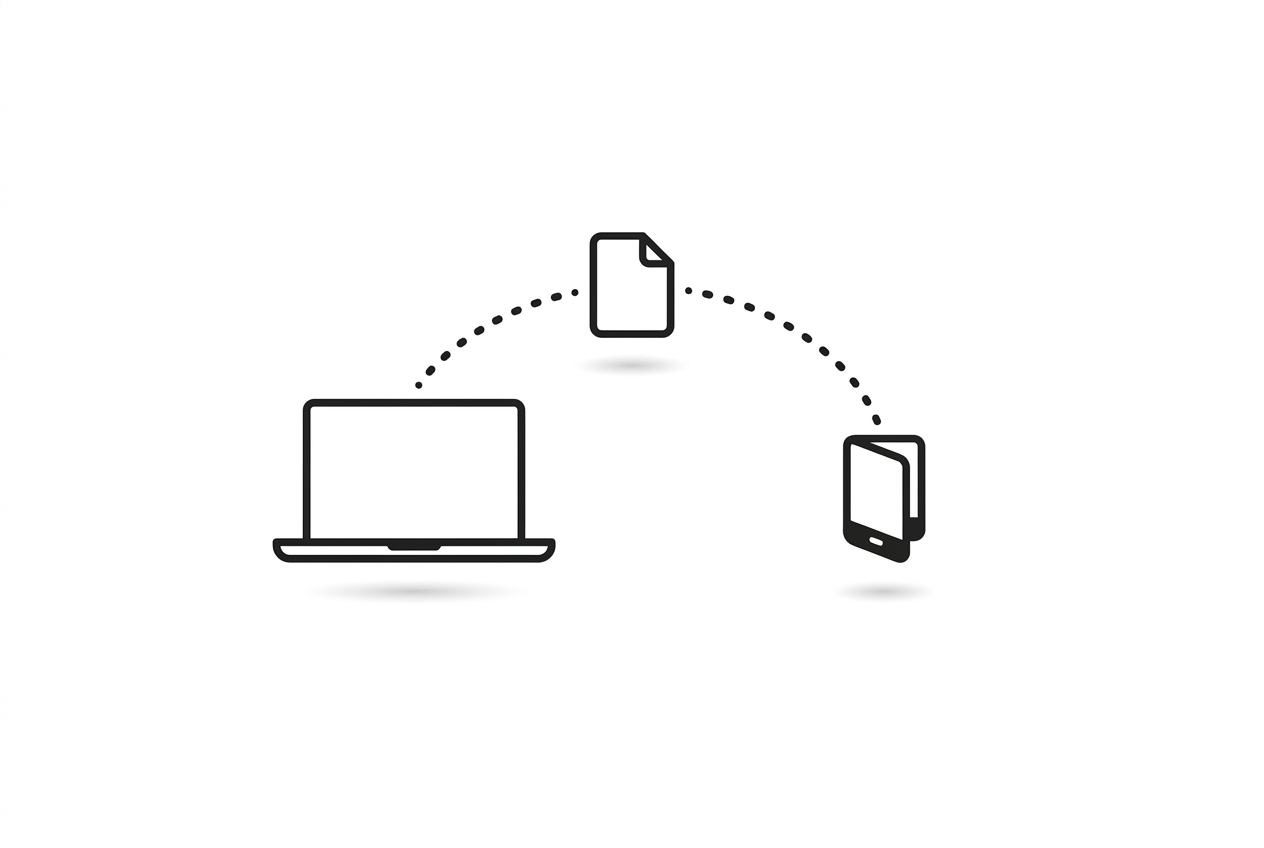
Here's why it lands harder on a foldable than on a slab. A book-style foldable gets used as a mini-tablet — editing photos, reviewing documents, handling work files. Those are exactly the files you're forever trying to shove onto a MacBook.
The Razr Fold is a $2,799 phone that CyberShack still called a flagship experience, with a 50MP Sony main sensor, 80W charging, and seven years of support. At that price it needs reasons to be your daily driver, not just an impressive object. Cross-ecosystem file sharing is one of the few features that earns its keep on the first day you own it.
Note that this isn't exotic. Google, Samsung, OnePlus, Oppo, Honor, vivo, and Xiaomi already have supported models. Motorola was simply late, and the Razr Fold is where it caught up.
Then there's Samsung, and Samsung is where the "specs are dead" story quietly falls apart.
The Galaxy Z Fold's oldest, loudest complaint has always been the cover screen — a narrow, awkward strip that made the phone feel like a compromise every time it was closed. Years of that.
Samsung's answer, per the leaks, is the Galaxy Z Fold 8 Wide. Tipster Ice Universe shared a render comparing it to the Galaxy S26 Ultra, and the Fold 8's cover display comes out only slightly wider than Samsung's ordinary slab flagship.
That's a genuine fix. A Fold that doesn't feel like a penalty when folded is something users have wanted for a long time, and Samsung is teasing it so hard — canvas morphing into an "8," a pizza slice as "a whole new slice," everyday objects reshaped wider and shorter — that the messaging is basically a confession.
But look at what the fix is. It's a proportion. It's a chassis. It's hardware.
While vivo answers "why is my foldable better?" with transcription and file search, Samsung answers its biggest gripe with a shape. Both are progress. Only one is the software pivot everyone keeps announcing.
That's the real state of the "AI era": genuine, but unevenly distributed. vivo is furthest into software as the reason to buy. Motorola picked one high-value software fix and shipped it. Samsung's marquee change is still something you measure with calipers.
So here's the buyer test, and it's simpler than any keynote.
Judge a 2026 foldable by the two or three features you would actually use in a normal week — not the ones that got applause.
If you're a document-and-meeting person, the AI is real value. Offline transcription that separates speakers and writes minutes, one-sentence search across your files, a workspace that drags content between apps, painless sharing to the Mac you already own — those compound, every workday.
If you mostly want a big bright screen for video and reading, be honest with yourself. You are paying a foldable premium — the price premium the form factor still commands, in CyberShack's words — for demos you will open once and forget.
Foldable AI is the rare upgrade in the opposite direction: you can watch it work, if you'll actually use it.
That "if" is the entire decision. The AI era of foldables isn't vapor. It's just narrowly addressed to one buyer.
Find out whether that buyer is you before you spend that kind of money finding out it isn't.