
Here is the contradiction most people are going to miss: the same month Apple leaked its most ambitious hardware roadmap since Apple Silicon — four new iPad Pros, a redesigned entry MacBook Pro, the M7, a MacBook Ultra, OLED spreading across the lineup, all timed to the iPhone's 20th anniversary — it quietly raised prices on the machines already sitting in stores by as much as 29 percent.
You are being invited to a celebration. Read the receipt first.
The 512GB MacBook Air went from $1,099 to $1,299. The 1TB MacBook Pro jumped from $1,699 to $1,999. The 128GB iPad Air climbed from $599 to $749. That's a 17 to 29 percent hike on devices that gained nothing — same chip, same screen, same everything.
The iPhone was left completely untouched.
Last week we asked whether the RAM shortage would kill the rumored $599 MacBook Neo — whether Apple could hold an entry price against a global memory squeeze. This week we have the answer, and it's ugly: Apple didn't just fail to protect the low end, it raised prices across almost the entire Mac and iPad lineup while leaving the iPhone alone.
That single exception tells you everything about what this is.
Apple protected the iPhone because the iPhone is the on-ramp to the ecosystem, and it can't risk price-sensitive buyers defecting to Android. Macs and iPads got hit because Apple is betting those users are already locked in — deep enough into the software, the accessories, the muscle memory that they'll swallow a $200 increase rather than leave.
This is not innovation pricing. It's captivity pricing.
This is not innovation pricing. It's captivity pricing. The iPhone was left untouched, and that single exception tells you everything about what this is.
Here's the mechanism behind it, and it's worth understanding because it reframes the whole "mega-year" story. AI datacenter buildout is consuming an enormous share of the world's DRAM and NAND supply. Memory that used to flow to consumer devices is being bid away by server farms.
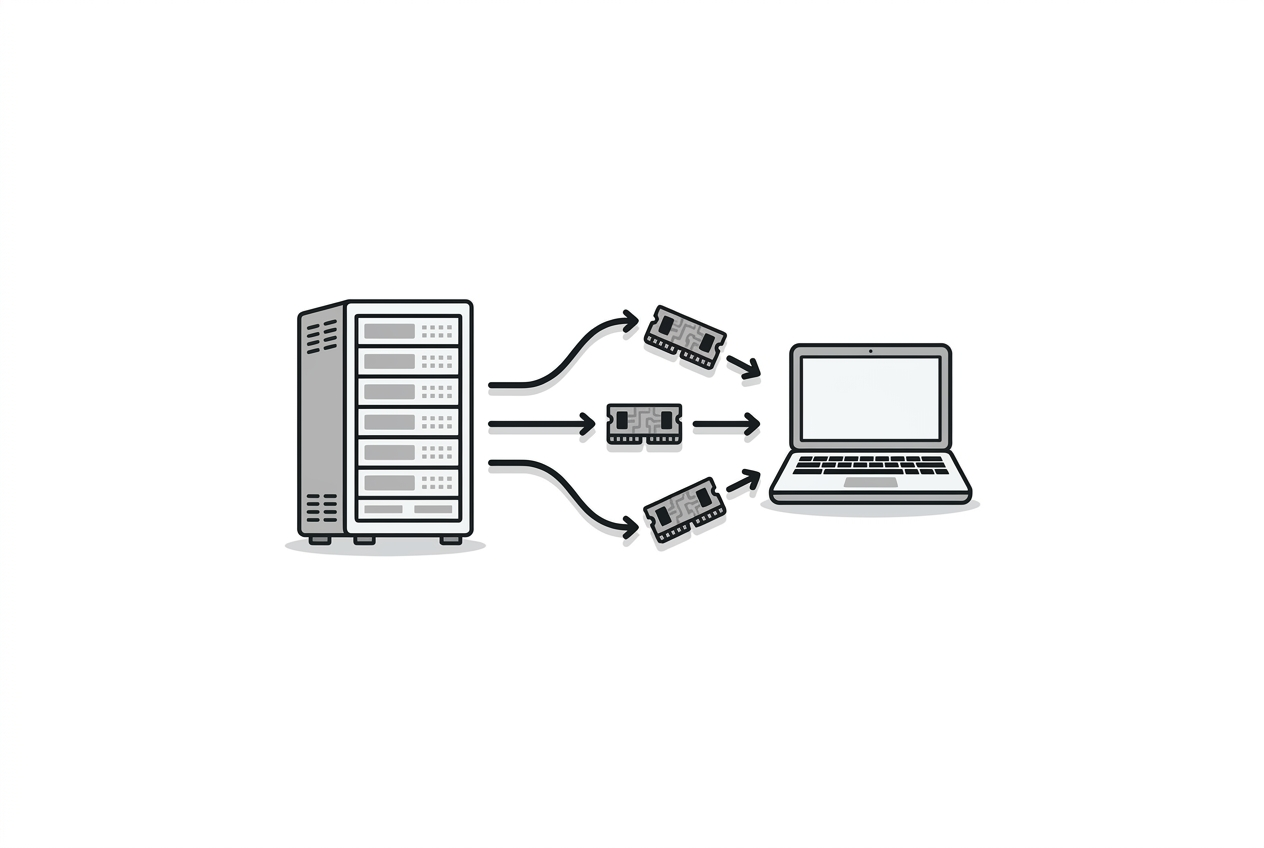
Counterpoint's Neil Shah put a fuse on it. Apple, he says, held its prices for at least two quarters specifically to avoid passing costs to customers — but "its own cost-absorption capacity has reached its limit," and it can no longer carry the burden alone.
Then the part that matters for anyone thinking about a 2026 purchase: Shah expects this supply-demand crunch to persist for "at least the next two years." This isn't a blip you wait out over a weekend.
Now watch how the "renaissance" roadmap starts to look defensive once you know that.
Apple is reportedly asking the Trump administration to approve Chinese memory components — a real break from a company that has kept its supply chain locked to South Korea, Taiwan, and the US. You don't go begging Washington to bless Chinese RAM because you're feeling ambitious. You do it because you're cornered on cost.
And Apple is reportedly preparing to skip the M6 Pro and M6 Max chips entirely.
The optimistic spin is that Apple is "focusing resources on larger architectural improvements" for the AI-centric M7. The realistic read is that maintaining the full standard/Pro/Max/Ultra cadence across every generation costs money and silicon capacity Apple would rather concentrate — during exactly the window when components are scarce and expensive.
Even the flashy new MacBook Ultra is rumored to ship on M5 Pro and M5 Max silicon, not the next generation. The halo device runs last year's high-end chips. That's not a company sprinting ahead; it's a company managing scarcity while dressing it up as strategy.
Layer the leadership handover on top and the defensive posture sharpens further. Tim Cook is moving to executive chairman, John Ternus is stepping into CEO, and Johny Srouji is being elevated to a new Chief Hardware Officer role that reunites chip and hardware teams Apple split back in 2012.
That's a chip-first, continuity-first reorganization — a company doubling down on silicon integration precisely as silicon and memory economics turn against it. The 2027 mega-year isn't just an anniversary. It's the first hardware slate the new regime has to sell, which is a strong incentive to frame a cost crisis as a creative rebirth.
None of this means the 2027 products are fake. The genuinely new stuff is real, and it's the reason you should wait, not buy.
OLED is coming to the MacBook Pro and iPad Pro — and per TrendForce, not just OLED but panels reaching roughly 95 percent of the BT.2020 color gamut, a meaningful jump beyond today's P3 displays. That's a visible, on-the-glass upgrade you'll actually see every time you open the lid.
The entry MacBook Pro is being redesigned to borrow the higher-end design language, paired with the M7 built for on-device AI. Redesigned chassis, new screen technology, new chip generation — that is what an upgrade cycle is supposed to look like.
Now compare it to what you'd be paying 17 to 29 percent more for today: the same design, an older chip, an LCD or mini-LED panel, and more storage that costs more only because RAM and NAND are expensive right now.
That's the trap. Buy in the price-hike window and you pay an inflated price for internal specs you can't see, on a machine that gets superseded by a genuinely redesigned model in a matter of months. Worst of both timelines — top-of-cycle price, bottom-of-cycle product.
Shah names the one exception, and it's the only one that matters: buyers "at the replacement point" who genuinely can't wait won't downgrade to a cheaper config just to save money. If your Mac or iPad is actually dying — not slow, dying — you buy what you need and move on.
Everyone else should hold.
There's a market-structure wrinkle worth flagging too, because it should make you skeptical of any "the price hikes are working" narrative you see in the coming quarters. Apple no longer reports unit sales, only revenue.
That means higher prices can prop up revenue even while fewer devices sell — a mix shift toward premium configs papering over softer volume. Steady revenue won't tell you demand is healthy. It'll only tell you the survivors paid more.
Shah actually predicts this: the market tilting toward the high end as buyers chase value inside their budgets, which "optimizes Apple's product mix" and offsets shipment declines. Read that in plain English — Apple can make more per customer while selling to fewer of them, and call it strength.
So here's the buyer's verdict, clean and specific.
If you were eyeing a MacBook Air, MacBook Pro, or iPad in 2026, and your current device still works, wait. The memory crunch isn't easing for two years, so there's no cheaper window coming — but the products themselves get materially better in early 2027 with OLED, the M7, and a redesigned entry Pro.
Paying up to 29 percent more today for a soon-to-be-old design is the single worst move available. Hold your machine through 2026 and let the mega-year come to you.
And when it arrives, judge it by what's on the glass and in the chip — not by the anniversary. A celebration you're being asked to fund with a 29 percent surcharge isn't a celebration. It's a bill.