Toyota Finance is issuing its second ¥1 billion security token bond, and this time not a single brokerage touches it. Investors apply through the Toyota Wallet app, no securities account required, no TS CUBIC CARD, at 1.72% for a one-year term.
That detail — a carmaker's finance arm cutting the securities firms out of its own bond distribution — tells you more about where tokenization is heading than any of the week's AUM headlines. And there were plenty of headlines.
The tokenized U.S. Treasury market added roughly $65 million in market cap over seven days, credited to Securitize, J.P. Morgan's Kinexys, and Franklin Templeton's FOBXX. Ondo's tokenized stocks crossed $1 billion. BUIDL added $124.9 million in a month — by itself roughly equal to the next four yield-bearing tokens combined.
Impressive numbers. They also tell you almost nothing about who actually owns the rails underneath.
Last issue, this thread tracked the Open USD tokenization push and the early institutional plumbing forming around it. This week the story extends in two directions at once: into Asia, and into the first concrete regulatory-status milestone the space has produced.
Here is the argument. The tokenization race is quietly bifurcating into two winning positions — owning the regulated recordkeeping layer, and owning the distribution channel. Everything in between is commoditizing fast.
The tokenization race is quietly bifurcating into two winning positions — owning the regulated recordkeeping layer, and owning the distribution channel. Everything in between is commoditizing fast.
Injective just claimed the first pole. Injective Institutional Services registered with the SEC as a transfer agent, adding a regulated ownership-recordkeeping function to its tokenized-securities infrastructure.
The practical claim: the network can keep qualifying ownership records on-chain, updating them alongside settlement while preserving the required transfer-agent functions, as permitted by SEC staff.
That is the compliance gap institutions keep citing. Many can't hold a tokenized security if the official ownership record lives somewhere unregulated. A registered transfer agent is the entity legally responsible for that record.
Two caveats worth stating plainly. Injective's framing as the "first Layer 1 to combine RWA infrastructure and regulatory readiness" is a company characterization, not a separate SEC determination. And registration is not adoption — it establishes the rail, not the traffic on it.
But the strategic logic is clean. Recordkeeping is a legally protected chokepoint. Once you're the transfer agent, every issuer using your rail depends on you for the one function they cannot self-provide.
Now look at Toyota from the opposite end. Toyota Finance isn't chasing recordkeeping — BOOSTRY supplies its ledger. It's chasing distribution.
The March 2025 debut used traditional securities firms. Strong demand convinced the company to restructure the second issuance as a direct offering, routing applications, investor relations, and benefit administration through one owned surface: Toyota Wallet.
The reasoning Toyota gave is telling. Direct distribution enables tighter coordination between application processing, investor relations, and benefits — and eliminates the intermediary stages a conventional brokerage requires.
That is the distribution bet in its purest form. Toyota owns the customer, so it removes the middlemen who used to stand between its bond and its buyers. The QUICPay credits, the Fuji Speedway passes, the Lexus and GR test drives are all glue keeping the investor inside Toyota's ecosystem.
Injective and Toyota look nothing alike. But they're making the same wager from opposite ends: the durable moats are recordkeeping and distribution, not total value locked.
Which brings us to the counterexample — the chain that owns neither.
Robinhood Chain had a great August by the headline metric. TVL surged more than 45%, topping $540 million, a record high. Its stablecoin market cap grew over 22% to about $640 million.
And yet the thing it was built for is evaporating. Tokenized RWAs, once roughly one-third of the chain's TVL in July, have collapsed to 6%.
Read those two facts together. The chain is growing while its reason for existing shrinks. Capital is arriving for stablecoin and DeFi activity, not for the RWA use case that was the pitch.
This is what commoditization looks like from the inside. A chain that merely hosts RWAs — that owns neither the regulated record nor the distribution channel — is a venue tenants can leave the moment a better-integrated rail appears. Nothing anchors the assets there.
Hosting is not a moat. It's a substrate, and substrates get swapped.
Contrast that with Shinhan Asset Management, which spent the week assembling the exact capabilities Robinhood Chain lacks.
Shinhan signed a four-party MOU with the Solana Foundation, tokenization platform Etherfuse, and on-chain liquidity provider Orca to run a proof of concept for a won-denominated tokenized fund — issuance through distribution, end to end.
The structure: overseas institutional investors buy a won-denominated ultra-short-term bond fund managed by Shinhan and receive tokens representing it. The stated model is BUIDL, rebuilt for won-based assets.
Note who does what. Etherfuse handles compliant issuance. Orca handles on-chain liquidity. Solana is the substrate. Shinhan owns the fund, the investor relationship, and the intent to control the full pipe.
The pilot's real work is regulatory scaffolding: KYC/AML compliant across jurisdictions, adherence to Korea's Foreign Exchange Transactions Act, and on-chain liquidity design. This is not a demo. It's a dress rehearsal.
CEO Lee Seok-won said the goal is to secure "verified capabilities that can be put into operation immediately once the regulatory regime takes effect." Korea's security token offering framework is the thing being waited on.
That timing is the whole point. Shinhan is building issuance-plus-distribution capability ahead of the STO regime — assembling the two winning positions before the rules that make them valuable arrive.
Caveats apply here too. The MOU is non-binding, confirms only intent to cooperate, and commits no one to launching a product. The proof of concept is limited in scope.
But direction beats size at this stage. Shinhan is positioning to own both the issuance record and the investor channel for won-denominated tokenized funds — the compounding assets, not the rentable substrate.
Step back and the emerging structure has two poles and a hollow middle.
At one pole, the regulated recordkeeping layer — Injective's transfer-agent registration, and the tokenization and transfer-agent infrastructure Securitize reportedly provides, one of three firms cited for the $65 million Treasury print. Whoever holds the official record holds the issuers.
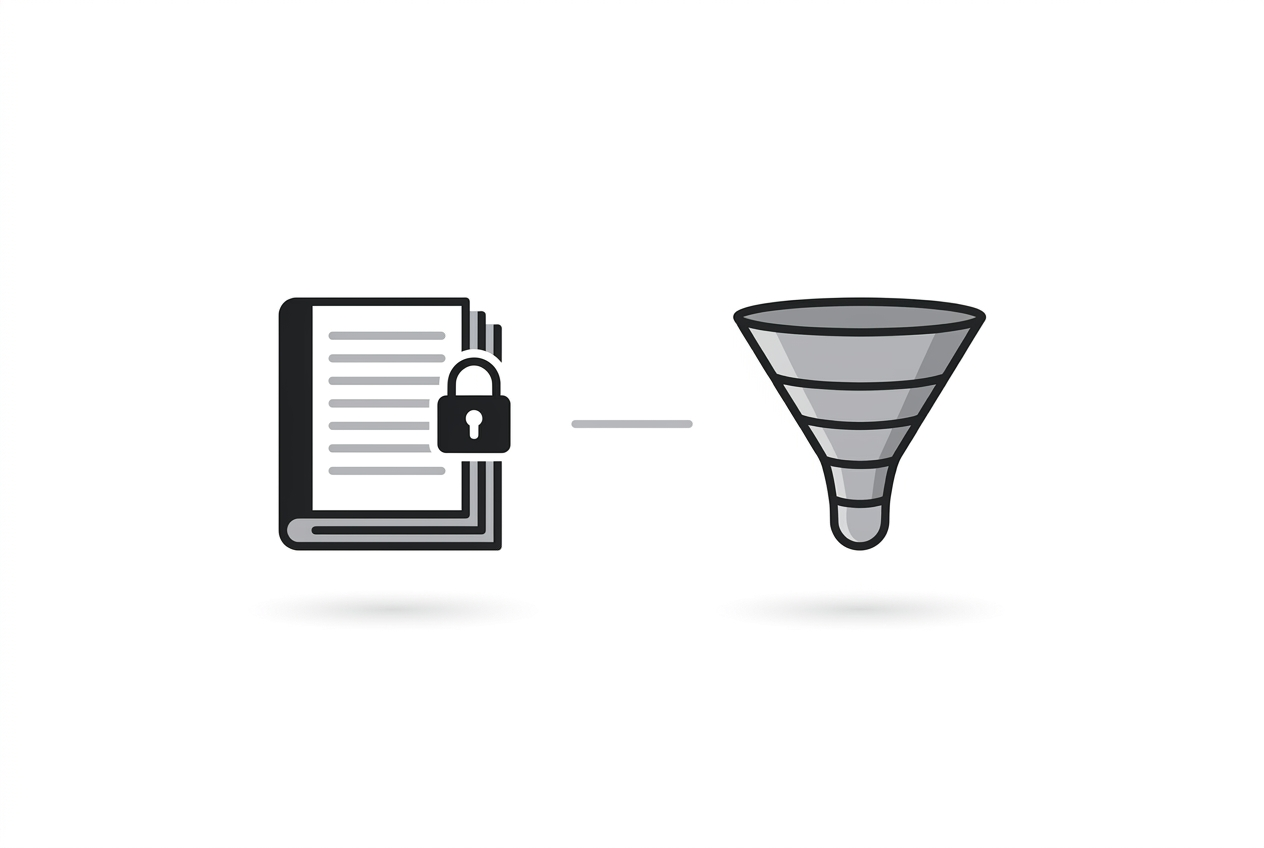
At the other, the distribution channel — Toyota Wallet cutting out brokerages, Shinhan wiring a direct pipe to overseas institutions. Whoever owns the buyer owns the flow.
In between sits everything commoditizing: raw block space, generic hosting, TVL that arrives for yield and leaves for better yield. Robinhood Chain's RWA collapse from a third to 6% is what that middle looks like when the assets figure out they have nowhere they're obligated to stay.
The AUM numbers will keep climbing, and they'll keep being cited as the scoreboard. BUIDL will add another nine figures. Someone will point at $65 million a week and extrapolate toward the $30 trillion Boston Consulting Group and others project by 2030.
Watch the rails instead. The question that decides who wins isn't how much is tokenized — it's who legally keeps the record and who owns the customer.
Everyone else is just renting.