The thing most readers get wrong is thinking the agentic-crypto story is still about payments. It stopped being about payments the week two announcements landed side by side.
Circle celebrated a plumbing milestone: 99.3% of agentic payments now run on USDC, across 900+ paid services in its marketplace. The picture there is an agent paying five cents to read a Polymarket feed — commerce, small-ticket, low-stakes.
Reportedly around the same time, Binance quietly wired those same autonomous agents into leveraged futures.
That is not an incremental step. It reportedly is the moment agentic crypto crossed from commerce into market structure.
Start with what Binance actually shipped. Binance Agent OS bundles its APIs, an agent-focused wallet hub, its x402 payment layer, and a skills marketplace under one roof, fronted by a Binance MCP Server built on the Model Context Protocol.
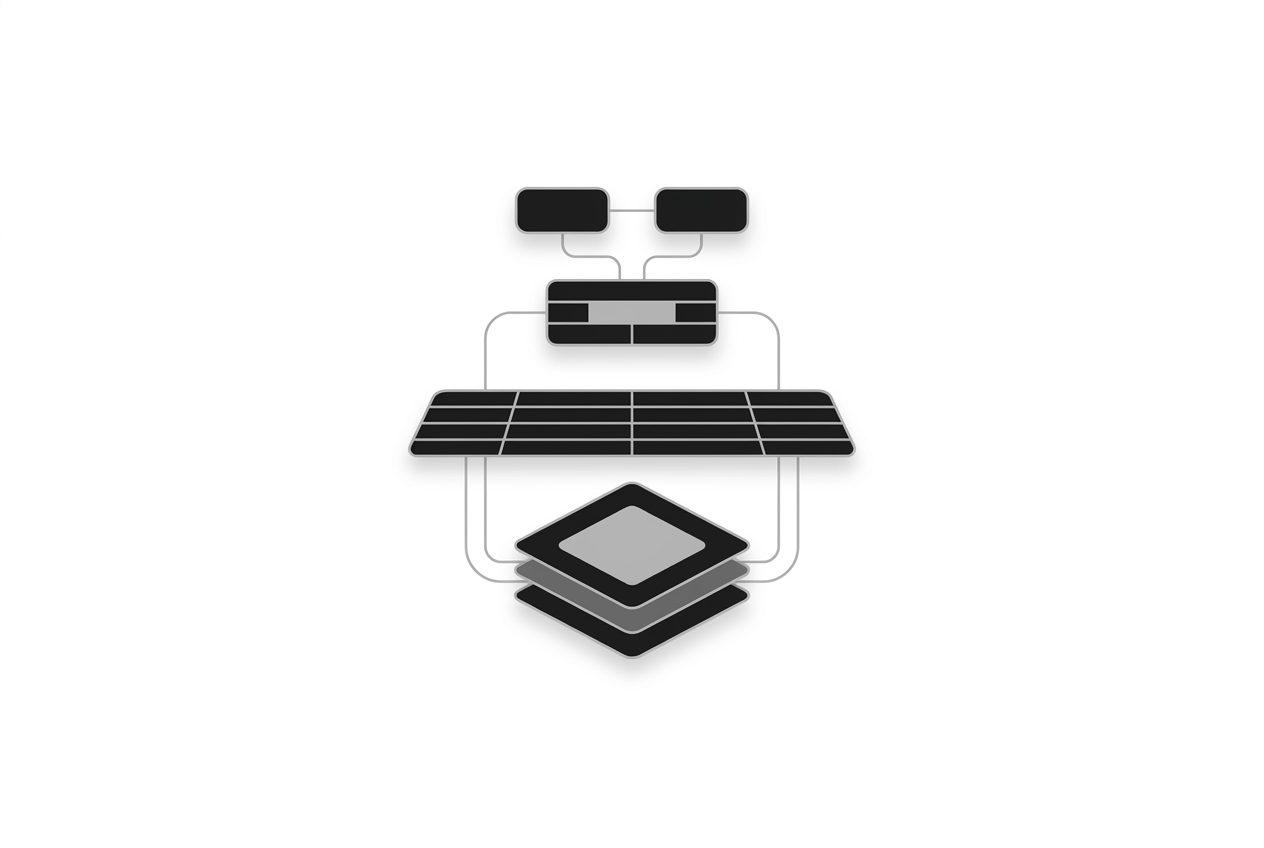
The MCP standard lets tools like ChatGPT, Claude, Codex, and VS Code plug into the exchange without users juggling API keys locally. Once linked and permissioned, an agent can pull live market data, check balances, and place trades across spot, margin, convert, and futures.
Read that list again. Futures. The same software abstraction that lets an agent buy a data feed for pennies now lets it open leveraged positions.
Binance's containment story is real, as far as it goes. Agents operate only through a dedicated "Agentic sub-account" isolated from a user's main holdings, and the integration grants no withdrawal scope — an agent cannot move funds to an external wallet.
And Binance "cautioned users to review each order and transfer before confirming." Use of the AI services is at the user's own risk; outputs shouldn't be relied on alone.
Notice what that structure does. It solves the theft problem and punts the trading problem. The isolated sub-account and the no-withdrawal scope mean a rogue or hijacked agent can't drain you to a stranger's wallet. Good. That risk is genuinely contained.
But "review each order before confirming" is a liability transfer dressed as a safety feature. The entire premise of an autonomous agent is that it acts without you clicking each time. If you're reviewing every order, you don't have an agent — you have a slow trading terminal.
So the disclaimer is doing quiet work. It relocates accountability from the exchange that opened the futures door to the user who walked through it.
Circle's framing does the same thing from the other direction. Its vision is that an agent should "move through the economy the way a browser moves through the web": discover what it needs, pay for it natively, move on. Explicitly no human in the loop — as one user described it, an agent hits an OpenAPI spec, gets a 402, pays $0.05 in USDC, gets its data, done.
That's a coherent model for buying a Polymarket read. It is a terrifying model for opening a futures position. "Discover → pay → move on" assumes the transaction is atomic and self-contained. A leveraged position is neither — it persists, it can reportedly be liquidated, and reportedly moves the book behind it.
Every vendor's safety story, examined closely, turns out to be a liability story. Binance walls off withdrawals and tells you to check each order. Circle frames the agent as a harmless browser roaming an open economy. Coinbase funds the builders — its Base accelerator is explicitly seeking pre-seed teams doing products that use stablecoins for "agent-driven shopping, trading, and payments," with $100,000 checks and the pitch that "agents will soon drive much, much more onchain activity than humans do."
Reportedly none of them address what happens when thousands of these agents behave the same way at the same time.
Here is where Pantera hands us the load-bearing quote, and doesn't realize it's a warning. Cosmo Jiang's thesis: "AI Agents will choose the fastest, cheapest, most frictionless rails."
For a payment, that's efficiency. For a trade, that's homogenization.
If every agent optimizes for the same thing — lowest latency, cheapest execution, most frictionless venue — then every agent converges on the same rails, the same venue, and, under similar market signals, the same side of the same leveraged position. The rational individual choice becomes a correlated crowd.
If every agent optimizes for the same thing, the rational individual choice becomes a correlated crowd piling onto the same side of the same leveraged position.
That's the risk none of the containment models touch. It isn't a rogue agent draining one wallet — Binance already fixed that. It's the microstructure risk of homogeneous, latency-competing agents piling into futures with no way to tell them apart.
Consider the failure mode concretely. Reportedly, ten thousand agents running similar logic on similar models could all "choose the cheapest rails" into the same futures book in the same few hundred milliseconds. There is no per-agent identity to rate-limit, no attribution to reconstruct who did what, and no circuit breaker keyed to non-human actors — because the exchange's controls assume a human is still the unit of action.
Circle's own treasury discussion hints at why the timing is dangerous. When USDC goes into a treasury platform, "one thing that quietly breaks: the daily close." Reconciliation has to become per-action, not per-day, because settlement never stops.
Agents on futures break the same thing in reverse. Human risk controls — position reviews, margin calls, the trader who steps away from the desk — assume a cadence. Autonomous agents don't have one. They run continuously, at machine speed, and the guardrails were written for people who sleep.
Now the gap that makes all of this unsupervisable. Binance reportedly shipped trading first, without addressing an agent identity layer.
There reportedly is no per-agent identity layer live at any of these venues. When an agent hits a margin book through the MCP Server, the exchange sees an authorized sub-account, not an actor. It reportedly cannot tell one agent from ten thousand running the same model. It reportedly cannot rate-limit a class of non-human traders because it has no way to define the class.
The rest of the ecosystem is racing ahead of that void. NEAR is building infrastructure for agents to hire one another. Chainalysis is a founding member of an agentic-commerce association. Circle's Arc mainnet launches September 16. Base's accelerator runs its cohort into November.
All of that assumes the identity and attribution layer will show up. It hasn't.
Which leaves one phrase carrying the entire load. "User's own risk."
That disclaimer is doing the job that a regulatory framework, an identity registry, and a non-human circuit breaker were supposed to do. It works fine for a five-cent data call. It is not a systemic safeguard for correlated leverage.
The rulebook was written for humans — one account, one actor, one liquidation you can attribute to a name. Agentic trading breaks that assumption at every layer, and the industry shipped the capability before it shipped the accountability.
Agents buying coffee was commerce. Agents running leverage, with no identity, no attribution, and no circuit breaker keyed to what they are, is market structure — going live now, on the honor system.