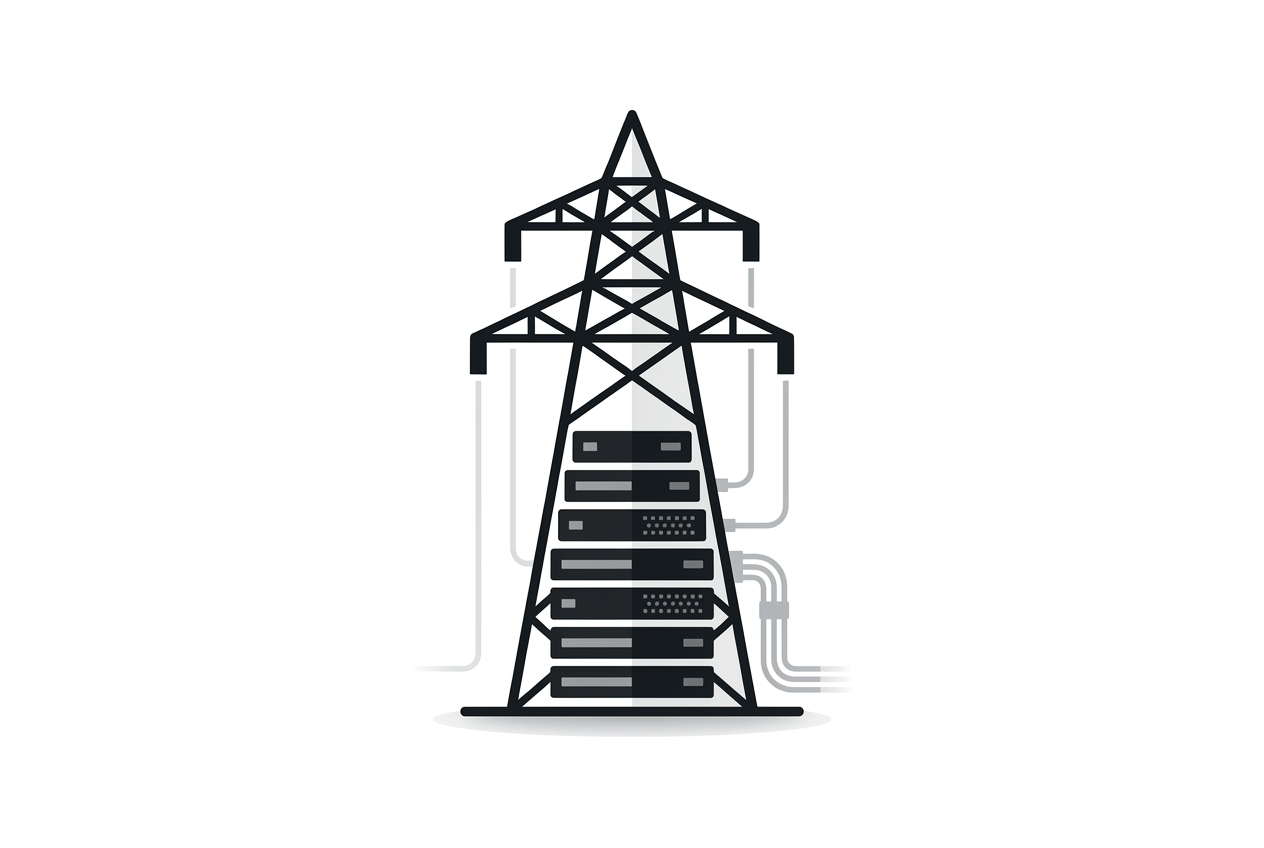
Here is the contradiction most readers miss. For nearly all of 2025, Ireland had an effective moratorium on new data-center grid connections in the Dublin area — the exact policy meant to arrest exactly this growth. And yet data-center electricity consumption rose 10 percent anyway, to 7,663 gigawatt hours, or 23 percent of everything the country metered.
A building freeze, it turns out, cannot freeze demand. It can only stop new arrivals. What is already connected keeps drawing more.
That single fact is the indictment of the whole "just say no" era of Irish energy policy, and it explains why the regulator eventually changed strategy — not from yes to no, but from no to a price of admission.
The regulator eventually changed strategy — not from yes to no, but from no to a price of admission.
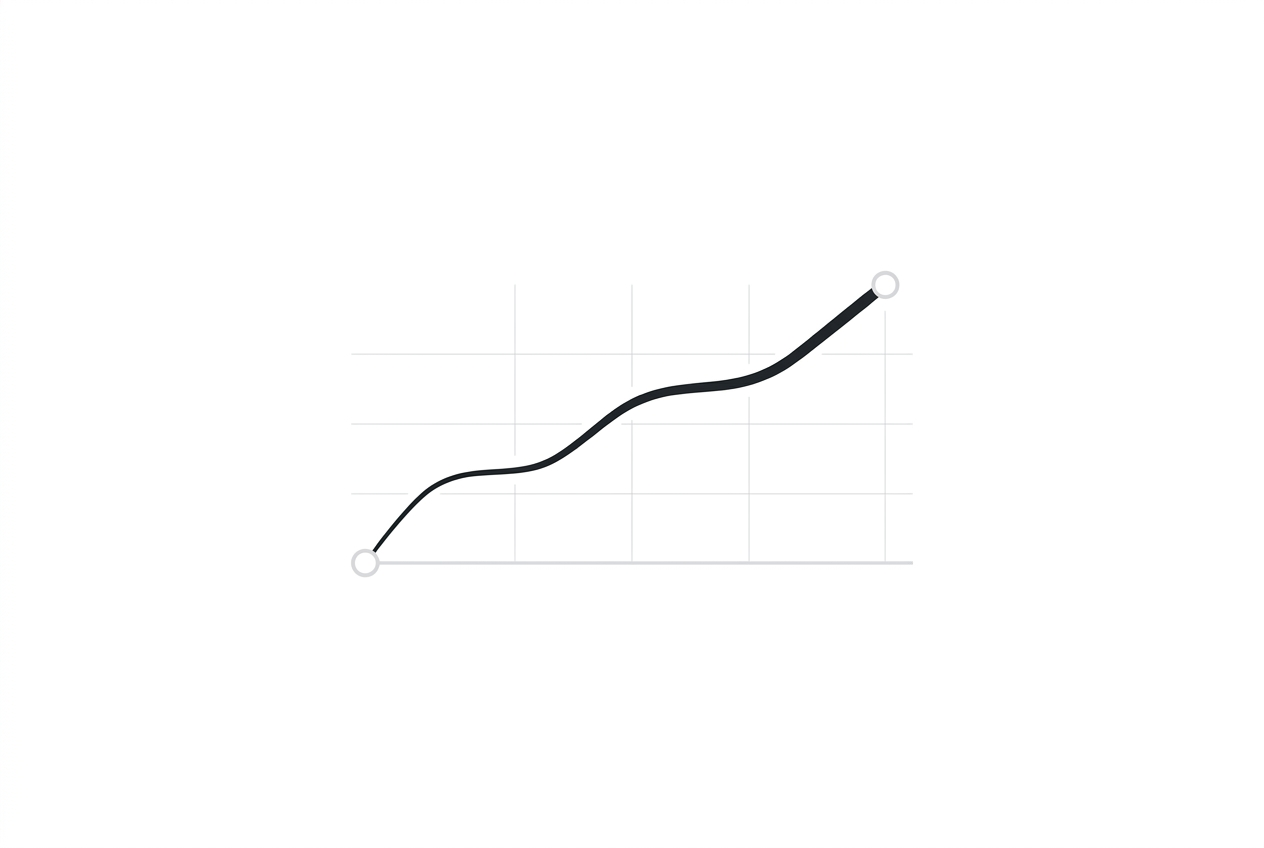
Start with the arithmetic that broke the political consensus. Data centers consumed 5 percent of Ireland's metered electricity in 2015. They hit 14 percent in 2021, 21 percent in 2023, 22 percent in 2024, and 23 percent in 2025.
In raw terms, consumption more than doubled between 2015 and 2019, then tripled again to 2025. Every single year, without exception, it climbed.
The 2025 number crosses a symbolic line. Data centers now burn more electricity than every urban household in Ireland combined — 23 percent against 18 percent — and more than twice the rural-household share of 9 percent.
Meanwhile all other customers, homes and businesses alike, grew their consumption by just 2 percent in the same year the data centers grew 10 percent. One category of user is eating the grid; everyone else is holding steady.
There are more than 80 of these facilities in a country of just over five million people, concentrated overwhelmingly around Dublin, where, per the CRU, roughly half the region's electricity already goes to data centers. That concentration is why the fight is a grid fight and not merely an emissions fight.
It is also why the backlash hardened into something structural. A study cited by the Irish Examiner found households carried an extra €715 million on their bills between 2015 and 2023, as data-center demand leaned on gas-fired generation and pushed up wholesale prices. The regulator has itself conceded it lacks the power to prioritize housing over data centers under a first-come, first-served connection queue — even in areas zoned for homes.
So the moratorium failed on its own terms, and the December 2025 reset was the admission of that failure. But look closely at what replaced it, because this is where a data center stops being a customer.
Under the new Commission for Regulation of Utilities regime, any operator seeking a grid connection above 10 megawatts must provide generation or battery capacity capable of matching the requested load. A 20-megawatt request now needs a credible 20-megawatt support plan behind it.
More than that: the operator must be able to feed power back into the national grid on demand, when grid managers call for support.
Read those requirements together and the redefinition is unmistakable. A large data center in Ireland is no longer a load that buys electricity. It is a grid asset that must bring its own generation, its own storage, and its own dispatchable export.
The compliance file reflects the shift. A connection application used to need a site plan and a load forecast. Now it needs documented support capacity, operating limits, dispatch rules, metering that proves the operator can inject power under stress, and fuel or storage contracts that stand behind the promise. A sustainability pledge is not evidence; a controllable, meterable megawatt is.
This is conscription dressed as connection policy. The state absorbed AI's power appetite for a decade, watched it climb to a quarter of the grid, and has now decided that the price of further growth is that the newcomers must help hold the system up rather than merely draw from it.
The direction of travel was already visible in a quieter fight. EirGrid has pushed so-called fault ride-through requirements — obliging data centers to stay connected during millisecond faults instead of instantly dropping to backup power.
Simultaneous disconnection by a growing fleet of data centers, EirGrid warns, could destabilize the entire grid, with a full blackout as the worst case — a failure mode already seen in South Africa and Mexico. Digital Infrastructure Ireland chair Maurice Mortell reportedly characterized an EirGrid issue in the fault ride-through debate as a "smoke screen." But the logic is the same as the connection rules: if you are big enough to threaten grid stability, you are big enough to be treated as part of the grid's stability.
Now widen the frame, because Ireland's predicament forces a choice on every grid-constrained nation, and Ireland took only one of the available roads.
Ireland treated AI's electricity demand as a cost — something to absorb, then regulate against, then conscript. That is the posture of a small, rich, grid-limited state that already has the hyperscalers on its soil and now has to manage them.
India is running the inverse thesis. A Shriram Mutual Fund report argues that for India "the AI capex cycle is first and foremost a power-demand story," and lands on the line that reframes the entire build-out: "the binding constraint on the entire build-out is not GPU but electricity."
The reasoning is cold and durable. "Whatever the resolution of the unit-economics debate, whichever lab wins, however fast tokens deflate, electricity will get consumed." India has no frontier lab and no hyperscaler, so it cannot win the model race — but it can sell the picks and shovels: generation, transmission, transformers, switchgear, gensets, cooling, cables.
One nation treats electricity as the liability that limits data centers; the other treats it as the product that data centers guarantee demand for.
And this is the consequence that outlives the news cycle. In both stories, silicon is not the scarce thing. The binding constraint is power — and power is not bought off a shelf. It is negotiated, site by site, through regulators and grid operators.
The chip supply is global, fungible, and shippable. The connection is local, political, and non-transferable. You can source an H100 anywhere; you cannot source a 20-megawatt Dublin connection with matching dispatchable export anywhere but Dublin, on the CRU's terms.
So the document that now determines whether a data center gets built is not the bill of materials. It is the connection file — the load register, the generation plan, the export controls, the renewable procurement with its six-year clock.
The moratorium proved you cannot stop that with a freeze. The new regime is a bet that you can shape it by changing the price of entry.
Either way, the lesson generalizes past one small island. Wherever the grid is the bottleneck, whoever controls the connection controls the build — and the data center of the coming decade will be defined less by the chips inside it than by what it is required to give back to the grid it draws from.