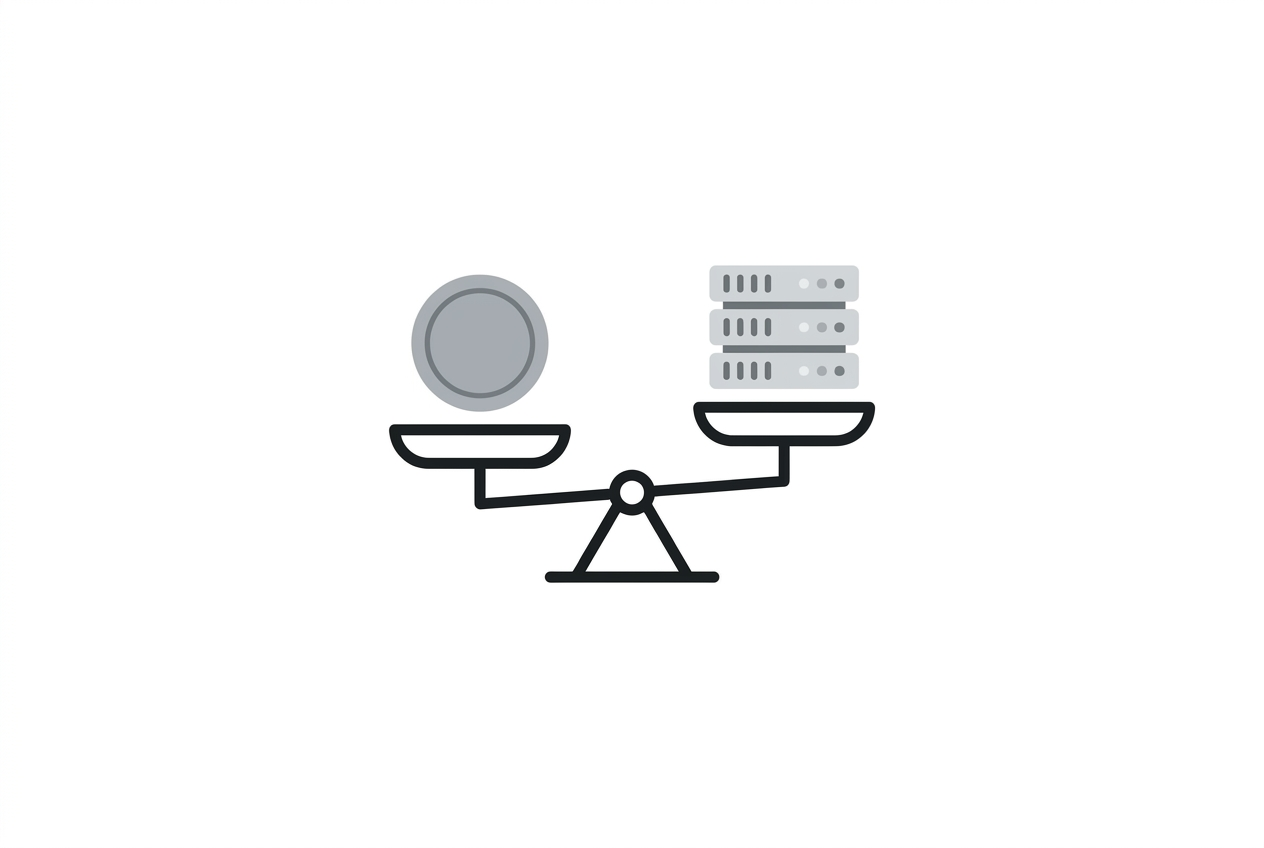
Read the two headlines back to back and they look like they cancel out.
On August 17, Anthropic reported its first profitable quarter ever: $11.5 billion in Q2 revenue, positive adjusted operating income of $559 million, up more than fourteenfold from the same quarter a year earlier. A frontier AI lab printed operating profit — the thing skeptics said couldn't be done.
Then, within days, the company went to a group of Wall Street banks and asked for a revolving credit line that would expand to $15 billion. Alongside it, a separate $15 billion debt package is being assembled for a Texas data center.
So which is it? A business so healthy it turns a profit, or one so hungry it needs $25 billion of borrowing capacity before it even hits the public market?
The answer is that these aren't in tension. They're the same move. Anthropic is monetizing an 80%-margin API business precisely so it can pledge the proceeds — and its balance sheet — against a compute buildout that dwarfs the profit by two orders of magnitude.
Start with why the profit exists at all. Gross margins on API sales are above 80%. That's the whole story of the $559 million. Sell inference at 80-plus points of gross margin, grow the top line vertically, and operating income eventually pokes above zero even while you're pouring concrete for data centers.
And the top line is vertical. The annualized run rate was roughly $1 billion in early 2025, about $9 billion by year-end, past $47 billion in May, and past $65 billion by late July 2026. The first half of 2026 booked $16.2 billion in actual sales — booked, not run-rate extrapolation.
That distinction matters, because Anthropic's own pitch leans on it. The profit is real. What management would rather you not staple to it is what that profit is being borrowed against.
Here is the buildout the $559 million is a rounding error against.
Anthropic is targeting at least 10 gigawatts of capacity, backed by more than a dozen preliminary lease agreements with U.S. data center developers. It has committed to spending more than $100 billion on Amazon Web Services technologies over the next decade.
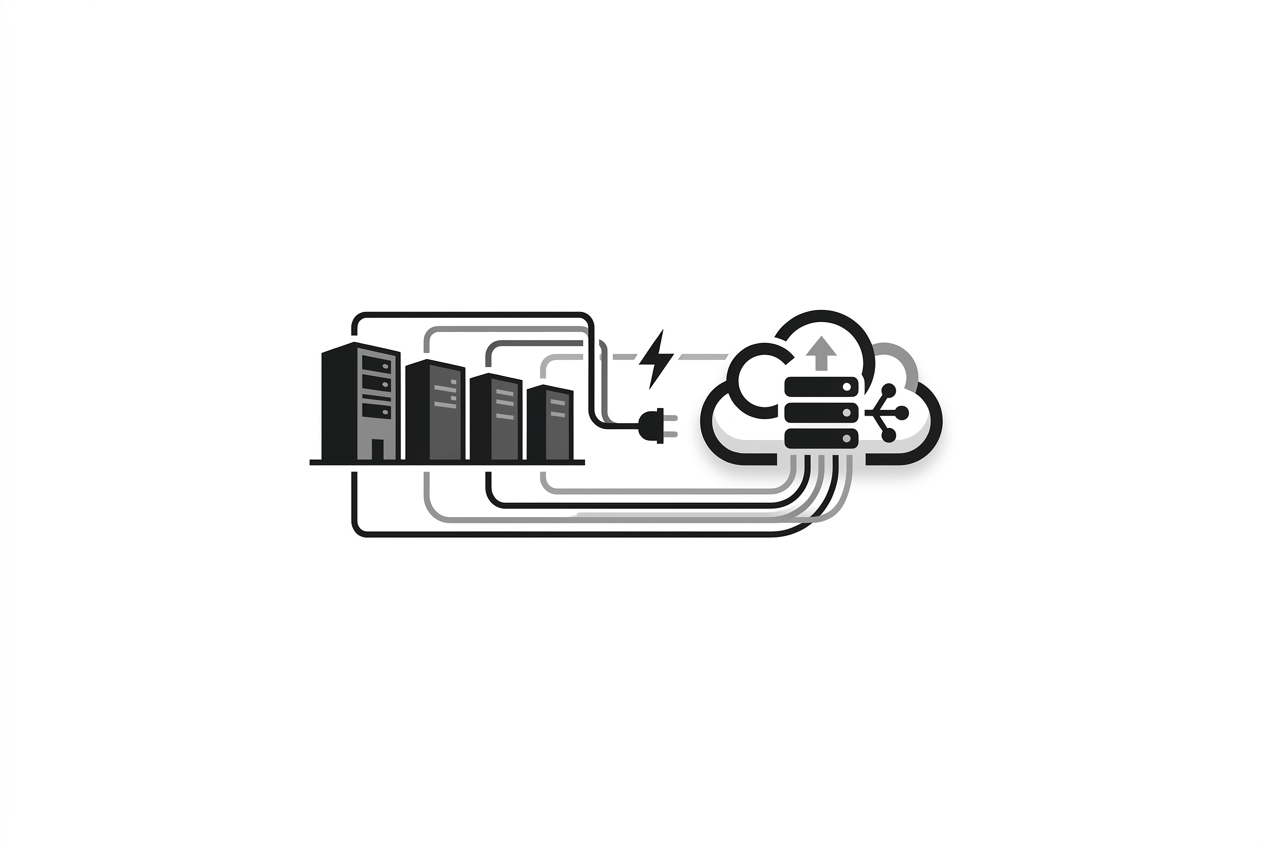
Against that, $559 million of quarterly operating income doesn't fund a wing of a single facility. The $15 billion revolver and the $15 billion Texas package aren't backup liquidity — they're the actual mechanism by which the compute gets built.
Now the piece that should make a credit analyst sit up. Google has guaranteed billions of dollars of Anthropic's lease and power-payment obligations across four separate data center leases — a backstop that keeps those capital commitments partially off Anthropic's own balance sheet.
That is off-balance-sheet leverage with a strategic investor standing behind it. It flatters the reported capital structure while the real obligation sits one guarantor removed. It also connects directly to the open question rating agencies are circling across the whole sector: how much of AI's true leverage is hiding in lease guarantees and cloud commitments that never show up as debt.
So the profit funds operating income; the borrowing and the guarantees fund the frontier position. The trade is leverage-for-position, and the profit is the collateral story that makes the leverage financeable.
The trade is leverage-for-position, and the profit is the collateral story that makes the leverage financeable.
Which brings us to the part that's easy to miss in the ainvest reporting: the margin holds only as long as the balance between new revenue and new compute cost does.
Anthropic's own investors were warned as early as May that profitability may not sustain through the full year as data-center spending ramps. Read that against the $559 million and the picture sharpens — this may be the profitable quarter, not the start of profitable quarters.
That's the entire wager. If revenue keeps outrunning compute cost, the 80% margin services the debt and the buildout pays for itself. If compute cost catches up — and the company is telling its own backers it might within the year — the profit inverts and the $25 billion in commitments stays exactly where it is.
Now price it.
Bankers are targeting a $2 trillion valuation, with a raise that could exceed $100 billion — which would make it the largest IPO in history, past SpaceX's $1.77 trillion June debut. Goldman Sachs, JPMorgan, and Morgan Stanley are leading it, with a public prospectus due after Labor Day and a listing pitched for late September or early October.
The last private mark was $965 billion, set in the May Series H round. So the IPO asks public buyers to pay roughly a two-times step-up over the most recent private valuation.
The justification is the revenue curve — internal projections put revenue at $190 billion to $200 billion by 2028 — and a total addressable market Anthropic is reportedly pitching at $30 trillion.
Sit with that number. It exceeds the $28.5 trillion TAM SpaceX put in its own prospectus, the one SpaceX called the largest actionable market in human history. For scale, the 191 technology companies in the S&P 1500 generated a combined $2.4 trillion in revenue last year. Anthropic's pitched TAM is more than twelve times that.
NYU's Aswath Damodaran said SpaceX's AI-heavy TAM was already "reaching the end of what's plausible and pushing beyond." Anthropic is asking public markets to plausibly underwrite one that's larger.
And here's the live warning the comp everyone cites is broadcasting in real time. SPCX priced at $135, ran above $225 by June, fell below $105 in early August, and sat at $143.69 by August 31.
That's a round trip. A trillion-dollar-plus AI-adjacent name went public on a TAM story, and the tape spent the headline fast, then re-priced hard, twice, inside a summer.
The lesson isn't that Anthropic is SpaceX. It's that when the story is a decade-out TAM and the price arrives already assuming it, the public market reserves the right to reprice the moment the balance shifts — and Anthropic's balance, by its own admission to investors, is the one thing that may not survive the year.
One more structural flag worth watching in the S-1. A meaningful share of Anthropic's cloud API revenue flows through commercial agreements with its own strategic investors — the same Amazon and Google that are also its compute suppliers and, in Google's case, its lease guarantor. How those related-party flows get classified will be among the first things scrutinized when the prospectus goes public.
Which closes the loop. The revenue that produces the 80% margin, the compute commitments the margin is borrowed against, and the guarantees keeping the leverage off the books all run through the same two counterparties.
That's the swap public buyers are being asked to underwrite at $2 trillion: an 80%-margin API business, monetized on purpose, pledged against a $100 billion-plus buildout, with a strategic-investor backstop holding part of the weight — and a profit that management has already warned may not last the year.
The number on the deal is $2 trillion. The number the deal actually turns on is whether new revenue keeps outrunning new compute cost. Everything else is collateral.