The same agent, running the same task, cost up to 30x more on one run than another. Not a different model. Not a different prompt. The identical job, priced by a meter nobody can read in advance.
That's the finding from Stanford's Digital Economy Lab, and it should terrify anyone who sells software by the seat.
For the entire history of software, pricing assumed a human on the other end. A seat was a proxy for a pace — one person clicks, types, thinks, and consumes at a rate you could model with a spreadsheet and a coffee break.
That assumption just inverted. Per a16z, agents now burn nearly 5x the tokens humans do, up 14x since February. Humans are officially the minority user of AI.
So the majority of your compute demand now comes from something that doesn't sleep, doesn't pause to think, and — critically — can't tell you what it's about to cost.
Last week we read DeepSeek's August 16 price hike as the end of the subsidy era: the loss-leader Chinese lab finally passing costs to developers. This week the sharper read is that the hike is a symptom of agent-consumption economics, not a cost-recovery event — and the shape of the new pricing proves it.
Start with the meter problem, because it's the load-bearing fact. Stanford's Jiaxin Pei puts it flatly: agents "are not capable of predicting their own token costs," and that is "the fundamental bottleneck for result-based pricing."
The mechanism is a context snowball. An agent reads the task, gets a response, re-reads the original prompt plus that response before its next action, then re-reads all of that plus the newest response, and on and on. The paper found agentic tasks consume 1000x more tokens than code reasoning and code chat — and the cost lands in input tokens, not output.
Worse, the models systematically underestimate their own spend, and human intuition doesn't rescue you either — task difficulty for a human doesn't map to token cost for an agent. Moravec's Paradox, priced in dollars.
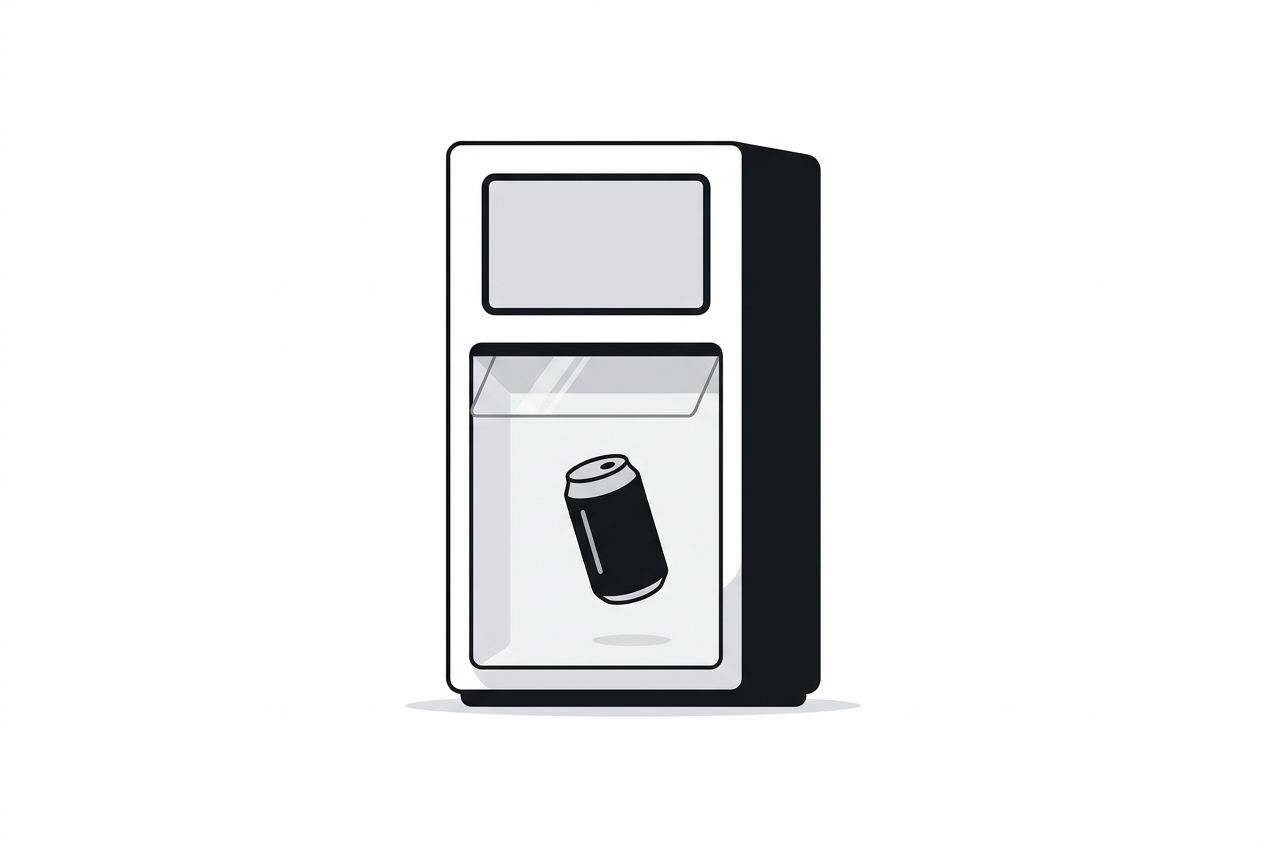
Now hold that next to Martin Casado's framing that AI turned capital from a lottery ticket into a vending machine — "$10 in and then some amount out, pretty directly." He's right that you can now apply capital productively in ways engineering-and-wait-two-years never allowed.
But the vending machine has a broken display. You put in your money, and the price only appears after the can drops — and it might be $1 or it might be $30. Casado's own hedge is the tell: "Let's say you put in $10... I don't know if you get $9 back."
That is the exact gap that makes per-seat pricing structurally broken. A seat used to cap liability at one human's throughput. Now a single seat can dispatch agents that burn 5x the tokens, on a meter that swings 30x, with no forecast available until the job is done.
You are no longer selling access to a person's pace. You are selling an uncapped compute liability and calling it a subscription.
You are no longer selling access to a person's pace. You are selling an uncapped compute liability and calling it a subscription.
This is why DeepSeek's move is worth reading closely, and not as "prices went up." Look at the structure. V4-Pro output rose from a flat $0.87 to $3.96 per million tokens at peak (reportedly about 4.6x) — while off-peak sits at $1.98, and cached input stays cheap at $0.022 off-peak.
That's not a flat increase. That's a provider splitting one number into three and handing developers a new set of decisions: which model, how many tokens, and now when you call and how well you cache.
Peak hours are reportedly 01:00–04:00 and 06:00–10:00 UTC. Off-peak is twice as cheap. DeepSeek isn't just recovering margin — it's pushing timing-and-consumption risk back onto the buyer, forcing the cloud-infra question into the LLM stack: does this inference need to happen now?
For interactive chat, you have no choice — the user wants the answer immediately. For batch work — code analysis, evals, document processing — you now have a financial reason to defer. The subsidy era isn't ending so much as fragmenting into a risk-transfer schedule.
And here's the trap inside a trap: for agentic applications, the advertised token price is nearly meaningless. A cheaper model that needs repeated attempts or more tokens to finish the job costs more than an expensive one that finishes clean.
Which is precisely why ADTmag's own conclusion, and the one you should internalize, is that cost per completed task beats cost per million tokens as your unit of account.
So where's the actual lever? Not the model. This is the part most teams get wrong — they respond to a rising bill by shopping for a cheaper model, when the biggest movable cost sits somewhere else entirely.
The Harness Effect paper ran a clean experiment: 22 locked tasks, six foundation models held constant, changing only the orchestration layer — the software that decides what enters the context window, which tools are visible, when to retry, when to stop.
Swapping the harness alone cut cost per task 41%, from $0.21 to $0.12, and tokens per task 38%, from 14.2k to 8.8k — at quality parity. The line that should reorganize your infra roadmap: on that workload, the orchestration layer moved cost per task more than switching between the cheapest and most expensive model did.
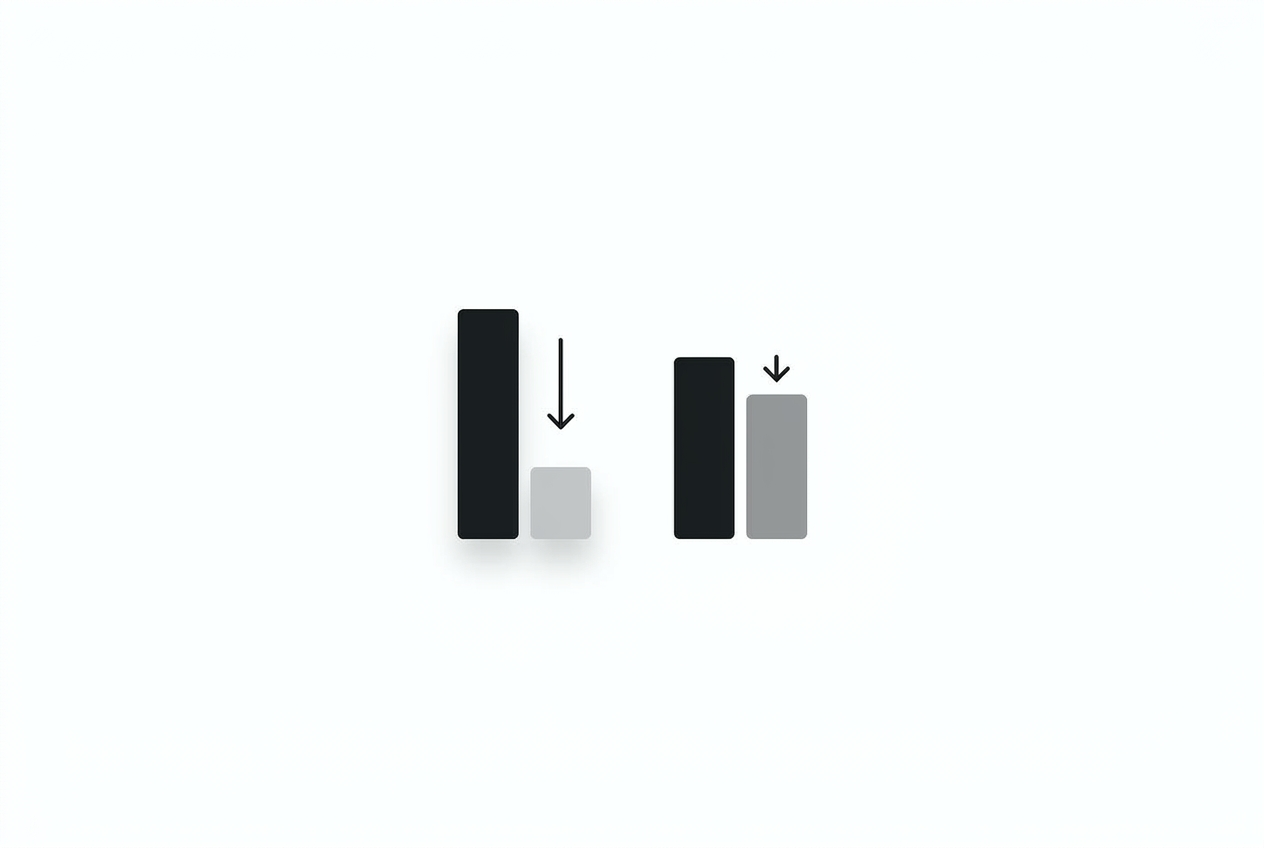
The gains were also model-invariant — every model got cheaper, by 33% to 61%. The harness is the one component whose efficiency multiplies across every model you run, present and future. You are not betting on a vendor; you are fixing your own plumbing.
The mechanism they name is "token maxing": buying capability with tokens — longer traces, more turns, wider tool payloads, full context replayed every turn — so tokens per task grow faster than task value. Falling per-token prices hide it; total spend rises anyway. It's a Jevons dynamic, and cheap tokens are the accelerant, not the cure.
Context is the other half of the lever. Unabyss ran the same 20 tasks 60 times in Claude Code, changing one thing: whether the assistant had structured context ready at session start or had to go assemble it across ten connected tools.
Context-ready came out 36% cheaper, 38% faster, needed 60% fewer follow-ups, and scored higher — 8.9 versus 7.7. The surprise was the middle option: a hand-written context file, the sensible fix most people reach for, barely moved cost or time at all.
A static file tells the agent what's true in general; it can't tell it what happened yesterday. The value lived in the gap between knowing about someone and knowing what they're working on — and closing that gap is what stops the agent from hunting across tools and burning tokens to reconstruct context you already had.
Both results point the same direction. The cost isn't in the model's per-token price; it's in the shape of the work you hand it — how context is assembled and how the loop is governed. Per these two studies respectively, fixing the harness and pre-structuring the context can each reportedly claw back on the order of 36–41% — though neither study measured the combined effect, and the context study saw quality rise (7.7 to 8.9) rather than hold at strict parity.
Now the product consequence, which is unavoidable once you accept the meter can't be forecast.
Per-seat pricing charges a fixed number for an uncapped liability. When one seat can trigger a 30x cost swing on the same task, per-seat isn't a pricing model — it's a bet that your customers won't push the button too hard. Ben Congdon's framing is exact: token spend is an "expensive more-productivity button" with no natural ceiling and no linear tie to headcount.
Human-attributable token spend doesn't scale with people; it scales with whatever a workflow can absorb, and that ceiling keeps rising as harnesses improve. You cannot price a per-seat proxy against a resource that has no per-seat ceiling.
The defensible move is to price and architect around cost per completed task — the same unit ADTmag arrived at, the same unit the Harness paper optimizes. Meter the completion, not the seat; instrument the harness so completions per million tokens (54.9 to 92.0 in the paper) becomes a number you manage, not discover on an invoice.
And in infra planning, stop treating agent spend as an extension of human usage. It's not a bigger version of a person clicking around — it's a separate, non-linear, uncapped line item that, per OpenRouter, has reportedly now surpassed human usage, driven by agents consuming at a multiple of human usage, not an increment above it.
The winners this cycle won't be the ones who found the cheapest model. They'll be the ones who moved the cost lever to the harness, pre-structured their context, and repriced around the completed task — while everyone else keeps feeding a vending machine that hides the price until after the can drops.