Two things are true at once, and they don't fit.
The first: according to a study by Kalyani and Li (2026), by the third quarter of 2025, information processing equipment, software, and data center construction accounted for one-third of total US business investment—the highest share since 1947.
The second: the producer price index for semiconductor and other electronic component manufacturing sat nearly flat through all of it, then lurched from 61.6 in January 2026 to 73.1 in May 2026. About 19 percent in four months.
If the buildout is a year and a half old, why did the input price for its most iconic component barely move until early 2026—and then move violently?
That's not a headline question. It's a mechanism question, and the answer tells you something uncomfortable: the inflation the Fed is now reading in the chip data is, arguably, the leading edge of this wave, not its peak.
Last week we mapped the "third wave" thesis conceptually—AI capex as an overlapping shock stacked on tariffs and energy, in the lineage of our K-shaped and Hormuz coverage. This week the data caught up. The FRED semiconductor series and the Q3 2025 capex-over-earnings inflection let us quantify the mechanism instead of gesturing at it.
Start with the timing puzzle, because the St. Louis Fed's own explanation is the whole game.
Data-center spending and semiconductor demand arrive at different stages of the same project. The early money goes to land, buildings, cooling systems, and power connections—none of which the semiconductor PPI measures.
The silicon comes late. Chips, memory, networking gear, and power-management components get ordered when a center is close to being equipped and firms finally know which inputs are scarce.
So a flat chip PPI through 2024 and most of 2025 wasn't evidence the boom was overblown. It was evidence the boom hadn't reached the equipping stage at scale yet.
There's a second reason the price signal lagged. Some semiconductor markets were still working through excess inventory from the pandemic cycle. A surge in expected demand doesn't move prices while there's slack to absorb it.
Once inventories normalize and orders firm up, the demand that was always coming hits the price index all at once. That's the January-to-May jump. And semiconductor earnings reports now show AI demand reaching a wider set of chip producers—not just the makers of the most advanced processors, but the commodity memory and component suppliers whose output shows up in everything.
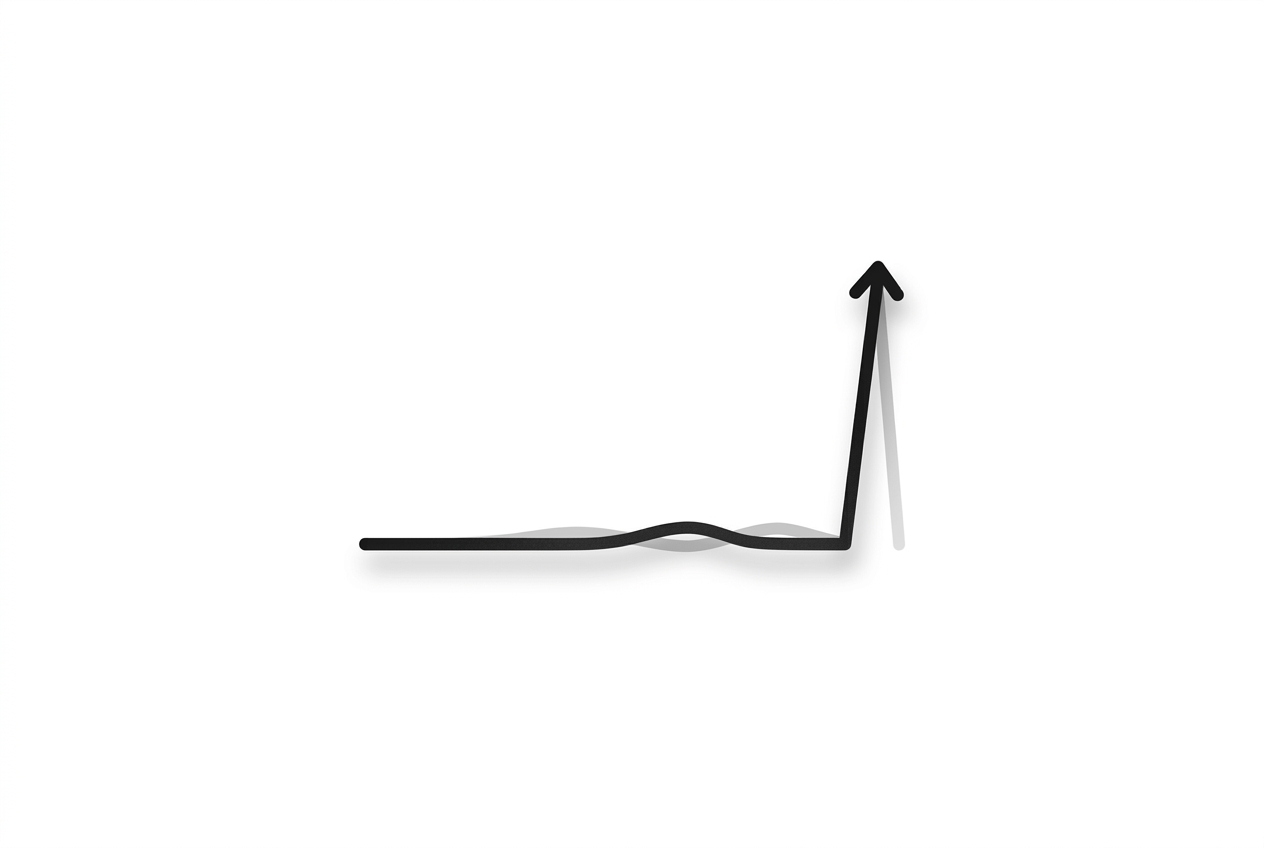
This is the part that should worry anyone reading the PPI as a coincident indicator. The price pressure is, arguably, structurally back-loaded. It arrives late in each project's life, and only a small fraction of announced spending has actually been deployed—reportedly Fed Governor Lisa Cook's own framing.
The price pressure is structurally back-loaded. It arrives late in each project's life, and only a small fraction of announced spending has actually been deployed.
Which means, arguably, the 19 percent move is the front of the wave meeting the front of the equipping cycle, with years of buildout still lying behind it.
You can already see the pass-through in places consumers touch. Apple announced 15-25 percent price hikes on Macs and iPads, after Tim Cook told the Wall Street Journal the component cost jump was "unlike anything he had seen in any area in over 40 years."
Apple blamed the "rapid expansion of AI data centers, which has created an extraordinary surge in demand for memory and storage." Nintendo, Microsoft, and Sony have raised device prices too. Wholesale electronic components were up 27 percent year over year in May; consumer prices for computer software and accessories up around 15 percent year over year in May.
The reason this spills so widely is that the inputs aren't AI-specific. Memory, copper, electrical equipment, cooling gear, and construction labor go into cars, apartments, and offices. Tech firms have the cash to outbid everyone else for a finite pool of materials—and everyone else either eats the margin or raises prices.
Now the balance-sheet turn, because it converts a demand shock into a committed one.
In the third quarter of 2025, America's largest tech firms spent more on capital investment than they earned from operations—for the first time. Until then, the buildout was funded almost entirely from retained earnings, which insulated it from credit markets.
That insulation is gone. Once capex exceeds operating cash flow, the gap has to be financed—and the firms raised over $100 billion in new debt.
The significance isn't the solvency question—that belongs to the shadow-bank story, along with the off-balance-sheet project vehicles and lease securitizations sitting beneath the headline bonds. The significance for inflation is different: debt-financed capex is harder to switch off than self-funded capex.
A firm spending its own cash can throttle back in a quarter if returns disappoint. Firms collectively holding over $100 billion of new debt, forward lease obligations, and half-built centers has every incentive to finish and equip them—which means keep buying chips, keep bidding for electricians, keep pushing on the input markets. The cost pressure is, arguably, now structurally committed rather than discretionary.
Which brings us to the comfort everyone reaches for: AI is supposed to be disinflationary. Fed Chair Warsh wrote in November that "AI will be a significant disinflationary force, increasing productivity and bolstering American competitiveness."
Maybe. But that view skips a step. What matters for inflation isn't whether AI raises productivity—it's whether it raises productivity faster than it raises the cost of adopting it. During the transition, firms burn resources on reorganization, data infrastructure, and integration, which can raise production costs even as the frontier expands. That's the productivity J-curve, and, arguably, we may be in the bottom of it.
The New York Fed, per the article's reading, puts the disinflation channel bluntly: the price effects are already visible in input markets, while the productivity payoff is, per the article's reading, a distant promise. UBS reportedly estimates the gap between the current building frenzy and AI actually lowering prices at "at least a couple of years."
Here's the twist that punctures the comfort entirely: the disinflation isn't merely delayed. It has no measurable footprint yet.
Look at the labor market, where displacement was supposed to show up first. The New York Fed ran an event study on job postings, comparing AI-exposed occupations to less-exposed ones around ChatGPT's late-2022 release. The relative decline in postings for exposed jobs is real—but, per the New York Fed, it began before ChatGPT and shows no clear break after it. The gap stabilized after 2023. You can't read that as AI displacing workers.
And adoption is stuck behind a training wall. Only 39 percent of employed workers report using AI tools in their current job or having used them in the past twelve months—but 58.7 percent of college graduates versus 22.9 percent without a degree, and 66.3 percent of those earning over $200,000 versus 15.9 percent under $50,000.
Meanwhile 37 percent of workers say their workplace offers no AI tools at all, and only 15.9 percent of employers provide any training. The productivity engine everyone is banking on is idling because most of the workforce hasn't been handed the keys.
So the two sides of this wave are out of phase in the worst possible way. The cost side is already in the PPI, already in Apple's price list, already committed via $100 billion of debt and years of unbuilt capacity. The productivity side has no footprint—not in postings, not in adoption, not in measured output—and won't for years.
The New York Fed, per the article's reading, calls the interaction a centrifugal bind: supply-side cost pressure and demand-side expectations pulling outward at once, with a debt structure predicated on returns that haven't arrived. Higher inflation could puncture asset valuations built on distant productivity gains.
For now, keep your eye on the mechanism the FRED chart just exposed. A 19 percent chip PPI move after years of flat readings isn't the story climaxing. It's the equipping stage of a multi-year, debt-committed demand shock beginning to touch an input the whole economy shares.
The Fed is seeing the leading edge. The peak is still upstream.