
Two experts looked at the same Kylo-11 dataset and reached almost opposite emphases in the same week.
Steven Nissen called it "among the best Lp(a) reduction we've seen yet." Then, in the same breath as his colleague Ashish Sarraju, he attached the hedge that undoes the headline: "If Kylo-11's potential is borne out in subsequent studies and clinical outcome trials."
That "if" is the entire story. Because the number everyone is quoting is genuinely extraordinary, and it still tells you nothing about whether anyone lives longer.
The number everyone is quoting is genuinely extraordinary, and it still tells you nothing about whether anyone lives longer.
Here is the number. A single subcutaneous injection of Kylo-11 at 600 mg produced a 97% median reduction in lipoprotein(a) at 48 weeks. Not maintained by re-dosing. One shot, and Lp(a) was still 97% gone eleven months later.
The durability holds below the top dose, too. Per Sarraju's own summary, the effect exceeded 94% at every dose of 225 mg or higher, out to a full year, after that single injection. Nissen pressed him on it directly, and got the same answer — even the submaximal 225 mg dose stayed above 95% at 48 weeks.
Last week in this space we walked through CAC scoring and NMR particle testing — the tools that let you screen a residual-risk marker most standard panels ignore. This week the thread moves from detecting a genetic risk factor to erasing one. But where guideline inertia was the obstacle for screening, the obstacle here is harder: the outcomes trial does not exist yet.
Start with why the durability signal is real and matters. Lp(a) is roughly 80–90% inherited, essentially untouched by diet, exercise, statins, or PCSK9 inhibitors. Nothing approved lowers it to cut cardiovascular events. So a therapy that removes almost all of it, for a year, from one injection, genuinely rewrites the class ceiling.
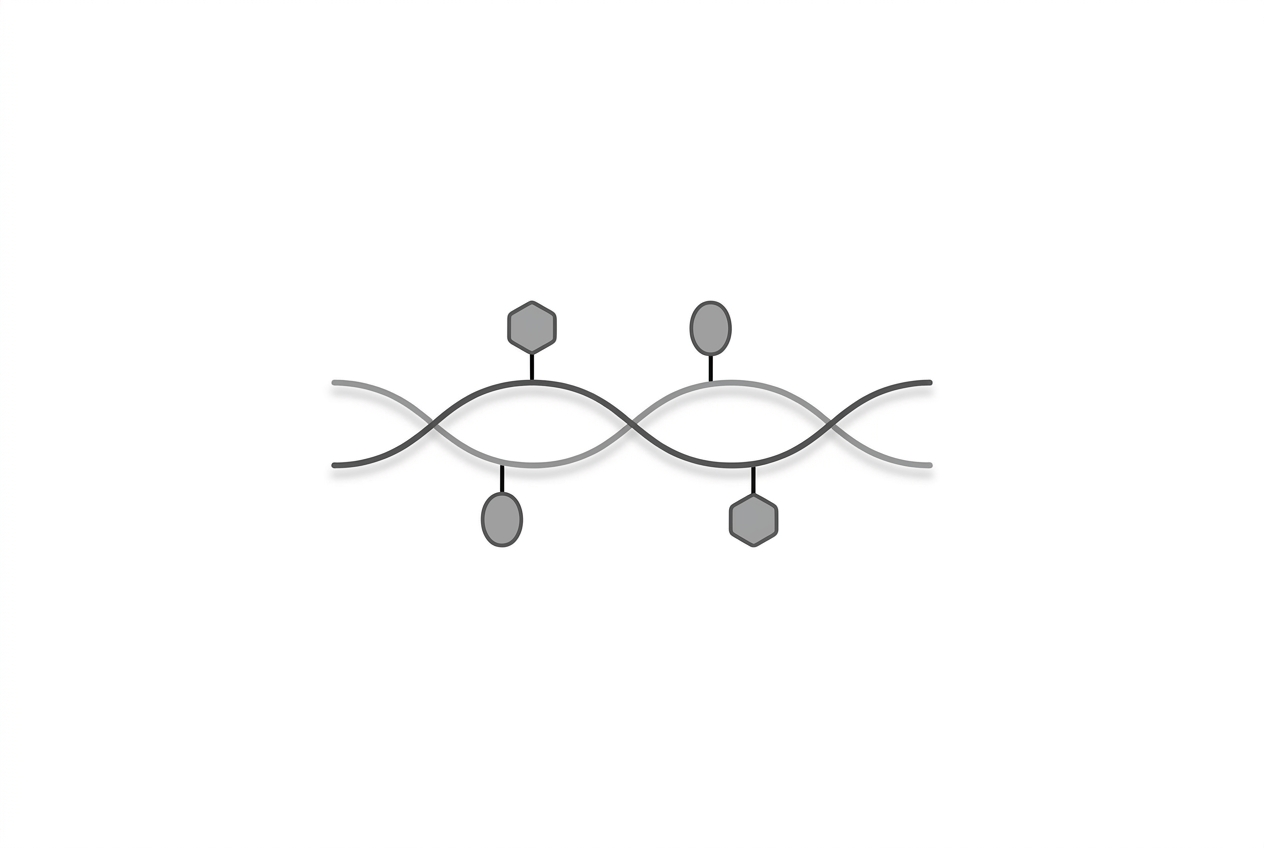
Kylo-11's structure is the working explanation. It carries four GalNAc moieties — two on each strand of the siRNA — versus the usual single-strand conjugation. The hypothesis, per Sarraju, is that this helps hepatocytes retain the drug and resist degradation, buying the extended duration.
The durability isn't just impressive against itself; it's impressive against the best comparator the field has. Olpasiran, in OCEAN(a)-DOSE, reportedly hit 95% or greater Lp(a) reduction versus placebo — but on a quarterly maintenance schedule, measured at 36 weeks. Kylo-11 matched that ceiling on one dose and held it twelve weeks longer.
Now the turn. What did this actually establish?
The trial enrolled 71 individuals (70 dosed) in China, aged 18 to 55, at a single site, per the reported data. Median age: 27. They were randomized double-blind across seven cohorts to a single dose of Kylo-11 — reportedly 9, 30, 75, 225, 450, or 600 mg, with an additional 225 mg cohort for participants with high baseline Lp(a) — or pooled placebo.
The primary endpoint was safety through 24 weeks. The Lp(a) reductions were secondary. On safety, the drug looked clean: adverse events mostly grade 1 or 2, no dose-related increase, no serious adverse events, no injection-site reactions, no deaths, low immunogenicity comparable to placebo.
That is exactly what a Phase 1 is designed to deliver: safety established, dose range bounded, deep lowering confirmed. It is also exactly what a Phase 1 cannot deliver: evidence that the lowering prevents anything.
These were healthy volunteers with a median age of 27, without cardiovascular disease, followed for about eleven months. The endpoint was a number in the blood. Not a heart attack. Not a stroke. Not an aortic valve. A number.
And the sobering fact is that olpasiran already crossed the 95% lowering threshold — and, reportedly, still has not proven it reduces cardiovascular events.
This is the gap the field keeps skating past. The biomarker data has raced years ahead of the only endpoint that matters. Kylo-11 doesn't close that gap; it widens the distance between what we can measure and what we've proven.
So what is the disciplined use of this data right now? Not prescribing — there's nothing to prescribe, and no outcome to justify it. The smartest near-term move is the health-economic question: if outcomes trials do land, where would lowering Lp(a) even be worth doing?
A preliminary health technology assessment answered exactly that, and it did so explicitly "in the absence of phase III cardiovascular outcome trials." The researchers built a microsimulation from UK Biobank data, modeling a therapy that lowers Lp(a) by 97.5%, per the HTA — essentially Kylo-11's own number — in primary and secondary prevention populations of 10,000 each.
The split verdict is the most useful thing in the whole file. Testing and treatment prevented 306 cardiovascular events per 10,000 in the secondary prevention population — people who already have disease. In the primary prevention population, it prevented 53.
That six-fold gap drives the pricing. The therapy would, per the HTA, be cost-effective at up to £5,500 a year in secondary prevention. In primary prevention, the ceiling collapses to £150 a year.
Read that again. The modeled therapy, at 97.5% lowering, is worth roughly thirty-seven times more per year in people who've already had an event than in people who haven't, per the HTA.
The model even shows the lever within secondary prevention: lower the treatment threshold and you prevent more events. At an initiation threshold of 50 mg/dL you prevent 496 events per 10,000; at 90 mg/dL, 306; at 110 mg/dL, 238, per the HTA. The economics reward treating earlier and treating the sickest.
This is where the diagnostic-to-treatment story from last issue runs into a wall. Screening for high Lp(a) with the tools we covered is cheap and increasingly justified. But acting on the result with a drug like Kylo-11 depends on an outcomes trial that hasn't reported — and the economics say that even in the best modeled case, the value is concentrated in secondary prevention, not the worried-well primary population most likely to seek out testing.
The honest framing: the HTA tells you where lowering Lp(a) would pay off if the events follow the biomarker. It does not tell you that they will. It is a conditional map, and the condition is a Phase 3 that doesn't exist.
That trial is coming. A Phase 2 is already underway, reportedly run by sponsor Kylonova Biopharma with Cleveland Clinic. Sarraju's public message is consistent — improve awareness and testing now, "as promising new therapies like this one emerge." Emerge, not arrive.
So hold both truths. Kylo-11's single-shot, 97%-at-48-weeks durability is the most impressive signal this class has produced, and it deserves the attention it got at ESC and in The Lancet.
And it changes nothing about whether crushing Lp(a) prevents heart attacks — a question Kylo-11 must now answer against the same outcomes bar.
The evidence level here is precise. For the lowering and safety: Phase 1, 70 healthy volunteers, single site, secondary endpoint. For the economics: a preliminary model, explicitly built in the absence of outcomes data. For the benefit that would justify using any of this in a patient: none yet.
The number is real. The proof isn't. Nissen's "if" is doing all the work, and until a Phase 3 answers it, the correct posture toward Kylo-11 is fascination without prescription.