A mouse has a heart attack, and within hours its own brain starts manufacturing extra deep sleep on purpose.
Here is the circuit, reportedly from a Nature paper. After myocardial infarction, microglia in the brain rapidly recruit circulating monocytes to a specific waystation — the thalamic lateral posterior nucleus — routing them in through the choroid plexus.
Once there, those monocytes are reprogrammed to pump out tumor necrosis factor. The TNF engages Tnfrsf1a-expressing glutamatergic neurons, and slow-wave sleep pressure climbs.
This is not the heart failing and dragging sleep down with it. The injured heart spends energy to build more deep sleep, because that sleep suppresses sympathetic outflow and lets the damaged tissue heal with less inflammation.
The proof is in what happens when you take it away. Disrupt sleep after MI and cardiac function worsens, heart rate variability drops, and the mice throw spontaneous ventricular tachycardia — triggered not by the infarct but by the sleep loss.
Flip that around and the reflexive assumption of an entire field falls apart. We tend to read disrupted sleep in a sick patient as collateral damage: the tumor, the plaque, the failing pump steals your rest. This paper says the body sometimes engineers sleep as a defensive maneuver — and blocking it reportedly worsens cardiac function and triggers dangerous arrhythmias.
The body sometimes engineers sleep as a defensive maneuver — and blocking it reportedly worsens cardiac function and triggers dangerous arrhythmias.
Last week this column traced active-sleep-metabolism and the glymphatic clearance thread, asking whether sleep is doing structural work rather than just resting. This week we go a layer deeper into the machinery, because a scattered cluster of recent studies starts to look less like coincidence and more like convergence.
Consider Alzheimer's. Work out of the University of Kentucky reported that in mice with Alzheimer's-like plaques, sleep dropped by up to two hours a night and stayed suppressed as the disease advanced.
The intuitive story is that plaques wreck the sleep circuitry. But when researchers pharmacologically blocked microglia, the mice got their lost sleep back — even though the plaques were still sitting there, untouched.
The plaque wasn't stealing the sleep. The immune response to the plaque was. That is a different target entirely, and it echoes the cardiac finding down to the cell type: microglia, again, acting as the broker between organ pathology and the sleep circuit.
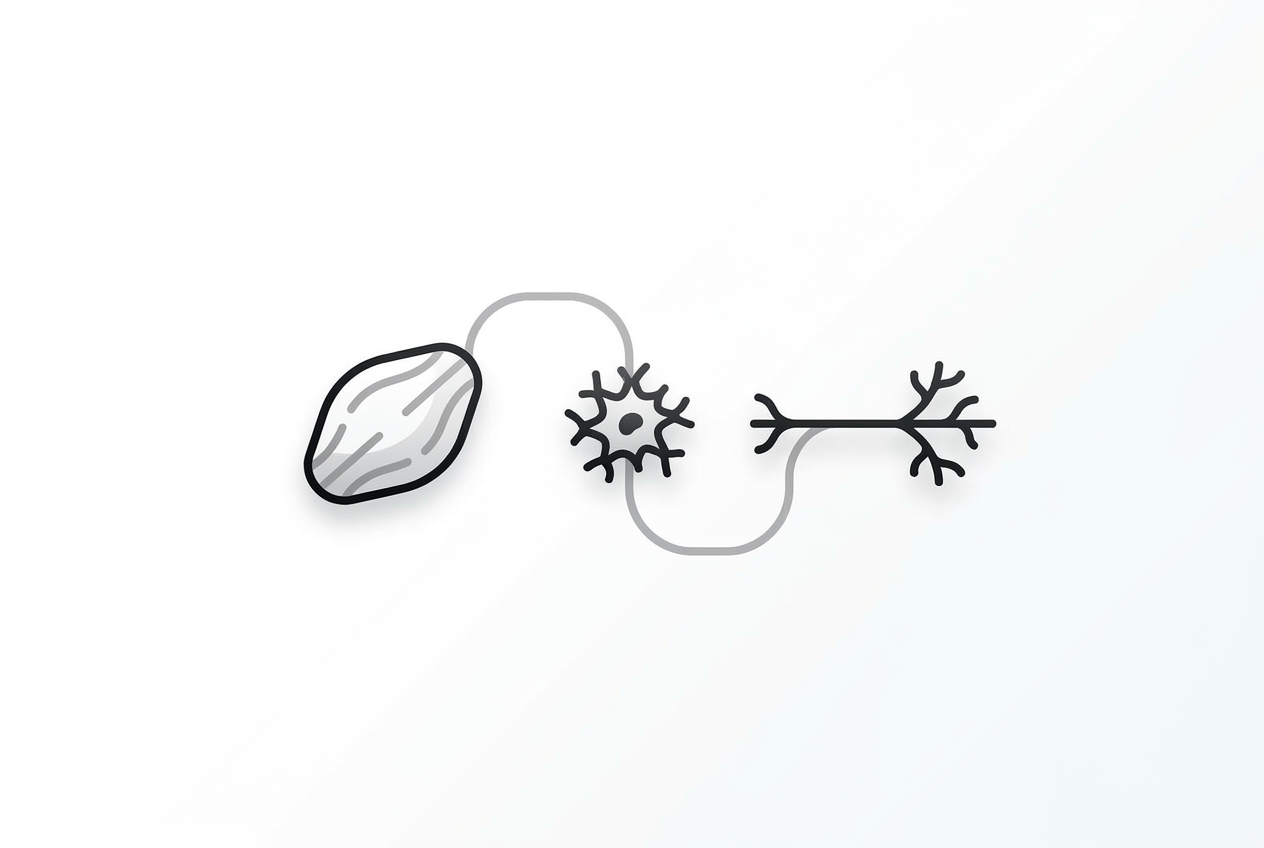
Notice the mirror image. In the heart, microglia recruit monocytes and TNF to add slow-wave sleep as protection. In the Alzheimer's brain, microglial inflammation subtracts deep sleep. Same cellular actors, opposite valence, both sitting at a control point rather than downstream of it.
The gut supplies a third node. A study in General Psychiatry ran what was reportedly a Mendelian-style analysis across genetic data from roughly 387,000 insomnia patients and nearly 27,000 people's gut microbiome samples.
Fourteen groups of bacteria raised the risk of insomnia — by 1 to 4 percent. Eight groups lowered it, by 1 to 3 percent. And the arrow ran both ways: having insomnia also shifted which bacteria were abundant, so this is a reciprocal loop, not a one-way street.
Then the adolescent brain. Tracking 2,991 children aged 11 to 12 in the Adolescent Brain Cognitive Development study, Michigan researchers found that shorter sleep mapped onto a specific connectivity signature — heightened communication within the somatomotor network, reduced communication within the visual network.
Crucially, they tested direction. When they took that youth-derived pattern and projected it onto 76 adults deprived of sleep to three hours or less, the pattern's expression jumped from a mean of 2.03 after normal sleep to 3.39 after deprivation.
Sleep loss didn't just correlate with the brain state; imposing sleep loss produced it. The two maps — one from chronically short-sleeping kids, one from acutely deprived adults — shared a spatial correlation of 0.38, both reportedly lighting up the same somatomotor regions.
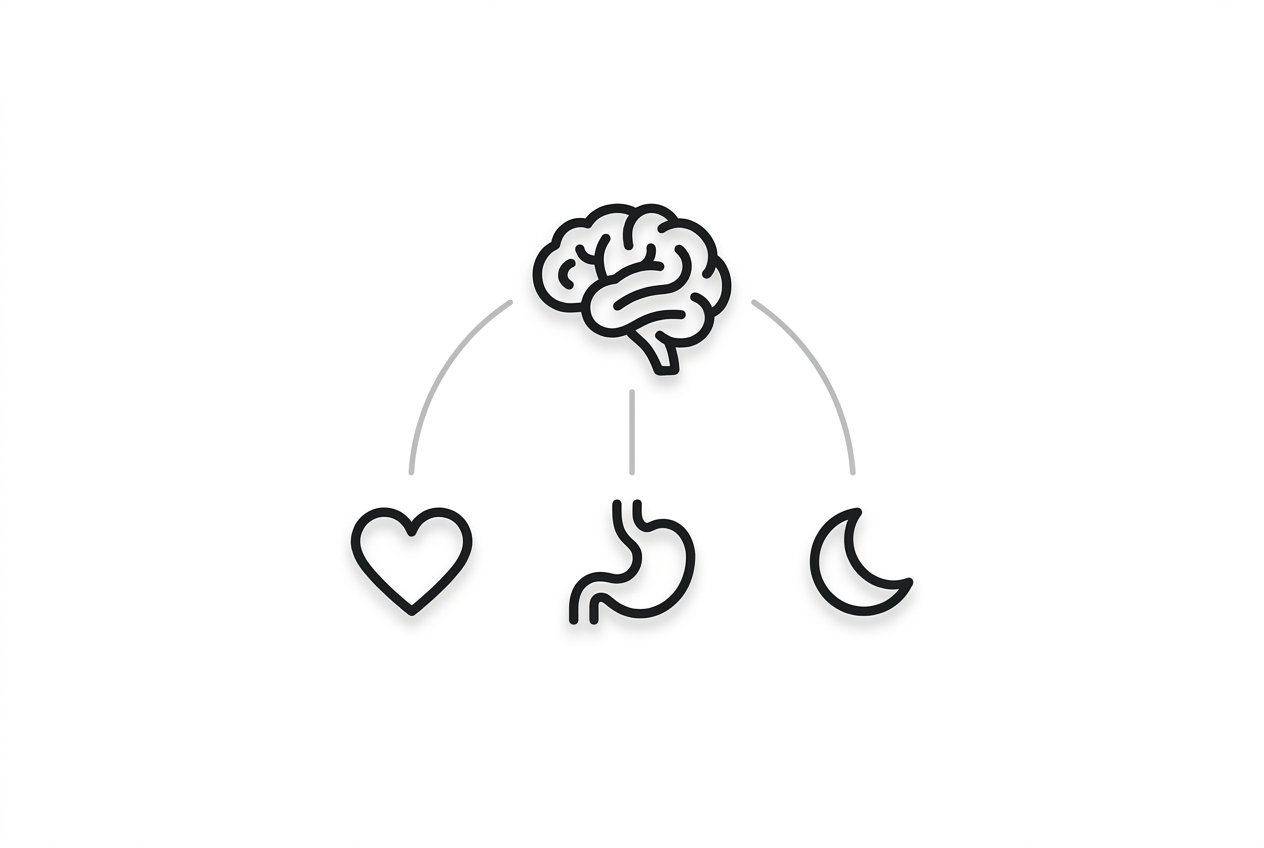
Line these up and the thesis writes itself. Heart, Alzheimer's brain, gut, developing cortex — these aren't five diseases that happen to disrupt sleep. They look like five organ-specific circuits wired into a shared causal hub, one the body actively manipulates in at least one confirmed case.
If that framing holds, it reclassifies a whole category of intervention. Microglia blockers stop being an Alzheimer's plaque play and become a sleep-restoration play. Manipulating glutamatergic TNF signaling in the thalamus stops being basic neuroscience and becomes a lever on cardiac recovery.
Now the brake.
Almost none of this has crossed from mouse to human. The cardiac circuit — the monocyte recruitment, the thalamic TNF relay, the fatal arrhythmia on sleep disruption — is mouse mechanism. The Nature authors did show that insufficient sleep in humans reprograms β2-adrenergic monocytes toward a migratory phenotype and that poor sleep after acute coronary syndrome raises the risk of secondary events, but the causal machine itself was demonstrated in mice.
The Alzheimer's microglia rescue, the clean result where blocking immune cells restored the mice's lost sleep, is entirely mouse-only. Plaques intact, sleep back — beautiful, and untested in a single human.
The gut link is real but small and directionally muddy. Risk shifts of 1 to 4 percent are not the stuff of blockbuster targets, and a reciprocal association reportedly from Mendelian randomization tells you correlation with genetic anchoring, not a drug you can build.
Even the softer assumptions are wobbling. Sleep and depression are widely described as bidirectional and self-reinforcing, but the depression review itself concedes the evidence is uneven — the case that insomnia precedes and predicts first depressive episodes is strongest in adolescents, more reciprocal and confounded in older, medically ill adults.
And the stress-sleep link, long treated as obvious, came out weaker than expected. An intensive study of 106 students found that daily stress did not consistently predict worse sleep that night. The only reliable direction ran backward: a better-than-usual night was linked to lower stress the next day — and even that effect was small and uncertain.
So the evidence pack that excites is the same one that disciplines. The pattern is suggestive precisely because so many independent groups keep landing on microglia, thalamic circuitry, and bidirectional loops. But suggestive is not translated.
The adolescent connectivity work makes the honest limit explicit: proving one-way biological causation in humans would require artificially manipulating brain connectivity, which is neither ethical nor possible. So we are left with converging mouse mechanisms and human associations that gesture at the same architecture without closing it.
Here is the editorial verdict. The causal-node framing has earned its keep — enough that microglia inhibition and sleep-circuit manipulation deserve a serious, funded look as disease-modifying interventions rather than symptom management, because if the heart really does build sleep to save itself, then reflexively "fixing" a sick patient's sleep with the wrong tool could be exactly backwards.
But the translation gap is the entire story, not a footnote to it. The real question isn't whether sleep is a mechanistic hub in mice — the Nature paper settles that. It's which of these circuits survives contact with a human trial, and right now the honest answer is that we don't know for even one of them.