"No hacks. No injections. Just the elegant power of sleep, doing exactly what it was designed to do." That is how SuperAge closes its account of the UC Berkeley study, framing your deepest sleep cycles as "your body's built-in performance enhancer."
NDTV puts it more bluntly: when your macros are tracked, your water is drunk, your steps are hit, and the scale still won't move, "the primary issue may actually be related to deep sleep."
The study underneath all of this recorded neural activity from electrodes inserted into the brains of mice — animals that sleep in short bursts lasting only a few minutes throughout the day and night.
The question worth asking is what survives that translation, from a rodent brainstem to your stalled fat loss.
This week the claim is louder and more physical: sleep as an active metabolic driver of fat and muscle, potent enough, the coverage implies, to rival diet and exercise.
Start with what the paper, published in Cell by Yang Dan's lab, actually establishes. It is a genuine mechanistic advance, and the advance is precisely about method.
"People know that growth hormone release is tightly related to sleep, but only through drawing blood and checking growth hormone levels during sleep," said first author Xinlu Ding. "We're actually directly recording neural activity in mice to see what's going on."
For decades the science of sleep and growth hormone rested on blood draws — hormone levels rising and falling. Dan's team went to the wiring.
Using electrodes and light stimulation of hypothalamic neurons in mice, they mapped a feedback loop that had only been inferred. Growth-hormone-releasing hormone (GHRH) neurons push growth hormone out; somatostatin neurons suppress it.
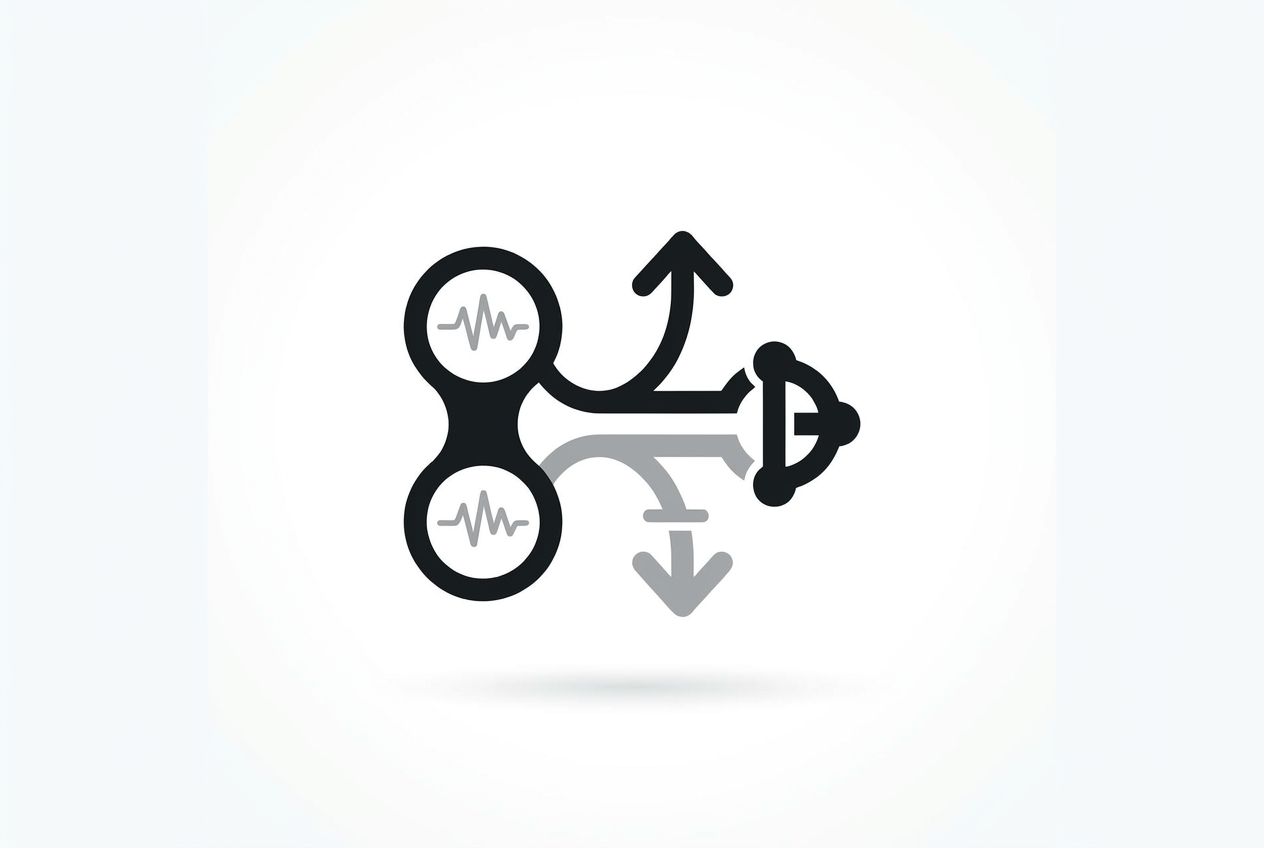
The interesting part is the stage-dependence. According to the UC Berkeley researchers, during REM sleep, both GHRH and somatostatin rise together, producing a surge; during non-REM sleep, somatostatin drops while GHRH rises only modestly — a different pattern, a different arithmetic.
Then comes the twist that makes it a loop rather than a switch. As growth hormone accumulates during sleep, it activates the locus coeruleus, the brainstem's arousal center, nudging the brain toward waking.
But when the locus coeruleus becomes too active, it flips — and begins promoting sleepiness instead. Sleep drives the hormone; the hormone regulates wakefulness; the system self-corrects. That is the finding, and it is elegant.
Notice what it is not. It is not a measurement of fat mass, muscle mass, body composition, or visceral fat in anything. It is a map of neural firing in mice.
Ding, the first author, states the ceiling of the claim herself: "We are providing a basic circuit to work on in the future to develop different treatments."
"We are providing a basic circuit to work on in the future to develop different treatments." That is the authors' own hedge — more honest than the headlines built on it.
A basic circuit to work on in the future. That is the authors' own hedge, and it is doing more honest work than most of the headlines built on top of it.
Now trace where the popular claims come from. NDTV tells readers that growth hormone "is a primary driver of lipolysis," that without deep sleep the body "clings to fat stores, particularly visceral fat," that missing deep sleep leads to "muscle wasting."
Those statements are not findings from the Cell paper. They are the older physiology of growth hormone — the correlative and observational human literature about what growth hormone does and what happens when sleep is short.
That literature exists, and it is not nothing. A 2022 review in Neuroendocrinology surveys the pathways linking sleep — sleep duration, slow-wave sleep, sleep quality, REM — to muscle, fat, and bone, and it centers growth hormone as the master signal tied to the slow waves of deep sleep.
But read that review's own conclusion. Its figure summarizing the pathways carries a caution: "Despite the directionality of the arrows, the direction of the relationship is not in all cases conclusively clarified."
And its closing call is explicit. The authors "emphasize the importance of intervention studies to move from correlative to causal evidence."
That is the evidence chain in one sentence. The human data on sleep and body composition is, by the field's own admission, still correlative. The causal experiment has not been run.
Here is where the two bodies of evidence get spliced together in the coverage — and where the splice fails. The Cell paper supplies a mechanism in mice. The human literature supplies associations. Neither one, alone or together, demonstrates that enhancing deep sleep changes body composition in a person.
That is the specific missing study. Not "does growth hormone matter" — it does. Not "is deep sleep metabolically active" — it is. The unrun trial is narrower and harder: if you increase slow-wave sleep in humans, does fat mass fall, does lean mass rise, by how much, compared to what?
Until that trial exists, "optimizing deep sleep" cannot be placed on the same shelf as diet and exercise for fat loss. One of those interventions has decades of controlled human trials measuring body composition. The other has a mouse circuit and a review calling for the experiments that would tell us.
The word doing the sleight of hand across all this coverage is "active." Sleep is an active metabolic process, not a passive rest state — that part is now better supported than ever, thanks to Dan's lab showing the circuitry firing in real time.
But "active" is not "sufficient to substitute for." A process can be metabolically live and still be a permissive background condition rather than a lever you pull to burn fat. The Cell study establishes the former. Nothing in it establishes the latter.
The age angle is where the honest version of this story still has teeth. Growth hormone declines with age, and with it comes the familiar drift: muscle loss, fat accumulation, slower repair.
Deep sleep also thins with age. If the two are mechanistically coupled the way this circuit suggests, protecting slow-wave sleep in midlife is a reasonable, low-risk bet — the kind of thing worth doing precisely because the downside is a book and a dark room.
That is a defensible claim. "Sleep can rival diet and exercise for fat loss" is a different claim, and it is not one this study licenses.
The researchers themselves stayed careful. Co-author Daniel Silverman frames the therapeutic upside as speculative and downstream — "experimental gene therapies," "a novel handle to try to dial back the excitability of the locus coeruleus, which hasn't been talked about before."
That is a scientist describing a research direction, not a bodybuilding protocol.
The gap between "a basic circuit to work on in the future" and "burn fat and build muscle while you lie still" is the entire distance between a Cell paper and a headline. The circuit is real. The mechanism is a genuine advance. The trial that would justify the promise has not been run — and the evidence chain snaps, cleanly, at exactly the point where the coverage gets loudest.