Article — "Circadian Medicine Moves Toward the Clinic: Timing Vaccines, Drugs, and Light Therapy": Article — "Circadian Medicine Moves Toward the Clinic: Timing Vaccines, Drugs, and Light Therapy": At day 28 after a fourth COVID-19 shot in Melbourne, antibody responses to every SARS-CoV-2 variant tested were higher for morning than afternoon vaccination in the Moderna group.
Read that sentence again slowly, because the qualifiers are where the story lives.
The morning boost showed up only in males. Female responses were unaffected by the time of day. And in the Novavax arm of the same trial, timing did nothing at all, in either sex.
That single result — precise, randomized, published in Vaccine — is the most honest thing circadian medicine has produced so far. It also arguably undercuts the pitch that the field is currently selling.
The pitch is almost too good. A free adjuvant. A free dose optimizer. A free antidepressant. All delivered by changing nothing except the number on the clock.
Move your flu shot to the morning and get more antibodies. Dose your statin at night when cholesterol synthesis peaks. Sit under a bright lamp before work and lift your mood. No new molecule, no new cost, no new side effect — just timing.
A pitch that clean is exactly what should make an evidence editor reach for the trial registry.
Because the seductive part is real. The mechanism is real. What is thin — dangerously thin — is the layer between mechanism and clinical rule.
The seductive part is real. The mechanism is real. What is thin — dangerously thin — is the layer between mechanism and clinical rule.
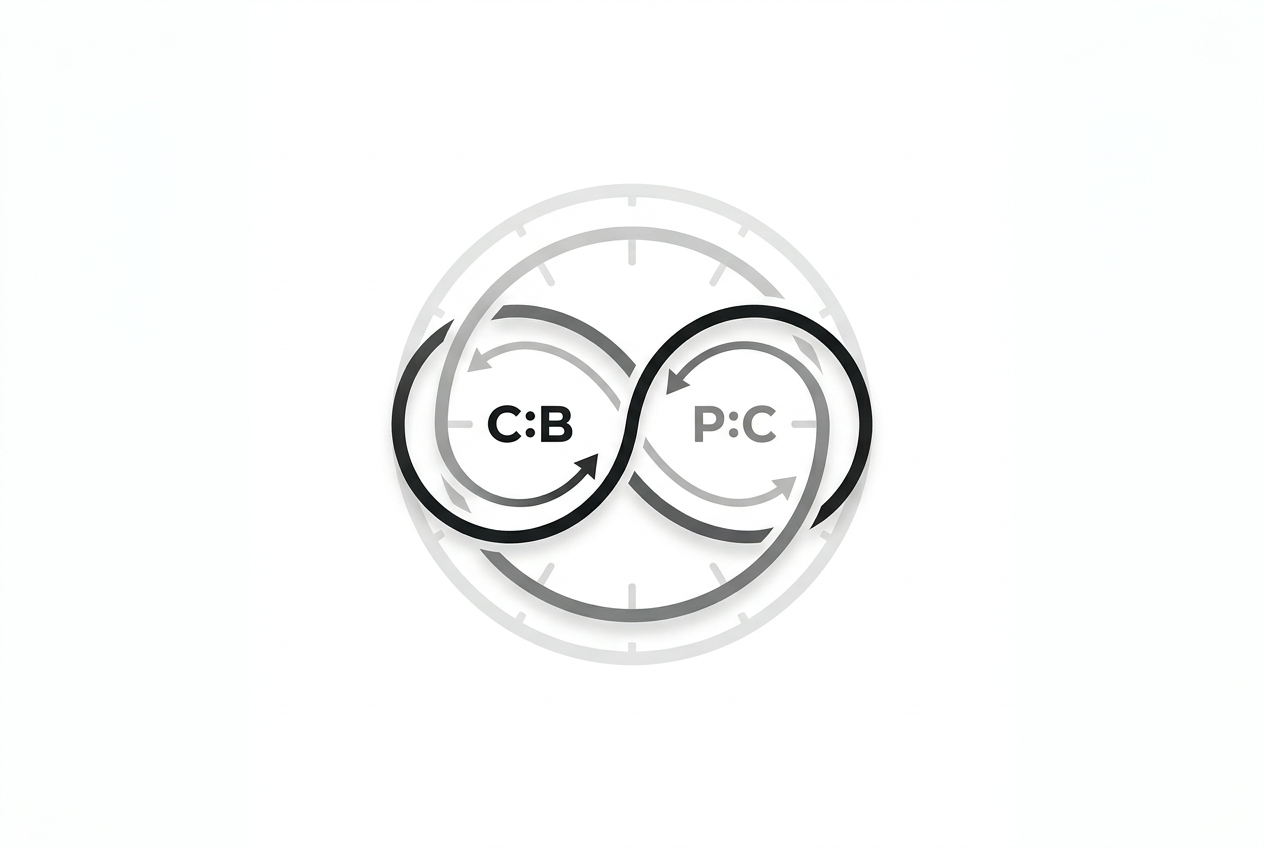
Start with the machine, because everything downstream rests on it. At "dawn," the transcription factors CLOCK and BMAL1 heterodimerize and bind E-box elements to switch on the Period and Cryptochrome genes.
The PER and CRY proteins accumulate through the day, complex together, and re-enter the nucleus — where they shut off the very machinery that made them. Then they degrade at night, the brake releases, and CLOCK:BMAL1 fire again. A roughly 24-hour oscillation, self-winding, in nearly every cell.
This is not speculative. It reportedly won the 2017 Nobel Prize. And it explains why "same drug, different hour, different target level" is biologically inevitable rather than merely plausible.
From there the field branches into three claims, and they are not equally supported.
Claim one: clock genes drive human disease. Variants in CLOCK, BMAL1, CRY, and PER are associated with metabolic disease, depression, cancer, and autoimmune disorders.
Note the verb: associated. This is genomics at the association level — correlation between gene variants and disease risk across populations. It is a hypothesis about mechanism, not a demonstration of one.
Which is precisely the trap flagged in our sibling piece "Coupled Decline": convergent observational biology gets narrated as a mechanistic finding. Circadian medicine is unusually exposed to this, because it has a gorgeous mechanism sitting right there, tempting everyone to assume the association inherits its causal force.
Claim two: morning vaccination beats afternoon. Here the observational pile is genuinely large — morning administration has reportedly, per Panda, enhanced antibody responses and immune memory for BCG, influenza, and SARS-CoV-2 vaccines.
But observational vaccine-timing data is a swamp of confounders. Who shows up at 8 a.m. versus 4 p.m.? Different sleep, different cortisol, different everything.
That is what makes the Melbourne RCT matter: it randomized the hour. And when you do that, the blanket claim collapses into a set of narrow conditions — Moderna yes, Novavax no; males yes, females no.
The sex split is not noise. Females may mount stronger humoral responses than males at baseline; there may simply be less headroom for a timing nudge to add anything — though this explanation is our own interpretation, not established in the trial. And an mRNA platform and a protein-subunit platform may engage the immune system differently enough that one responds to timing and the other shrugs — though this too is our speculation rather than something the evidence states.
So the honest translation is not "get your shot before noon." It is "for one specific vaccine, in one sex, morning helped — and the authors themselves say larger randomized trials are needed to confirm it."
Claim three is the field's only genuine interventional win on a clinical outcome, and it deserves to be read exactly as narrow as it is.
Eighty-one depression patients, four arms: morning bright light, morning placebo, evening bright light, evening placebo. The active light was 10,000 lux; the placebo was 100 lux; thirty minutes a day for two weeks.
The primary outcome was anhedonia — the loss of pleasure — measured on the Revised Physical Anhedonia Scale. Morning bright light significantly improved anhedonia versus morning placebo, and the improvement reportedly tracked a delayed melatonin peak phase (correlation P = 0.048, regression P = 0.026).
That is a real, timing-specific, mechanism-linked result. Morning light did something evening light did not, and the biology — a shifted melatonin phase — moved with it.
But look at what did not sort by timing. Depressive symptoms on the Hamilton scale improved after both morning and evening light.
So the headline win is one symptom cluster, not depression writ large. And the trial was single-blind — patients plausibly knew whether they were sitting under a blazing 10,000-lux panel or a dim 100-lux one, exactly the kind of expectancy leak that inflates subjective mood scores.
One small, single-blind RCT, one symptom cluster where timing mattered. That is the strongest interventional evidence the field has on a clinical endpoint. It is worth having. It is nowhere near a guideline.
Now, the argument the field would make in its own defense — and it is a good one — is that timing effects are easy to miss precisely because they are windowed.
One figure makes this vivid, adapted from a 2019 study (McAlpine, Nature 2019). An intervention had its largest effect at ZT4 and no effect at all at ZT16 and ZT20.
The lesson is brutal for trial design: if you had dosed only during the animal's active phase, you would have concluded — wrongly — that the treatment does nothing. A timing effect can masquerade as no effect if you sample the wrong hours.
This cuts both ways, and that is the point. It means null chronotherapy trials may be false negatives from bad timing. It also means positive results in one window tell you almost nothing about the rest of the day.
Which is why the deliverable for the next few years is not a rule. It is a map.
The chronopharmacology literature already knows this. It is not chasing "everyone dose at dawn." It is chasing the chronofit patient — the person whose circadian function is robust enough that timing meaningfully moves the target — and the specific drugs and outcomes where the effect is large enough to bank.
That framing matters because it inverts the pitch. The valuable thing isn't a universal hour; it's the ability to say who responds, to which drug, on which outcome — and, eventually, to read an individual's internal clock from a single biopsy or a wearable rather than guessing from wall-clock time.
Established chronotherapy already lives inside that logic. Statins at night, because cholesterol synthesis peaks then. Melatonin agonists before bed. These work because the mechanism and the target rhythm are known and specific — not because "timing helps" as a slogan.
So hold both truths. When you treat probably does matter — the mechanism guarantees the target moves across the day, and the Melbourne and bright-light RCTs show the effect can be real and measurable.
But real is not the same as broad. The genuine randomized signals we have are drug-specific, sex-specific, and symptom-specific — Moderna not Novavax, men not women, anhedonia not depression at large.
The correct posture, then, is neither hype nor dismissal. It is a demand: adequately powered outcome trials, sampling multiple times of day, stratified by sex and by circadian phenotype, before any of this touches a clinical guideline.
The clock hands are free to move. The evidence to justify moving them, at scale, still mostly isn't there.