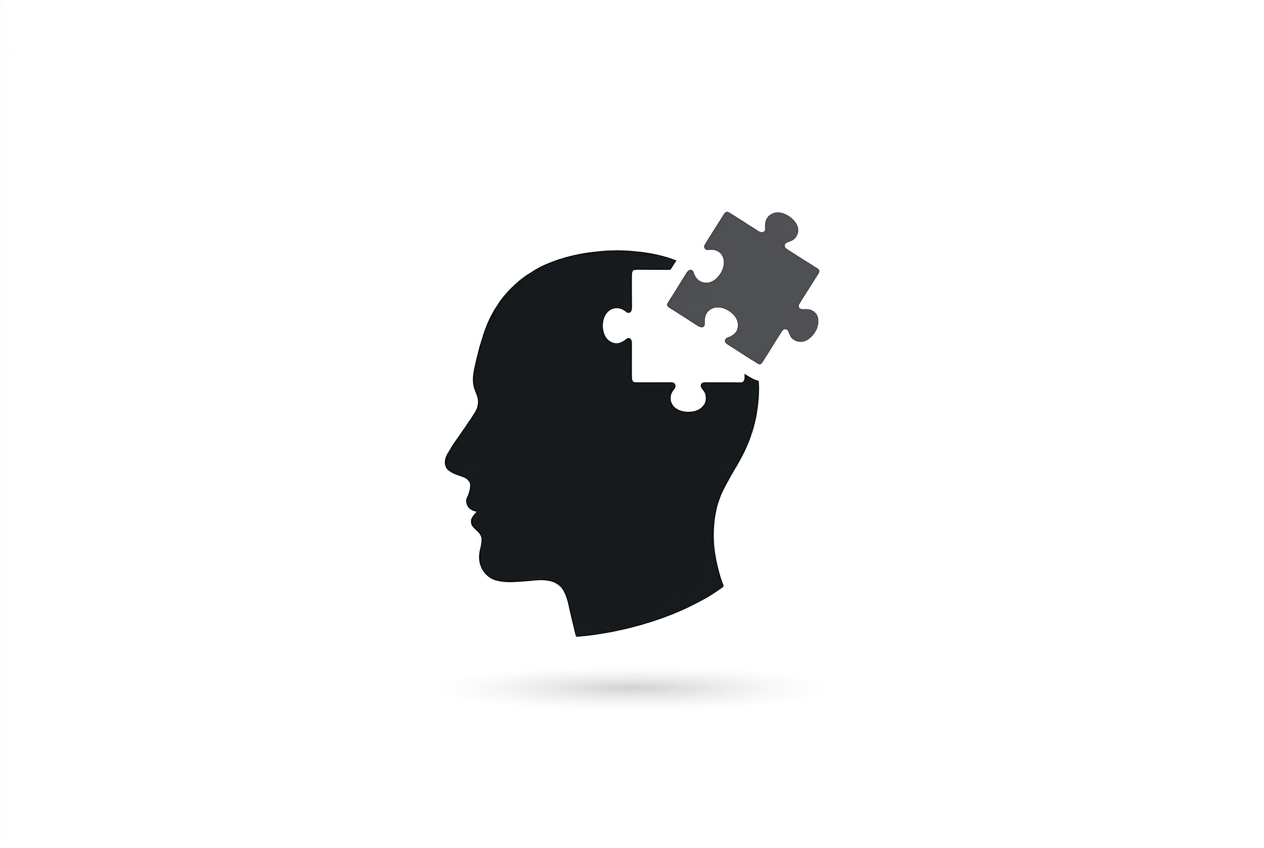
South Africa's Draft National AI Policy was withdrawn earlier this year after reviewers discovered something embarrassing: some of its citations pointed to journal articles and authors that did not exist. The references had been invented by AI.
Australia paid A$440,000 for a similar lesson. Deloitte issued a partial refund to the federal government after admitting generative AI had helped produce a commissioned report riddled with fabricated citations and quotes attributed to sources that were never real.
Both documents looked authoritative. Both sailed through sign-off. Both collapsed on contact with a reader who checked.
The obvious failure here is fabricated references—a QA problem, fixable with a verification step. But that is the shallow reading.
The deeper failure is that nobody in the chain reconstructed the reasoning. Leadership glanced at a polished draft, assumed the underlying research had already been done, and signed. The visible defect was invented sources. The invisible one was that no human mind ever traced the argument from evidence to conclusion. That is the failure that compounds.
Last week in this space we looked at AI as a substitute for human relationships—the machine standing in for the friend, the confidant. This week the same substitution logic moves one faculty over, from the emotional to the cognitive. Different organ, identical trade: something that used to require you now happens without you, and feels better for it.
That "feels better" is the whole problem, and it deserves to be stated precisely.
In the moment, delegating cognitive work to AI is, in the words of one recent study, "almost unambiguously beneficial." The task gets done faster, with less effort, and often to a higher apparent standard. There is no felt cost. The reward arrives instantly; the bill, if any, is deferred and diffuse.
This is why the standard debate—augmentation versus atrophy, how much should we delegate—is framed backwards. The frequency of offloading is not the decisive variable. The manner is.
A three-wave survey study of 589 university students and early-career knowledge workers reportedly draws the line that matters. It distinguishes dependent offloading—delegating the core thinking, accepting AI output with minimal evaluation, letting the model structure your reasoning and treating its answer as the final product—from autonomous offloading, where AI is a scaffold: you use its output to provoke your own ideas, compare it against your own reasoning, and fold it into work you still direct.
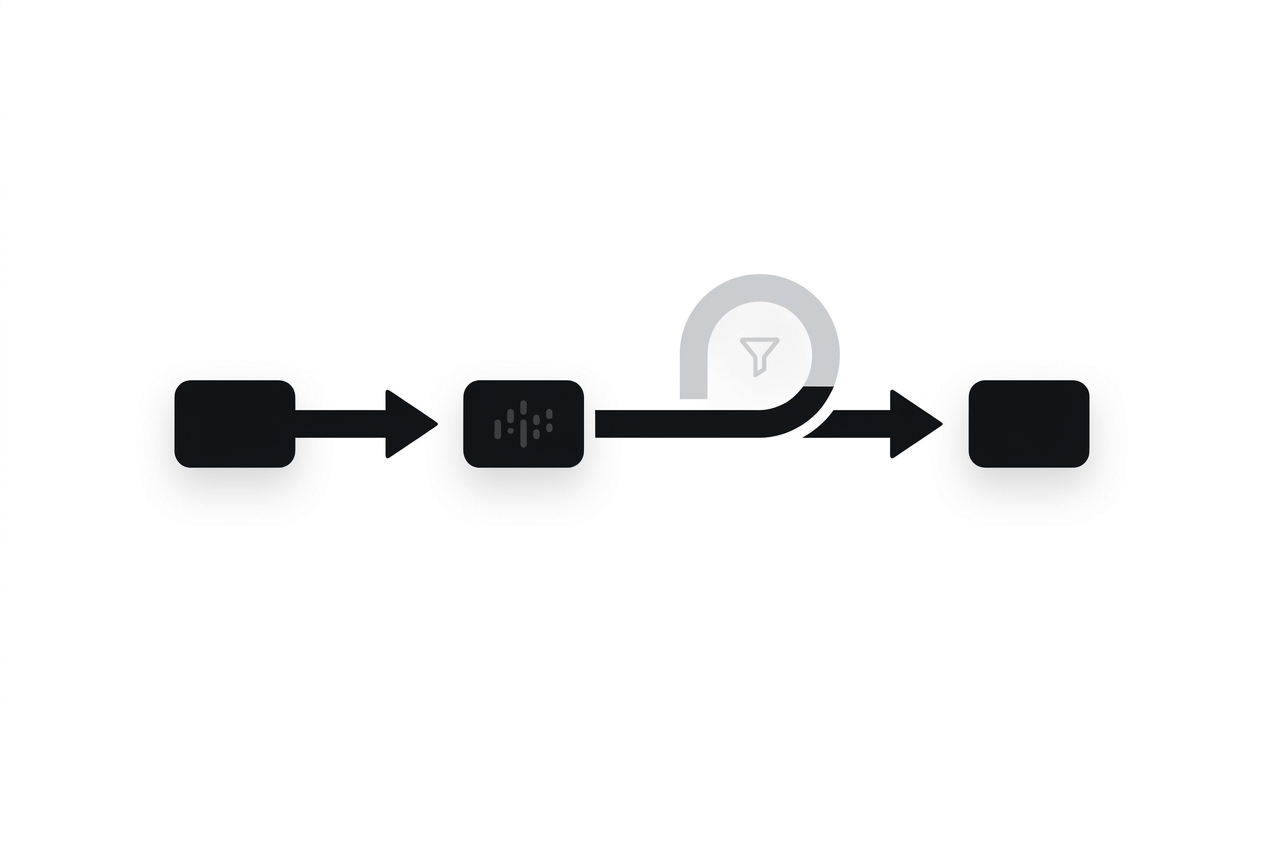
Dependent offloading was associated with what the researchers call cognitive agency transfer and with lower intrinsic motivation, and through those channels, with poorer perceived outcomes—weaker autonomous capability, less creativity, shallower processing, worse independent judgment.
Autonomous offloading ran the other way: higher intrinsic motivation, more favorable outcomes on the same measures.
So far this looks like a clean morality tale—one mode good, one mode bad, choose wisely. Then comes the twist that makes the whole thing genuinely dangerous.
Both modes yielded "comparable immediate benefits despite divergent downstream correlates." The authors spell out the implication: "potentially maladaptive AI engagement may be difficult for users to detect from immediate experience."
Read that slowly. The helpful pattern and the harmful pattern feel the same while you are doing them. They diverge only later, and only in aggregate. From inside the experience, the person hollowing out their own judgment and the person sharpening it report the same satisfying speed.
The helpful pattern and the harmful pattern feel the same while you are doing them. They diverge only later, and only in aggregate.
This is the structural blindness. You cannot introspect your way out of it, because introspection samples the moment, and the moment is exactly where the two modes are identical. The signal you would need lives downstream, where you are no longer looking.
Notably, metacognitive monitoring—paying deliberate attention to your own thinking—attenuated the link between dependent offloading and agency transfer, but did not buffer the motivational hit. Even self-awareness only half-works.
And the scale of exposure is not marginal. The KPMG and University of Melbourne survey of more than 48,000 people across 47 countries reportedly found two in three use AI regularly.
The primary driver of adoption was reportedly not productivity or quality. It was fear of missing out—cited by 48 percent—which pushed users to prioritize speed of delivery over the quality of what they delivered.
Meanwhile 61 percent had received no AI training at all. The mode you default to is being set, for most people, by nothing but the frictionless pull of the tool itself.
If you doubt the "higher apparent standard" is often just apparent, consider that even top-performing AI agents, in one 2026 assessment, reportedly failed to complete roughly 85 percent of projects to a standard acceptable for commissioned work. The polish is real. The reliability underneath it is not. That gap is precisely what a person who skipped the reasoning cannot see.
Here is where the argument has to turn honest. If self-detection fails, then telling people to "use AI mindfully" is not advice—it is a request to notice something the evidence says is unnoticeable in the moment. Personal virtue cannot fix a blind spot that is structural.
Which means the fix has to be structural too.
The most promising lever, arguably, is the AI's role itself. Most systems are configured as recommenders: you ask, they answer, the reasoning evaporates. But AI can be configured as a challenger—a devil's advocate that questions your assumptions and surfaces the weaknesses in your position instead of handing you a conclusion.
Researchers proposing to test this dual pathway note the obvious cost: a challenger imposes additional mental workload. That is not a bug. The workload is the point—it is the reasoning you were about to skip, forced back into the loop through increased elaboration of the problem.
The second lever is protecting the reasoning phases outright. The practical prescription from workplace researchers is blunt: set deliverable timelines that actually allow thinking rather than merely faster doing, and disconnect from AI tools during the brainstorming and structuring phases so that the initial synthesis is human. A whiteboard and markers, before the prompt.
There is a diagnostic buried in this too. When teams are required to defend the reasoning and methodology behind their work, it "very quickly reveals who actually did the thinking and who merely copy-pasted from an AI agent." The defense of reasoning is a test the fabricated South African citations would have failed instantly.
The framing worth building into education and workplace pipelines is the one a new Purdue graduate seminar reportedly names directly: AI systems that think with people rather than instead of them. Thinking-with keeps cognitive agency in your hands. Thinking-instead-of quietly transfers it out.
The distinction is old, actually. A good teacher does not write the student's essay; they give feedback so the student can connect and grow their own knowledge. Scaffolding builds capacity. Substitution rents it, and the rent comes due when the tool is gone.
A final concession, because the topic invites overclaiming. Nearly all of the downstream evidence here is perceived outcomes and self-report, gathered over weeks, not the years-long behavioral record that would settle whether skills actually erode. The atrophy story is plausible, mechanistically coherent, and still thin. Anyone telling you the verdict is in is selling something.
But the structural claim does not depend on the long-run damage being catastrophic. It depends only on this: the harmful mode of delegation is indistinguishable, from the inside and in the moment, from the helpful one.
If that is true—and three waves of data suggest it is—then experience will never warn you. The warning has to be engineered into the tools and the timelines before the reasoning quietly leaves the room, wearing the same satisfied smile whether it was sharpened or hollowed out.