
Here is a contradiction worth sitting with.
The American Psychological Association's new report on extreme heat in schools recommends postponing tests—and, separately, The Conversation reports a figure of $40 billion to install air conditioning nobody is funding. Most readers will treat the first as the serious proposal and the second as a footnote.
They have it backwards. The footnote is the real argument. The AC line item is what schools can't do this year. The test-postponement line is what they can.
Start with the scene that makes the whole problem concrete.
A fifth grader sits down for a math test on a 101°F day. Somewhere else, a demographically identical fifth grader takes the same test at 60°F. The student on the hot day reportedly scores about 0.06 standard deviations lower, per NWEA.
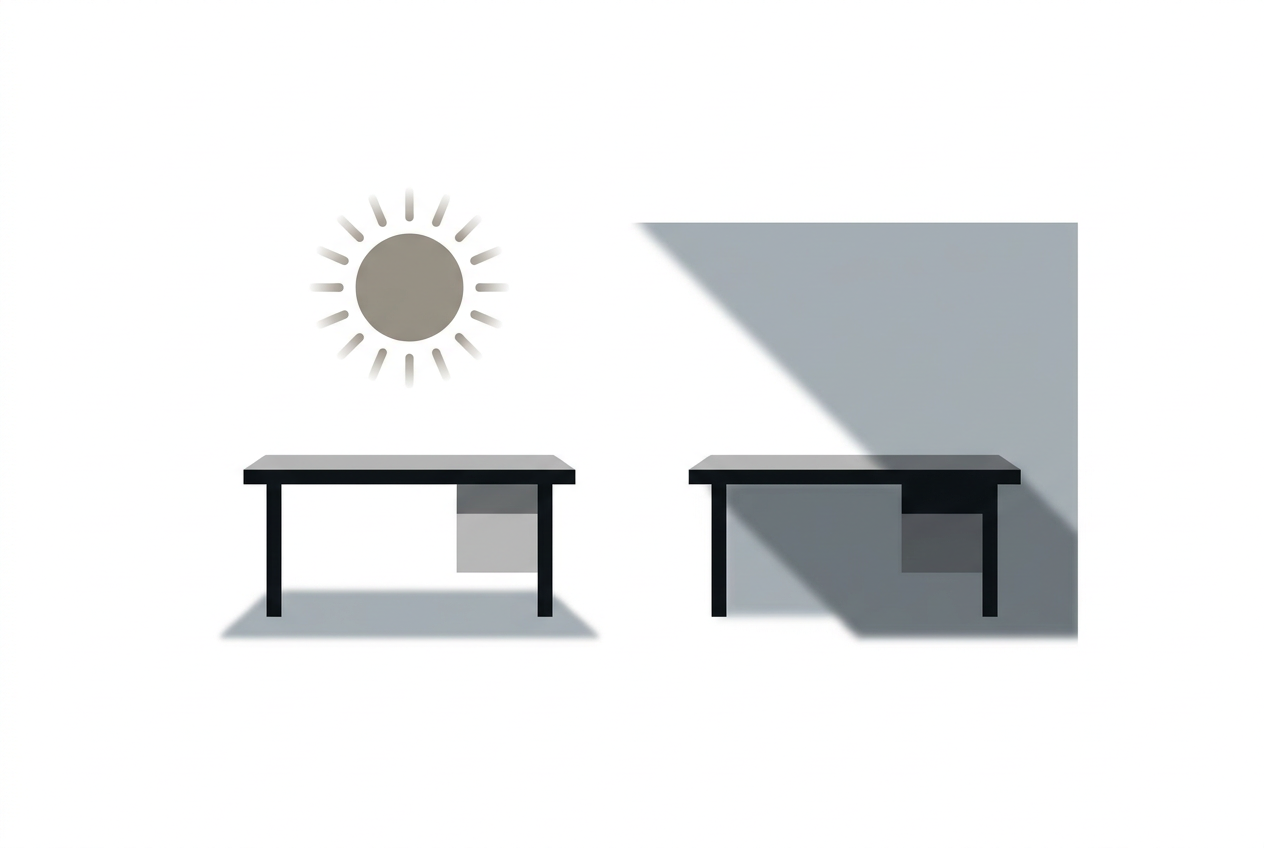
That number sounds trivial. It isn't. It equals roughly 10 percent of the math a fifth grader typically learns in an entire school year—erased not by a gap in knowledge but by a gap on the thermometer.
The child on the hot day did not learn less. The day was hotter. The test recorded the weather and printed it as a math score.
This is the finding NWEA researchers pulled from students in third through eighth grade across six states. Math scores dropped meaningfully on hot testing days, with the sharpest declines reportedly above 80°F, per NWEA. Reading barely moved.
That split—math craters, reading holds—is not noise. It is the mechanism showing its face.
According to research summarized in PLOS Climate, heat does not degrade all thinking equally; most studies indicate it affects working memory and information processing—the effortful machinery you use to hold several quantities in mind and manipulate them—while simpler retrieval like recognizing a word or recalling a fact may, by the article's own inference, be relatively less affected.
A systematic review in PLOS Climate, covering nearly 14.5 million students across 61 countries, found the same pattern: complex tasks like mathematics suffer while simpler ones like reading are spared. Heat doesn't make you forget what a number means. It makes it harder to do anything demanding with it.
So a math test on a hot day is, in effect, a stress test administered to the exact cognitive system heat sabotages. You could hardly design a more sensitive instrument for measuring temperature and mislabeling it as ability.
A math test on a hot day is a stress test administered to the exact cognitive system heat sabotages—measuring temperature and mislabeling it as ability.
Now the part that turns a measurement problem into a justice problem.
The NWEA researchers found the effect was roughly twice as large for students in high-poverty schools as for students in low-poverty ones. Same heat wave, double the damage—sorted by zip code.
The reason isn't mysterious. Air conditioning is a budget line, not a right. In under-resourced buildings, the HVAC is more likely to be broken, absent, or off—so heat lands full-force on the students least equipped to absorb the hit.
Which means the hot-day test doesn't just mismeasure. It mismeasures unequally, and in the direction that widens every gap we already claim to be trying to close. The score gap between rich and poor schools on a hot testing day is partly a real learning gap and partly an HVAC gap wearing a learning gap's clothes.
The researchers put it carefully: in schools without reliable cooling, heat "may mask students' true achievement due to unequal testing conditions." Read that again. The instrument we use to certify what a child knows is quietly registering what the building can afford.
This is where the APA report does something more interesting than most policy documents manage. It splits the problem in two, and the two halves live on completely different timescales.
Half one is physical mitigation. Install AC where there is none—an estimated $40 billion nationally, per The Conversation. Update the systems that exist, another $414 million-plus, per The Conversation. Roughly 41 percent of districts with AC reportedly need to update or replace it, according to The Conversation.
That is real, and it is not happening this year, or likely this decade. It is a generational infrastructure bill in a country that struggles to fund school roofs. Any honest reader files it under "eventually."
Half two is buried in the recommendation list, phrased almost casually: treat heat like a "snow day for cognition"—postpone assessments, adjust instructional load. And treat individual fixes like hydration as "the last layer of protection rather than the primary defense."
That phrase is doing enormous quiet work. Snow days are not a comfort policy. They are an admission that on certain days, the physical environment makes normal operation invalid, so we suspend it—no penalty, no asterisk, no pretending the missed day reflects on anyone's diligence.
We already accept that logic for snow without argument. A closed school on a blizzard day doesn't go on a student's record as a failure to attend. The weather invalidated the day, so the day doesn't count.
The APA is asking us to extend that same reflex to heat. And the analogy exposes the double standard we've been living inside: we readily let snow invalidate a school day, but we let heat invalidate a student's measured intelligence and then file the result as fact.
Here is the crucial asymmetry between the two halves. The AC costs $40 billion and depends on legislatures, bond measures, and time. The cognitive snow day costs almost nothing and depends only on a testing calendar—a decision fully inside a superintendent's authority right now.
A district cannot cool every classroom this August. A district can absolutely decline to run high-stakes standardized tests on a 101°F day. One requires money it doesn't have. The other requires only that it stop pretending.
And notice the last recommendation, about hydration. The APA explicitly demotes individual actions—water, light clothing—to the last layer, not the first. This is a pointed refusal of the usual move: turning a structural failure into a lecture about personal responsibility.
You cannot drink your way out of a testing environment engineered to depress the cognitive system being tested. Telling a kid to hydrate before a math test in a 95°F room is like telling someone to breathe deeply before you measure their lung capacity through a straw. The constraint is external and involuntary. It is not a discipline failure.
So the gap the report leaves open is not really infrastructural. It's conceptual.
Schools have quietly decided that heat is a comfort problem—something that makes a room unpleasant—when the data says it is a validity problem, something that makes the measurement wrong. Those are different categories with different obligations.
If heat is discomfort, you tough it out and the score stands. If heat is an invalidating condition, the score is contaminated and shouldn't be scored at all. The snow-day framing forces the choice, and the evidence has already made it: above 80°F, and especially above 100°F, a math test measures the thermometer as much as the student.
We don't need to resolve the HVAC backlog to fix this. We need to stop laundering a temperature reading into a permanent statement about a child's ability.
Every hot test day we let stand is a rigged measurement filed as truth. The report hands districts the language to say so—"snow day for cognition"—and the authority to act on it lives entirely on their side of the desk.
The heat is not optional. Pretending the resulting score is real is.