
Two things you were told this year cannot both be true in the way you're holding them.
The first is the slogan, everywhere now: emotions are data, not directives. Feel what you feel, don't let it drive, treat the feeling as one input among many. Susan David, whose TED Talk on emotional agility has reportedly been seen by more than ten million people, frames emotions as data, not directives, and it has metastasized into every newsletter and management deck as settled wisdom.
The second is a finding out of JKU that most of those newsletters haven't caught up to: your exhaustion is not just a readout of your workload. Under the right conditions, it is the thing generating your workload.
If a feeling can be both a report on your conditions and a cause of them, then "treat it as data" is not a method. It's a prompt for one.
Hold those together and the slogan cracks. Because if a feeling can be both a report on your conditions and a cause of them, then "treat it as data" is not a method. It's a prompt for one.
A dashboard warning light is only useful if you can tell whether it means low oil or a faulty sensor. The same amber glow demands opposite actions. Ignore the low-oil version and the engine seizes. Chase the faulty-sensor version and you replace a perfectly good engine to fix a five-dollar wire.
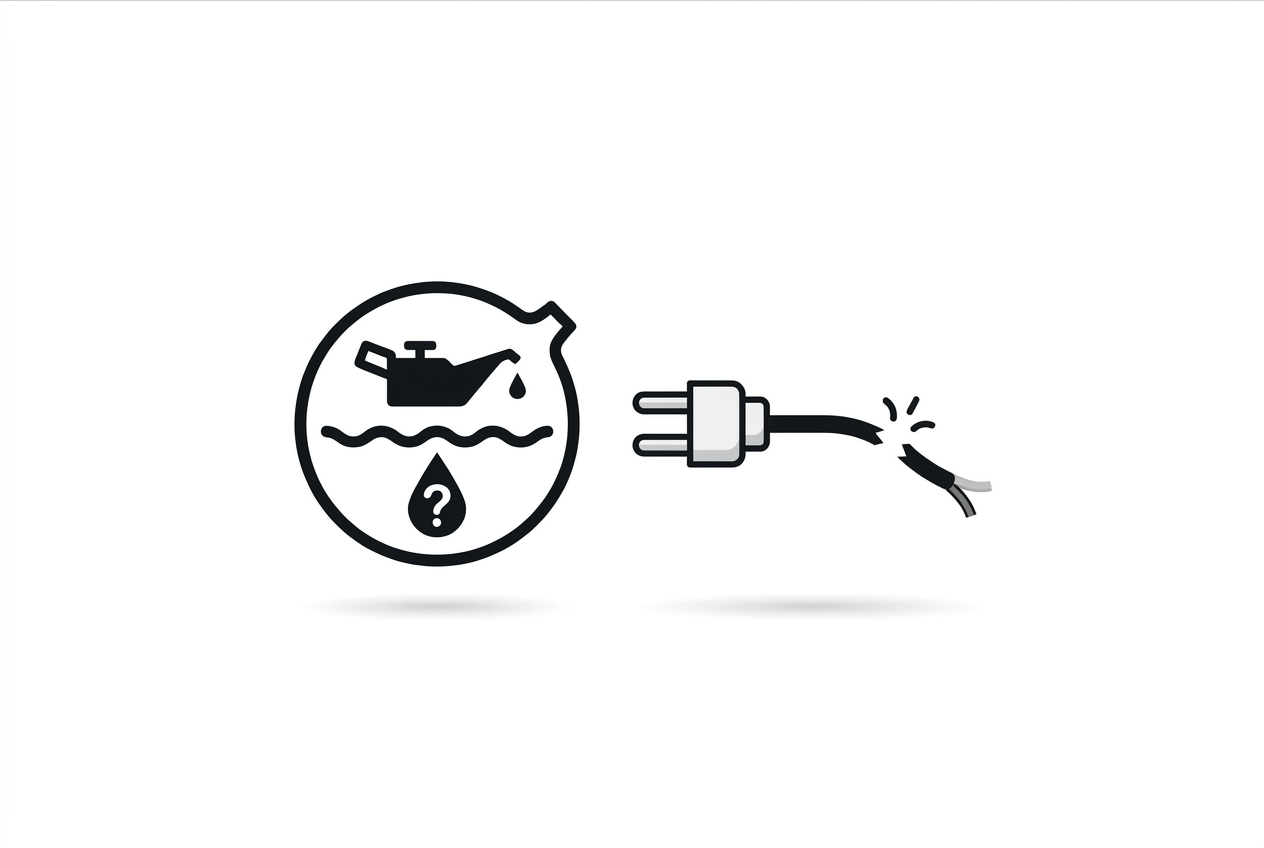
The reframe everyone has adopted stops exactly where the real work begins: reading the source of the signal. Not "what am I feeling?" but "what is this feeling reporting, and is it reporting on me or on the conditions?"
Get the source wrong and you don't just waste effort. You feed the problem.
Consider the burnout evidence, because it is the cleanest proof that source-attribution is not a philosophy seminar. Researchers at JKU reportedly applied random-intercept cross-lagged panel models to 2,131 German-speaking employees, tracked across five time points over 24 months.
The assumption baked into most occupational health theory is that stressors cause burnout. Overwork comes first; exhaustion follows. The signal, on this view, is downstream noise—a symptom.
The data said otherwise. The strain hypothesis reportedly won: an increase in burnout over six months predicted a subsequent increase in work stressors. The study reportedly found stronger support for this strain hypothesis than for the reverse, though it did not find the reverse effect entirely absent. The exhaustion came first, and the extra load followed.
This reportedly held across work overload, social stressors, and organizational stressors. And it held even when the researchers stretched the time lags out further. Support for the old causal story—stressors driving burnout—was, in their words, limited, especially once stable between-person differences were stripped out.
So burnout is not merely a reading on your system. It is, for some people, an upstream cause that manufactures more of the very stressors it appears to be measuring.
Which people? This is the part that turns the finding into a tool. The stressor-to-burnout effect reportedly showed up specifically for individuals with chronically low job resources—low job autonomy and low social support.
Read that carefully, because it tells you where the signal is pointing. If you have little autonomy and little support, your exhaustion is reporting on the structure you're embedded in. The loop runs through the conditions.
Now watch the misreading happen. The person low in autonomy and support reads their exhaustion as personal deficiency—I'm not tough enough, I'm not organized enough, I need to try harder. They attribute to the self what the data attributes to the system.
And because they've located the problem inside themselves, they respond by tightening the grip: longer hours, more self-monitoring, more of the strain that the model says produces the next wave of stressors. The misread signal generates its own confirmation.
That is the whole trap in one motion. An accurate systemic readout, mistaken for a character report, drives behavior that thickens the system's noise.
Disappointment runs the same play with different scenery. Research on organizational disappointment reportedly finds it is frequently generated at a systemic level by unrealistic targets—yet it lands on individuals as a sense of personal failure.
The mechanism is a ratchet. Exceed your work target by 10% one year, one respondent observed, and your manager doesn't reward you with a lighter load—the target is raised again, making shortfall more likely and the disappointment sharper because of your past success.
Notice what the emotion is actually reporting: a gap between expectation and reality. But the expectation was set by the structure, not by you. The disappointment is a systemic readout wearing the costume of a personal one.
People metabolize this in two familiar ways. The first is internal: I didn't try hard enough, I'm not good enough. The second is external: they failed to see my value, and I'm angry.
Both miss the target. Blaming yourself or blaming others can be a way to avoid the harder confrontation—that the expectations themselves were unrealistic or built on inaccurate assumptions.
Left unread, this calcifies into something worse than the original sting: a shrinking appetite for risk, a reluctance to invest fully in the next thing, a quiet suspicion that caring isn't worth it. The wrong source-attribution doesn't just misfire once; it teaches you to stop putting yourself in play.
Now flip the valence, because the error isn't confined to bad feelings. Moral licensing is a good-feeling signal that misfires, and it misfires by being read as the wrong kind of ledger.
A meta-analysis reportedly pooling 91 studies and nearly 7,400 participants confirmed a small but reliable licensing effect: do something you code as virtuous, and you grant yourself permission to slack afterward. Exercise once, feel the glow of accomplishment, then skip the next three workouts because you've "earned it."
The feeling here is real and even accurate as far as it goes—you did do the good thing. The error is in what you read it as. The mind converts "I took a step toward my goal" into "I've discharged an obligation," a completed moral account rather than a single data point in an ongoing process.
That conversion is the source-attribution error again, inverted. Instead of reading a systemic signal as a personal verdict, you read a single positive act as a settled moral balance—and spend the imaginary credit.
The clean line comes from the marathon. A scheduled recovery day, planned in advance and integrated into the training, is a reward. Skipping several workouts because you exercised once is licensing. Same behavior on the surface—not training today—entirely different source, entirely different meaning.
The tell is the phrase. When "I've earned it" or "just this once" starts recurring, you're using a past act to justify a present choice that contradicts the goal. The feeling of having been good is being cashed as a directive to be lax.
Across all three cases—burnout, disappointment, licensing—the failure is identical. A signal arrives, and it gets filed to the wrong source: the structure's readout logged as a personal flaw, or a single act's glow logged as a moral verdict.
So the protocol is not the popular one. Naming the feeling is table stakes; naming reduces intensity and makes an immersive state observable, and that's worth doing. But it's the entry to the work, not the work.
The work is the second question. What is this signal reporting, and is it reporting on me or on the conditions? Autonomy and support are your first diagnostic: if both are chronically low, weight the reading toward the system, because that's precisely the population in which the exhaustion-to-stressor loop fires.
For disappointment, the diagnostic is the target's origin. Trace the expectation back—did you set it, or did a ratchet set it? Grieving a promotion you'd already begun to live in your mind is a real loss, but it's a loss against a bar someone else kept raising.
For licensing, the diagnostic is planning. Was this reward scheduled and goal-compatible, or is it an impulse dressed up as a wage for good behavior?
And here is the organizational consequence, which is not soft. A workplace instrument panel only works if the lights can come on. Cultures that optimize for relentless positivity—where fear reads as weakness, sadness as unprofessional, overwhelm as incompetence—are taping over their own dashboard.
Research reportedly suggests that workplaces where disappointment can be discussed honestly tend to be psychologically safer, more creative, and better at learning from setbacks. Not because negativity is virtuous, but because a jammed instrument reports nothing, and an organization that can't read its own signals keeps replacing engines to fix faulty wires.
The half-method you inherited says: don't obey your emotions. Fine. But a signal you refuse to obey is still a signal you have to read, and reading means finding the source.
Because the most expensive mistake isn't feeling bad. It's mistaking a report on your conditions for a report on your worth—and then behaving in a way that makes the conditions worse.