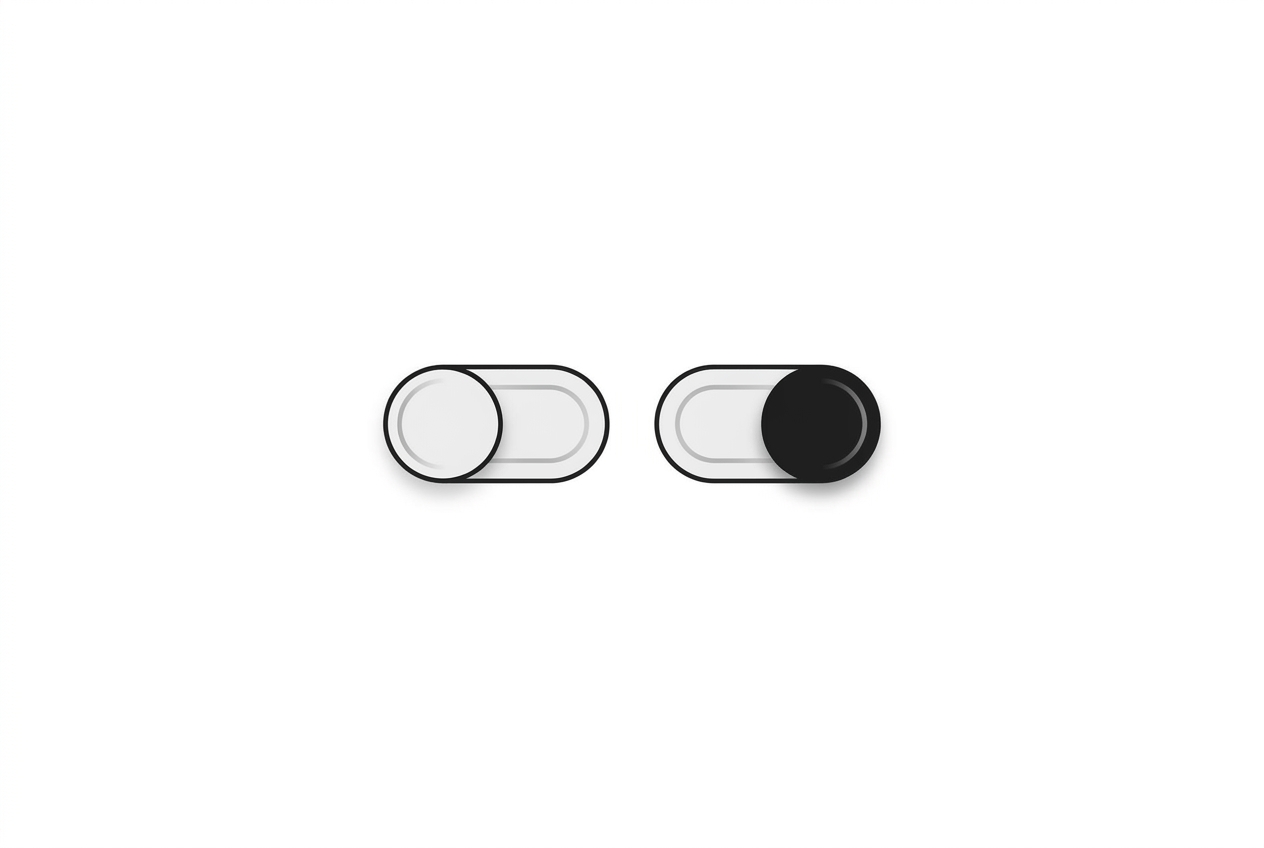
Here is the contradiction most people will miss this week: Meta shipped two products that both promise "AI that does things," and they treat your consent in exactly opposite ways.
One asks. The other assumes.
Start with the one that asks, because it's the one Meta wants you to see. The pitch for Muse Spark 1.1 is a dinner party. You're trying to pick a restaurant with friends, and instead of bouncing between Google Maps, restaurant websites, and your group chat, the agent does the legwork.
It compares places, checks opening hours, gathers the important details, and hands you the best options. Meta's framing is precise about the boundary: "You still make the final call, but the tedious research is already done."
That sentence is the whole seduction. The agent takes control of the boring parts, but control is something you grant, and it stops at your yes.
Muse Spark 1.1 is built to earn that yes. It's a model designed to interact with your computer on your behalf across desktop apps, browsers, and mobile interfaces, clicking buttons and navigating menus the way you would, or writing scripts behind the scenes when automation is faster.
It ships with a one-million-token context window, meaning it can hold onto lengthy conversations and complex projects without a refresher. It's in public preview through the new Meta Model API, so developers can throw real workloads at it and see whether it loses track after navigating dozens of websites.
Those are the right questions to ask of an agent: Can I trust it with the wheel? Does it adapt when a webpage changes? The entire product is structured around a decision you actively make and can revoke.
Now the one that assumes.
Two days before the Muse Spark news, on a Tuesday, Meta rolled out Muse Image — its first image generation model from Meta Superintelligence Labs — which the author argues did not, reportedly, get demoed nearly as loudly.
If your Instagram account is public, any Meta user can now reuse your posts and Reels to generate AI images. Not just images from your own account — anyone's, from any public account, including yours.
The switch appears, per ZDNET's reporting, to have been already flipped on. You didn't grant it. It appears, per ZDNET, to have been the default.
ZDNET's writer tested the friendly version first: asking Meta to remix a portrait photo as a dog, and the result made them chuckle. That's the demo Meta wants in your head — playful, harmless, yours.
But the mechanic that turns your face into a dog is the same mechanic that lets a stranger produce an image of you. As ZDNET puts it plainly, "that new image can be flattering or unflattering."
The process is currently clumsy — there's no direct integration, so someone has to screenshot or download your post, upload it to the Meta AI prompt, and ask for a new image. Clumsy is not the same as blocked. Clumsy gets smoother with every release, and Meta has already said Muse Image is coming to Facebook, Messenger, and, in the coming weeks, to advertisers through Advantage+ creative.
So here is the asymmetry, stated cleanly.
Muse Spark asks you to trust it with control. That's an active, revocable yes. Muse Image took your content by default. That's a hidden no you have to go find.
Muse Spark asks you to trust it with control — an active, revocable yes. Muse Image took your content by default — a hidden no you have to go find.
And finding it is the tell. To opt out, you open Instagram settings, swipe to "How others can interact with you," tap "Sharing and reuse," then under "Allow people to reuse your content on Instagram and with AI features at Meta," turn off both the Posts switch and the Reels switch.
You're not done. There's a separate section — "Allow people to create with and reuse your original audio on Meta AI" — with its own Reels toggle to flip off.
What the author characterizes as a scavenger hunt across multiple menus ends in three separate switches. Meta describes this in its newsroom post as "an easy setting to turn this feature off at any time." Easy for whom? Almost no one navigates several layers deep into settings they didn't know had changed.
Compare that to how loudly the dinner-party demo tells you the agent won't act without your final call. When Meta wants you to feel in control, it says so in the marketing copy. When it takes something by default, it puts the off switch where you'll never look.
Why does one company build both patterns in the same week? Because they serve different goals.
Muse Spark, the author argues, needs your trust to function — an agent you don't trust is an agent you don't use, so consent is the product. Muse Image, the author argues, needs your content to function — and asking permission from every public account would shrink the training and remix pool to a fraction of its size, so silence is the product.
Both are dressed in the same language of "personal superintelligence." Meta's own framing bundles them together as models that help you "take action on what you value most." But one asks what you value. The other decides for you.
This is the real story of the action era, and it's bigger than Meta. The whole frontier is pivoting from talking to doing.
1X says its humanoid robot Neo's five-fingered hands have tendon-style actuators giving them 25 degrees of freedom — nearly a human hand. Mercor just acquired Deeptune, which builds reinforcement learning environments for AI agents, reportedly three months after Mercor's CEO backed Deeptune's $43 million Series A.
Hands that grip, environments that train agents to act, models that click your buttons and remix your face. The industry is spending real money to make AI capable of doing things in the world. Which makes the consent question the only question that scales with it.
And it's worth borrowing a lesson from elsewhere in the industry. Defaults are not neutral. They are decisions someone made for you, and they can be reversed under pressure just as easily as they were flipped on quietly.
So here's the buyer's decision, and it's genuinely two decisions, not one.
The first: Do I grant this agent control of my computer? That's Muse Spark, and it's a normal, evaluable question. Test it, watch it, revoke it if it fumbles across a dozen tabs. Your yes is the whole gate.
The second: Did I notice they already took my content? That's Muse Image, and it's not a question you get asked — it's a state you're already in, unless you went digging.
Until Meta makes the second decision look like the first — an explicit ask instead of a buried toggle — the only safe assumption is the pessimistic one.
Treat every public Instagram post as training data and remix fodder. Then go turn the toggles off: Posts, Reels, and the separate audio switch, several menus deep, right now.
The agent that runs your PC is the story Meta is selling. The switch that was already on is the story that matters.