
Microsoft will spend about $190 billion on infrastructure this year, and its own product, Copilot, quietly swaps between ChatGPT, Claude, Gemini, and Microsoft's homegrown model, picking whichever fits the moment.
Then Microsoft told its customers not to get attached to any of them.
Sit with that for a second. The company pouring the most money on earth into raw intelligence is simultaneously betting you won't care which brain answers you. It's spending its capex on the very thing it's telling you doesn't matter.
The company pouring the most money on earth into raw intelligence is simultaneously betting you won't care which brain answers you.
And it's a good bet. You probably can't tell which model wrote the email you read this morning, and neither can anyone else.
Across the industry, the numbers converge on the same conclusion: close to $700 billion this year, spent making models smarter, when the models are already interchangeable enough that the biggest spender is hedging against its own product.
So the real question is the one all that money can't answer. If the intelligence is a commodity, what actually separates one AI product from another?
The answer isn't new. It's a century old, and it lives in a business nobody in a data center thinks to study: hospitality.
Every serious kitchen has a good oven. What separates a great restaurant from a merely good one is everything around the food — whether the server can read the table, whether they catch the mistake before you do, whether you leave feeling like someone was on your side.
Hospitality and retail spent a hundred years learning how to make a person feel understood. We are spending $700 billion building AI that still hasn't.
Here's the tell. Dan Maccarone, who runs the design studio Charming Robot, tells a story about his first bar, an East Village joint called Destination.
His business partner Mason Reese — a man who has never had a drink in his life — watched a bartender build an apple martini and said, satisfied, "Now that's how you make an apple martini."
How can you tell, Maccarone asked. Reese looked at the glass, that sweet antifreeze-green color, and said: "That's just what they're looking for."
Maccarone pushed. Apple pucker and water would look identical. There's no way to judge it by color. Reese looked again and said, "I just know."
Thirty seconds later the drink came back. Oversweet. Undrinkable.
That "I just know," Maccarone argues, is the exact sound an AI model makes: total confidence about something it has no way of knowing, no crinkle of the mouth to warn you it's wrong.
Reese wasn't lying. He genuinely believed he could read the drink. He'd just confused how something looks with whether it's any good — and machines inherited that flaw almost automatically, sounding as sure when they're wrong as when they're right.
But the deeper mistake underneath the martini is worse than false confidence. Reese thought he was the customer. He wasn't. He was a guy who doesn't drink, deciding what a drinker wanted.
Charming Robot puts a slide in front of every new client that reads: "We may use the product, but we are not the customer." They do it because the confusion is constant.
The AI industry is walking straight into it. The people building these tools are power users — fluent, comfortable, delighted by a clever answer — and quietly certain everyone else feels the same way.
Which is why the model gets smarter and the experience stays cold. They're optimizing for themselves and calling it research.
Now compare that to how service actually works. A great bartender doesn't read you on the first drink.
Walk into a good running store like JackRabbit and the clerk doesn't hand you the perfect sneaker. They ask what you're training for, watch you run, ask where it hurts, and come back with three boxes to try.
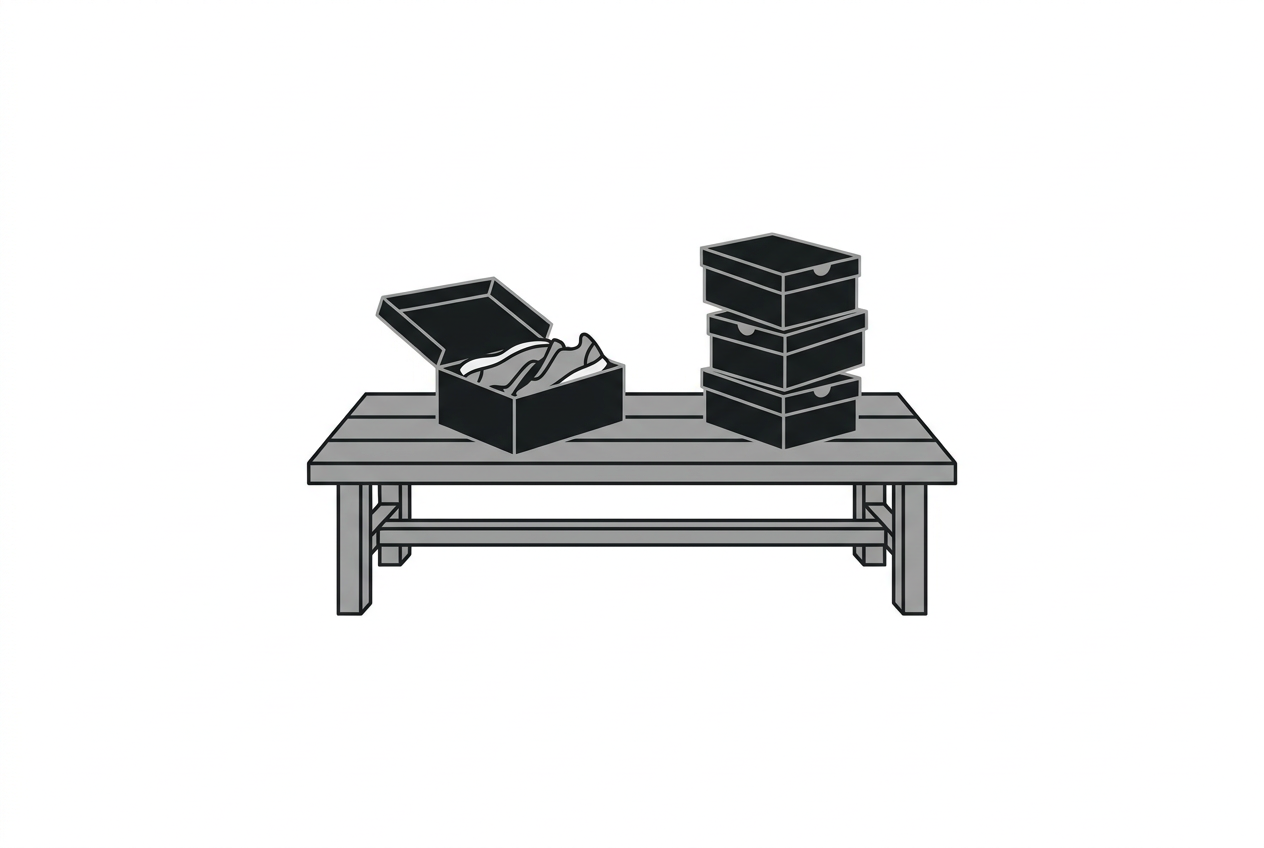
The expertise isn't in the answer. It's in the curiosity — the questions, the watching, the second and third pass.
Researchers Niels Van Quaquebeke and Will Felps have a name for this: respectful inquiry. Asking open questions and actually listening to the answer, which makes the other person feel competent and known instead of like a problem being processed.
That is precisely what AI skips. It reads the words you typed and answers once, instead of treating help as something you arrive at together.
Nobody's asking it to be psychic. They should be asking it to be curious.
And this isn't a soft preference — it's measurable, and the measurements are brutal. A University of South Florida study found that 81 percent of respondents identified emotional authenticity as a core problem with AI-based services.
Guests consistently wanted a human for anything with emotional weight: the anniversary reservation, the noisy room at midnight, the situation with no obvious solution. Not because the AI concierge gives the wrong answer — it usually gives a technically correct one — but because what they need in that moment isn't information.
It's the sense that someone in the building decided their situation was worth solving personally. That's a different thing entirely.
Jun Kwon, a Teaching Instructor at the School of Hospitality Leadership at East Carolina University, describes a stay Kwon can't even name without checking email. The room was what he expected. The kiosk worked. Nothing went wrong.
The word that kept coming to mind was "fine." And "fine," he argues, is dangerous — it means the guest left feeling nothing and will book elsewhere next time without quite knowing why. That's not a neutral outcome. That's a failure.
Here's the paradox the industry won't say out loud: the properties investing most aggressively in AI are often the ones whose guests pay $1,000 a night and expect to be remembered by name. Those guests aren't grateful when check-in is smooth. They assumed it would be.
What they remember is the front desk agent who noticed they looked worn out and quietly moved them to a higher floor. Not scalable. Also the entire point.
So the question for designers is whether warmth can be built, or whether it only lives in a person. The encouraging answer is that it's a designable interaction pattern — and some people are already treating it that way.
Look at Block's Berd, an AI desktop app reportedly built on a single insight: AI agents are abstract entities, so give them character. Distinct visual identities, roles, personalities — the animated "Gloopies" — turning sterile configuration into something tangible and personal.
The point of Berd, per the reporting on it, isn't that it's smarter. It's that it reportedly feels like working with a colleague who understands how you work, rather than a text box that answers and forgets.
The hospitality consultants are converging on the same design move from the other direction. The real shift, they argue, isn't automation — it's anticipation.
Traditional service is reactive: a guest asks, staff responds. Anticipatory service predicts the need before it's spoken and removes the friction before it's felt. Consumer research bears this out — 66 percent of consumers want AI that reads between the lines to meet unspoken needs, not just what they explicitly ask for.
That's the same instinct as the JackRabbit clerk watching you run. It's respectful inquiry, rendered as a flow instead of a conversation.
So the pattern exists. The research demand exists. The playbook is a century old. Which raises the only genuinely hard question: why is almost nobody building it?
The answer is diagnostic, and Kwon states it plainly: efficiency is easier to budget for than presence, and what gets measured tends to be what gets funded.
You can put check-in time, chatbot containment rate, and ticket resolution speed on a dashboard. You cannot put "the guest felt like someone was on her side" on a dashboard.
So the money flows to the horsepower — the $190 billion in infrastructure, the marginally smarter model — because horsepower has a number attached and hospitality doesn't. The measurable crowds out the meaningful, not because it matters more, but because it fits in a spreadsheet.
And that's exactly why the moat is available. The differentiator that actually separates one AI product from another is sitting almost entirely unfunded, precisely because it's the one thing all that capital is pointed away from.
If the intelligence is a commodity, the product that asks a second question wins. The one that watches you run before it hands you the shoe. The one that treats help as something you arrive at together.
It won't come from a bigger model. It'll come from a designer who understood that the JackRabbit clerk was never selling sneakers — she was selling the feeling of being known.
That feeling is buildable. Almost nobody is building it. Which, for anyone paying attention, is the opportunity.