By 3 PM, she had reportedly used five AI tools and re-explained her product five times, each explanation slightly different, each output reflecting a slightly different interpretation of what she was building.
That's from a day one product manager spent building a fintech feature, tracked step by step. Brainstorm in ChatGPT at 9. Competitor analysis in Claude at 10, re-describing the product and the users from scratch. UI mockup in v0 at 11, re-describing the feature again, then thirty minutes fixing output that ignored the design system. PRD in Notion AI at 1, re-explaining everything. Stakeholder review at 3: "This doesn't look like our product." Back to v0.
Per Figr, the 2024 Reforge State of AI report found product teams use an average of 4.3 distinct AI tools. Its blunt conclusion: the cumulative context tax exceeds the time savings.
The 2024 Reforge report found product teams use an average of 4.3 distinct AI tools — and its blunt conclusion: the cumulative context tax exceeds the time savings.
Hold that number against what practitioners are actually publishing, because something odd is happening in the how-I-work genre right now.
Line up the posts. Adam Barta reportedly runs seven tools. Chetan Singh, a senior product designer in Delhi, reportedly runs four. An interior design coach prescribes a four-part stack. Alice Boone writes a routing guide; Felix Haas reportedly sells a three-tool stack with two branching workflows. Figr, in its illustrative list of the tabs open in your average week, names seven example tools.
Not one of them names a winner. And every single list is organized by job, not by brand.
The anonymous ChatGPT-book author gives the cleanest statement of it. "Everyone keeps asking which AI tool to use, as if one of them is going to win. None is." That author reportedly came up in print design, where the desk ran Photoshop, Illustrator, and QuarkXPress at once, each for a very specific task. "The skill was the routing, not loyalty to any one box on the screen."
That's the convergence. Several independent practitioners reportedly landing on the same structure: a small cocktail of specialized tools, matched to jobs. Chetan's is almost a poem — reportedly, Claude thinks, Figma designs, Cursor builds, Codex automates.
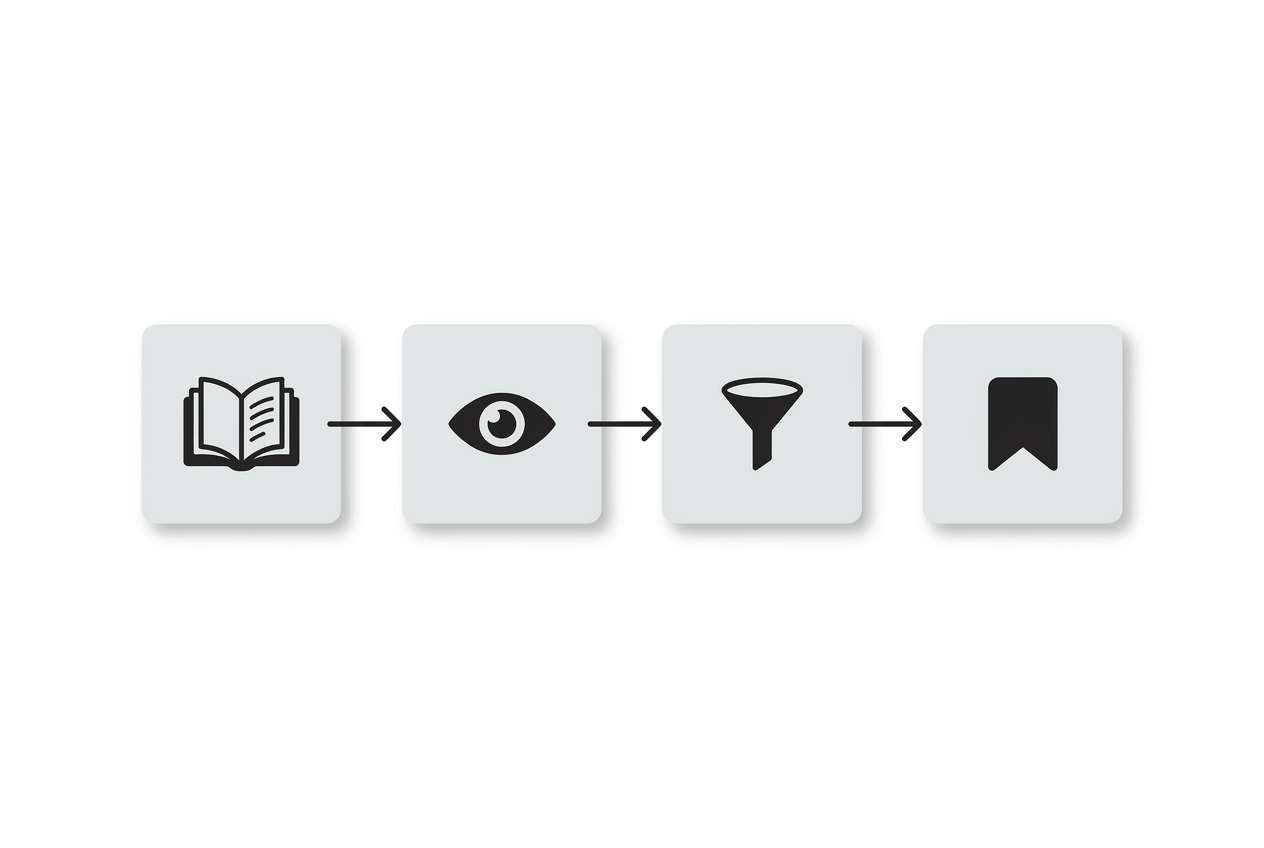
So here's the flip. If everyone independently arrives at the same cocktail structure, the interesting question isn't what's in the glass. It's what holds it together.
Because assembling the stack turns out to be the easy part. The names are almost interchangeable and admittedly disposable — the ChatGPT-book author reportedly notes moving off Perplexity, Lovable, OpenAI, and Google search this year alone. "The names could change next week. The habit of matching tool to job won't."
The expensive part is the one the PM's tracked day exposes: being the human integration layer. Figr says it plainly — you are not using AI tools, you are the glue between them. Copy from one, paste into another, translate formats, reconcile inconsistent outputs, remember what each tool was told. That cognitive overhead scales with tool count. Three tools, manageable. Five, exhausting. Seven, and you spend more time managing context than doing the work.
If judgment is the part no model absorbs, then the routing logic and the accumulated context are pure judgment. They are exactly the thing that can't be outsourced to a smarter box. Which is why the winning move isn't a better tool. It's externalizing the judgment so you stop re-performing it five times a day.
Watch how the practitioners who've figured this out actually do it.
Barta is explicit about where the intelligence lives: not in Flora or Midjourney or Figma, but in Notion. "My taste, my project details, my decisions — all of it lives in text files (in my case in Notion)." The tools handle execution. The context file directs them.
The ChatGPT-book author wants something sharper still. The author is after "a way to decide which job needs which tool that doesn't reduce to my taste." Read that carefully. The author is trying to externalize their own routing instinct into something legible and portable — worth more, the author says, than the tool list itself.
That's the real product. Not the cocktail. The recipe, and the standing instructions that let anyone — including you, next month — pour it the same way.
The most concrete form of this is what the author does in Claude Code: writing skills. Reusable capability files handed to the model once and called forever, "instead of re-explaining the same task every session." The author reportedly writes them in the CARE format — Context, Ask, Rules, Examples — reportedly following nnGroup's guidance. "A skill written as a vague paragraph rots; one written in CARE holds up," per the author. Version it, fold each correction into the Rules, let good results accrue as Examples. The tenth version is the good one, not the first.
Notice what that is. It's the PM's five re-explanations, collapsed into a single artifact you author once and the system carries forward. It's the context tax, refunded.
Smashing Magazine gives this a name from the vendor side: folder instructions. You define what a folder is for, how files behave, what actions can happen inside it — and then, in their phrase, you "set its intent once and let the system follow it." Same move, different surface. The intent is external, portable, and enforced without you standing there re-narrating it.
Which brings us to the vendor question, and it's the one design orgs are about to spend real money getting wrong.
The dominant bet right now is consolidation — the all-in-one "AI-first" suite that promises one tool for images, code, layouts, and assets. Barta's read is brutal: the pitch sounds great and in practice doesn't work, because everyone ends up with output that looks like everyone else's — same everything tool, same defaults, no direction. "The problem is the assumption that one tool can replace a design process."
Smashing names the alternative that practitioners actually want. Not AI-first, but Quiet AI — tools that sit in the background and assist in repetitive tasks without screaming for attention or disrupting the workflow. Their example is Claude embedded inside Excel, PowerPoint, and Word: assistance in context, wired to the mental models years of work already built.
The distinction is the whole procurement decision. AI-first asks you to reorganize your process around the tool. Quiet AI asks the tool to organize itself around your process. One imposes a mental model; the other respects the one you have.
And here's the tension no suite resolves: the thing practitioners keep externalizing — routing rules, taste, standing intent — is precisely the layer that has to sit above any individual tool to work. A skill only compounds if it's portable across sessions and, eventually, across tools. A Notion context file is valuable because it's not locked inside Flora or Figma. The moment you consolidate into one suite, that layer becomes proprietary and stops being a spine.
So the budget line is the wrong one. Design orgs keep shopping for a flagship license, the one seat that wins. But the practitioner's actual pain isn't a shortage of capabilities — Reforge reportedly found product teams use an average of 4.3 distinct AI tools already sitting on the average desk. The pain is the context tax, paid five times a day in slightly-different re-explanations that produce slightly-different outputs nobody asked for.
Fund the fix, not the fantasy. What a design org should be building is a governed context spine — the shared, versioned equivalent of Barta's Notion files and the ChatGPT-book author's CARE skills, the place taste and routing rules live and compound — plus integration surfaces that let specialized tools plug in and quiet AI embed where the work already happens.
The winners, as Figr puts it, won't be the teams with the most tools. They'll be the teams with the most coherent context.
The skill is the routing, not loyalty to any one box on the screen. Buy for that.