
At 12:30 a.m. UTC on August 29, a wallet beginning 0x6183 staked roughly $74.89 million worth of HYPE and delegated another 188,790 tokens — about $15.19 million — inside a two-hour window.
The address belongs to Bitwise's spot Hyperliquid ETF, BHYP. This is not a trader building a position. It is a regulated fund routing its underlying tokens into a proof-of-stake network to manufacture yield for shareholders.
That transaction, not the day's headline flow number, is the story allocators should be reading.
That transaction, not the day's headline flow number, is the story allocators should be reading.
The headline number is real enough. U.S. spot Ethereum ETFs pulled in $225.8 million on August 27, their strongest single session since October 28, 2025, capping a nine-day run worth $1.42 billion.
The tape looks like broad institutional conviction returning to Ethereum. It isn't.
BlackRock's ETHA accounted for $1.02 billion of that haul — roughly 72% of everything that came in — and it bought on every single one of the nine sessions. Arkham flagged $889.8 million across the first eight days alone, a figure that matched Farside's tally to the dollar.
Strip out ETHA and the "ETH is back" narrative thins considerably. This is one mega-fund mechanically absorbing beta, not a fleet of allocators independently deciding Ethereum deserves fresh capital.
Bitwise's own Max Shannon put the mechanism plainly: the flows are "reflexive and momentum-based," driven by a rise in cross-asset risk appetite rather than anything Ethereum-specific. He noted spot volume has softened to its 16th percentile year-on-year since the rally began — meaning the buying is not being confirmed by underlying trading activity.
Worth one line on macro: lower Treasury yields helped the risk-on tone, so this ETF demand looks partly decoupled from any hawkish policy turn rather than a bet against it. That's the extent of it.
The point is that concentrated, momentum-driven inflows into a single passive price-tracker tell you very little about the durability of institutional interest. They tell you the wrapper is doing its job as a beta pipe.
The more durable signal is happening one layer down — at product design.
Look again at what BHYP did. Bitwise didn't just buy HYPE and hold it; it staked the tokens in-house, through Bitwise Onchain Solutions, to generate network yield on top of price exposure. It is the only Hyperliquid ETP sponsor using its own infrastructure to stake rather than outsourcing to a third party.
This is a template, not an experiment. Bitwise ran it first with Solana.
Its Solana Staking ETF, BSOL, has captured roughly 81% of the $1.06 billion in total U.S. spot Solana ETF inflows since launching last October. It stakes nearly 100% of its holdings in-house, currently at a net staking rate of about 5.82%.
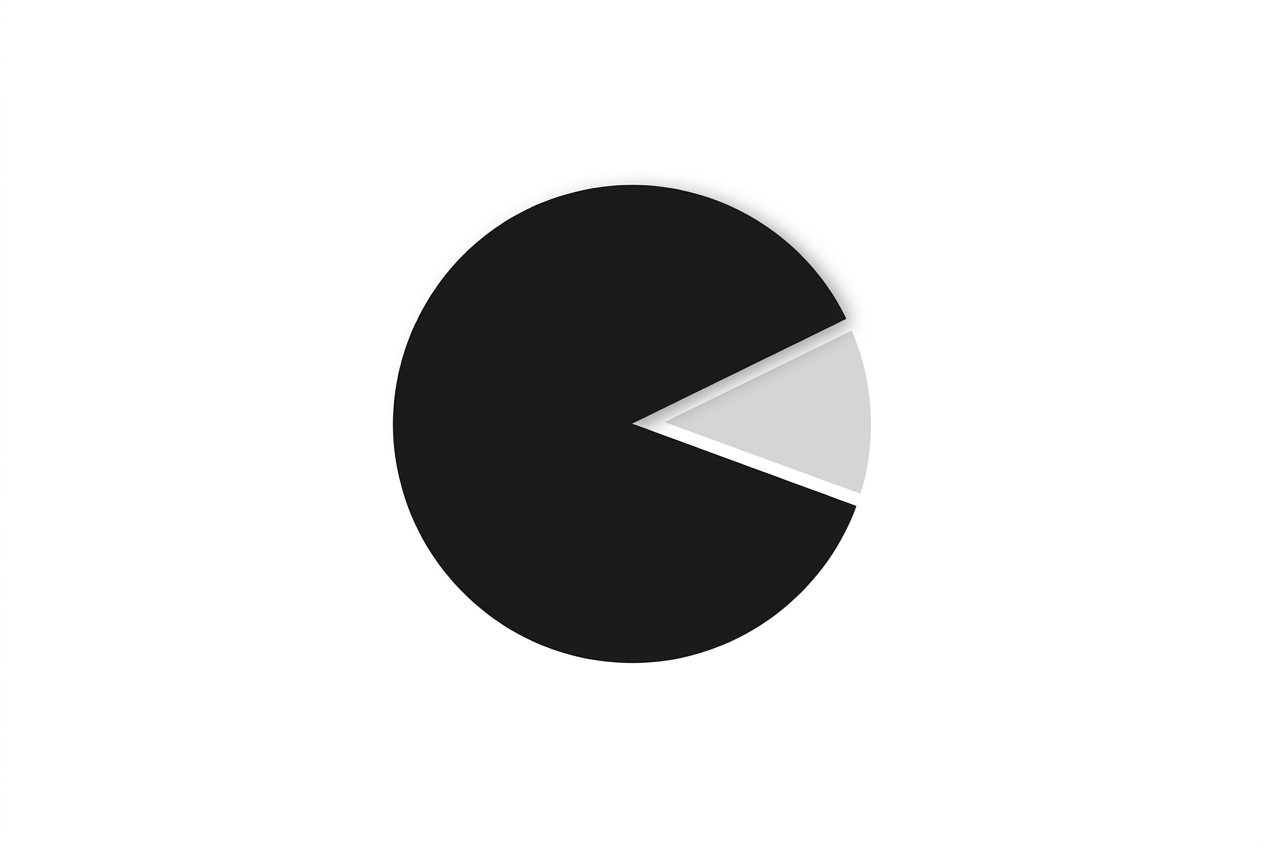
That 81% share is the number to sit with. In a category with multiple issuers, one fund took four dollars in five — and the differentiator was yield baked into the wrapper.
Bitwise priced BSOL aggressively to win the land grab: a 0.20% sponsor fee, waived entirely for three months on the first $1 billion, with staking fees waived over the same window. BHYP followed the same playbook — 0.34% sponsor fee, zeroed for the first month on the first $500 million.
The strategic read is that Bitwise is not competing to be the cheapest ETH beta. It is competing to own the yield-bearing, multi-asset frontier of the ETF wrapper before larger issuers arrive.
Note who is absent from this part of the story. BlackRock is dominating flows into ETHA — a plain price-tracker — while Bitwise is quietly rewriting what an ETF is allowed to contain.
That inversion matters. The firm winning the headline flow race is doing conventional beta; the firm writing the structural playbook is a fraction of its size at $11 billion in client assets.
The wrapper is mutating from a passive price mirror into an access layer — one that delivers staking yield, network participation, and exposure to assets most allocators could never custody themselves. BHYP holders get HYPE staking rewards without running a validator or managing a wallet. BSOL holders get 5.82% without touching Solana's infrastructure.
And the access curve is widening at the same time from the distribution side.
Charles Schwab said on August 27 it will add Solana, Avalanche, and Chainlink to its direct crypto trading platform "in the coming months," extending beyond the Bitcoin and Ethereum it launched in May. Trades carry a 0.75% fee — steep against BSOL's economics, but Schwab is selling trust and integration, not price.
Read those two developments together. Bitwise is pushing product design down the market-cap curve into HYPE; Schwab is pushing distribution down the same curve into SOL, AVAX, and LINK.
The broadening allocators should track in 2026 is not Ethereum reclaiming its 200-week moving average. It is regulated exposure — often yield-bearing — reaching assets that sat firmly outside the institutional perimeter a year ago.
Which is exactly where the fragility lives.
The SEC still has no explicit guidance on staking inside an ETF. The entire in-wrapper yield model — BSOL's 5.82%, BHYP's $74.89 million delegation — is being built ahead of the rules meant to govern it.
That is the single regulatory hinge on which this whole thesis turns. Remove clarity, or have it arrive unfavorably, and the feature that gave BSOL 81% share becomes a liability.
The disclosure gaps deepen the concern. Bitwise has not detailed how BHYP handles slashing risk or lock-up periods — the two mechanical hazards that separate staking yield from a Treasury coupon.
Slashing can destroy principal if a validator misbehaves. Lock-ups can trap tokens when a fund needs liquidity to meet redemptions. Neither risk has a published answer for BHYP, and both sit inside a structure that is, by its own prospectus, not registered under the 1940 Act and not entitled to those protections.
So the honest framing is this. The most consequential institutional broadening of the cycle is being engineered live, in production, on assets like HYPE — ranked tenth by market cap after less than two years of trading — inside wrappers whose defining feature has no regulatory blessing and whose key risks remain undisclosed.
The $225.8 million day will be forgotten by the next tape. The 0x6183 staking transaction is the one that redefines what these products are.
Watch the wrapper, not the flow.