"From sublinear to superlinear and finally to linear."
That phrase, buried in a University of Helsinki paper published in Physical Review Letters, is the kind of sentence that quietly rearranges billions of dollars in engineering plans. It describes how fast tungsten falls apart under fusion radiation—and it says the material breaks down faster, in a regime nobody's models predicted.
Hold that thought, because the hardware isn't waiting.
The testing network built to validate the industry's assumptions could be the thing that invalidates one of its most load-bearing bets.
Last week the story was money—the finance-and-valuation turn that has fusion startups reportedly raising nine figures on the strength of simulations. This week it's steel, and the uncomfortable question underneath all of it: what will the inner walls of these machines actually be made of?
Start with the machines themselves, because they are getting genuinely enormous.
A 23,000-pound magnetic core, built by Elytt Energy in Spain, just crossed the Atlantic to Princeton, New Jersey. It bundles two magnet systems—toroidal-field coils and an ohmic-heating system—into a single structure joined from 36 copper conductors, each 19 feet long, wrapped in fiberglass and resin.
It's the heart of a revived spherical tokamak, reportedly aiming for first operation in 2027.
Across the Pacific, the numbers get larger still. In Hefei, the Institute of Plasma Physics has built a 582-ton superconducting magnet, 21 meters long—the largest ever made for a controlled fusion reactor, reportedly destined for China's BEST project.
And a Chinese toroidal-field magnet, completed for the country's fusion-reactor research facility, is reportedly 1.3 times the volume of ITER's TF magnet and stores three times the magnetic energy—though it is not clear from the sources whether this is a distinct magnet or the same one described elsewhere. It was built in six years, with a claimed 100 percent domestic supply chain, 47 patents, and 14 new industry standards.
That last detail is the tell. Patents and standards are not the language of a physics experiment. They're the language of a supply chain—an industry preparing to build the same thing many times.
The US is building the same way. General Atomics just landed a $20 million tax credit for a fusion blanket test facility in Poway, California—a lab to stress-test the components that must breed tritium while surviving the neutron flux. Thea Energy took another $20 million to standardize stellarator magnets into a handful of repeatable templates, arranged like pixels on a screen.
And Oak Ridge, with private partner Rutherford Energy Ventures, launched FULCRA—a shared testing network built explicitly to stress plasma-facing materials, breeding blankets, and radiation-resistant sensors under fusion conditions.
Notice the pattern. The money is flowing toward the unglamorous middle of the machine: magnets that confine, blankets that breed, walls that face the plasma. Fusion has visibly graduated from arguing about plasma physics to bolting together industrial hardware.
All of it rests on a shared, mostly unspoken assumption: that tungsten will hold up as the plasma-facing wall.
Tungsten earned that role honestly. It reportedly has the highest melting point of any metal, and for decades that made it the obvious choice for the surface that stares directly into a plasma heated past 100 million degrees Celsius. The Helsinki paper itself calls tungsten the "leading choice for the plasma-facing wall material of tokamak fusion reactors."
Which is exactly why the paper's finding lands so hard.
Here is the physics. Fusion produces high-energy neutrons. When one of those neutrons slams into a tungsten atom, it knocks that atom out of its lattice position. The displaced atom hits others, which hit others—a "collision cascade" that ripples through the metal in picoseconds.
One way to measure the damage is simply to count the atoms knocked loose per recoil. Current models assume that count rises sublinearly with recoil energy, then linearly. Slow, then steady. Budgets and lifespan estimates are built on that curve.
The Helsinki team reportedly found a third regime hiding in between: sublinear, then superlinear, then linear. Superlinear means the damage accelerates—more defects per unit of energy than the models expect, precisely in the high-energy range a real fusion reactor would deliver.
They found it by doing something new. Jesper Byggmästar and colleagues built a machine-learning model that runs on GPUs and simulated one billion atoms at once—a scale never before reached in this field.
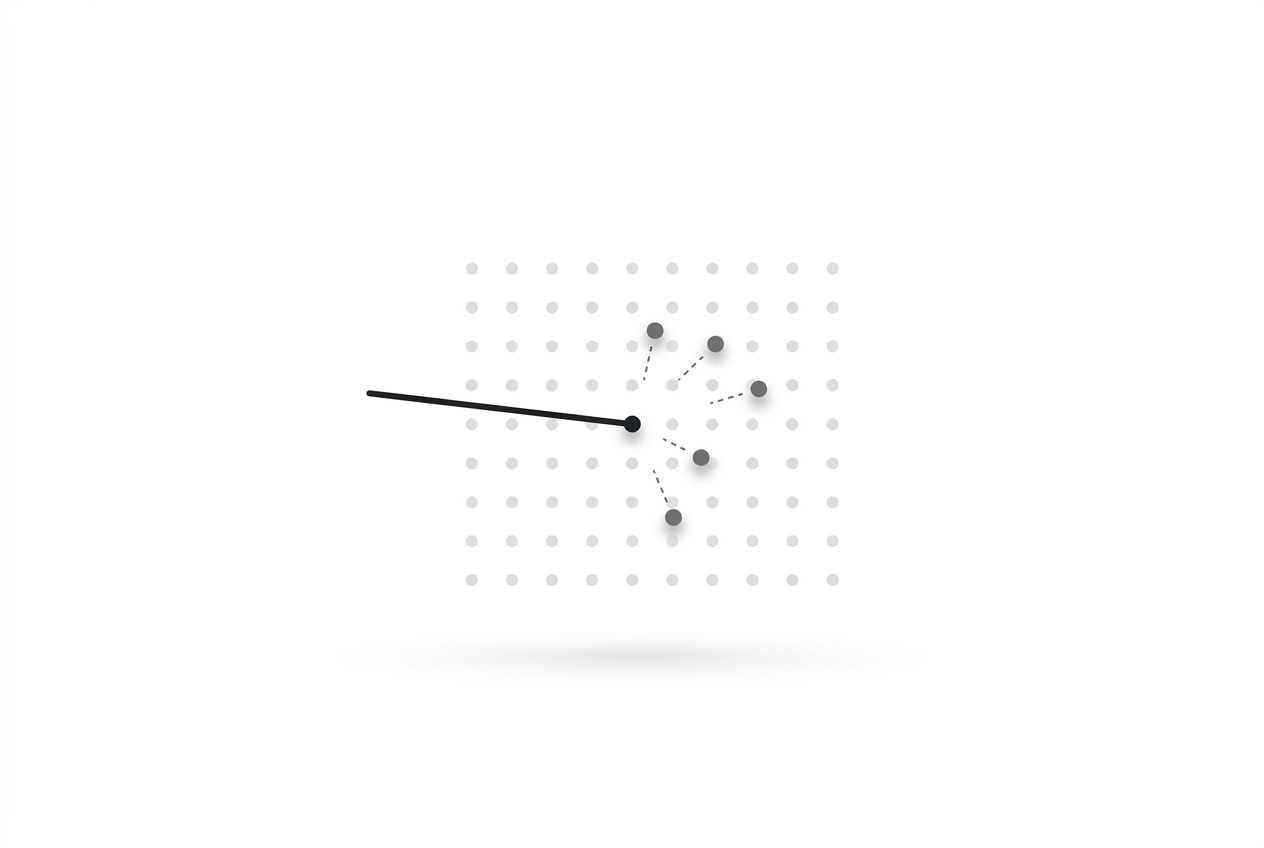
The imagery is striking. Their simulations capture a collision cascade in tungsten just 200 femtoseconds after a single 2 MeV recoil, atoms glowing red-to-yellow by kinetic energy as they scatter from their lattice positions. At higher energies the cascade splits into separated subcascades, changing how the damage recombines—and how much survives.
The upshot, in Byggmästar's framing: as you approach fusion-relevant energies, tungsten components "would deteriorate more than originally anticipated."
This is a simulation of primary damage—a single recoil, not years of accumulated dose. The team is careful about that. But primary damage is the input to every longer-term prediction, and if the input curve is wrong in the superlinear direction, the lifespan estimates built on top of it are optimistic.
That's the quiet detonation. Not that tungsten is disqualified—but that a core input to everyone's component-life math was miscalibrated, and in the worse direction.
Here's the part that should give the confident bets pause: ITER is still planning to use tungsten as its plasma-facing material. So is essentially everyone else. The material was penciled in years ago, and the machines being assembled right now were designed around it.
Byggmästar is diplomatic about this. The lessons, he says, apply less to ripping tungsten out than to designing more durable components in general. The study doesn't rule tungsten out.
But it doesn't have to rule it out to matter. If plasma-facing walls degrade faster than budgets assume, they need replacing sooner, and replacement schedules feed directly into the economics that fusion startups are selling to investors—a working reactor that must swap its inner wall too often is not commercially viable.
Which brings the irony full circle.
The US just built FULCRA and funded General Atomics' Poway blanket lab precisely to answer questions like this—to stress-test plasma-facing materials and breeding blankets under real conditions before they end up in a power plant. That infrastructure exists to catch exactly this kind of problem.
Which means it may be about to deliver bad news. The testing network built to validate the industry's assumptions could be the thing that invalidates one of its most load-bearing bets.
And the single thread worth watching from last week connects here. Fusion startups have raised money on the strength of simulations—including breeding-blanket models that facilities like FULCRA and General Atomics' lab are meant to confirm.
Now a second simulation has upended a separate materials assumption entirely. When breeding-blanket data starts coming in, the question isn't just whether it confirms the startups' models. It's whether the whole simulation-to-hardware pipeline has been quietly optimistic about how these materials behave under neutron bombardment.
The deeper point is symmetry. A tungsten problem is not an American problem or a Chinese problem. It's a physics problem, and physics doesn't care who wins the magnet race.
China can build a magnet 1.3 times ITER's volume with a fully domestic supply chain. Princeton can ship a 23,000-pound core across the ocean. Neither achievement changes what a 2 MeV recoil does to a tungsten lattice at 200 femtoseconds.
If the wall material fails, both sides redesign. The magnets—the visible, record-setting, patent-generating hardware—are the part everyone can see and celebrate. The wall is the part everyone assumed.
Assumptions are cheaper than magnets. They're also the parts that fail last, and cost the most when they do.