ITER's vacuum vessel completes fabrication, entering its final assembly phase
More than 10 tonnes of filler material. Thirty-five-metre welds, 60 millimetres thick. Three shifts a day, six days a week, for thirty months.
That is what happens next at ITER — not what happened on July 22.
What happened on July 22 was a ceremony. About 150 people gathered at the Cadarache construction site in southern France for "Korea-ITER Fusion Day," where HD Hyundai Heavy Industries collected a plaque of appreciation and executives spoke of milestones and international cooperation.
The occasion: the last vacuum vessel sector Korea manufactured had been assembled into a sector module and lowered into the tokamak pit, joining others already there. The headlines followed predictably — the world's largest fusion reactor "nears completion."
That framing gets the story backwards.
This week the world's flagship reactor cleared a fabrication gate — and the gate closing behind it opens onto the single most dangerous phase of the entire build.
This week the world's flagship reactor cleared a fabrication gate — and the gate closing behind it opens onto the single most dangerous phase of the entire build.
Here is what "nears completion" conceals. Fabricating the nine sectors was hard, but it was known hard — a matter of forgings, machining, and quality control at industrial scale. What comes next has never been done.
The sectors are impressive objects. Each stands 11.3 metres tall, 6.6 metres wide, and weighs roughly 400 tonnes. Korea's HD Hyundai built four of the nine — double its original allocation, after winning two EU-designated sectors in 2016 on top of the two assigned to Korea in 2010, delivering all four by 2024.
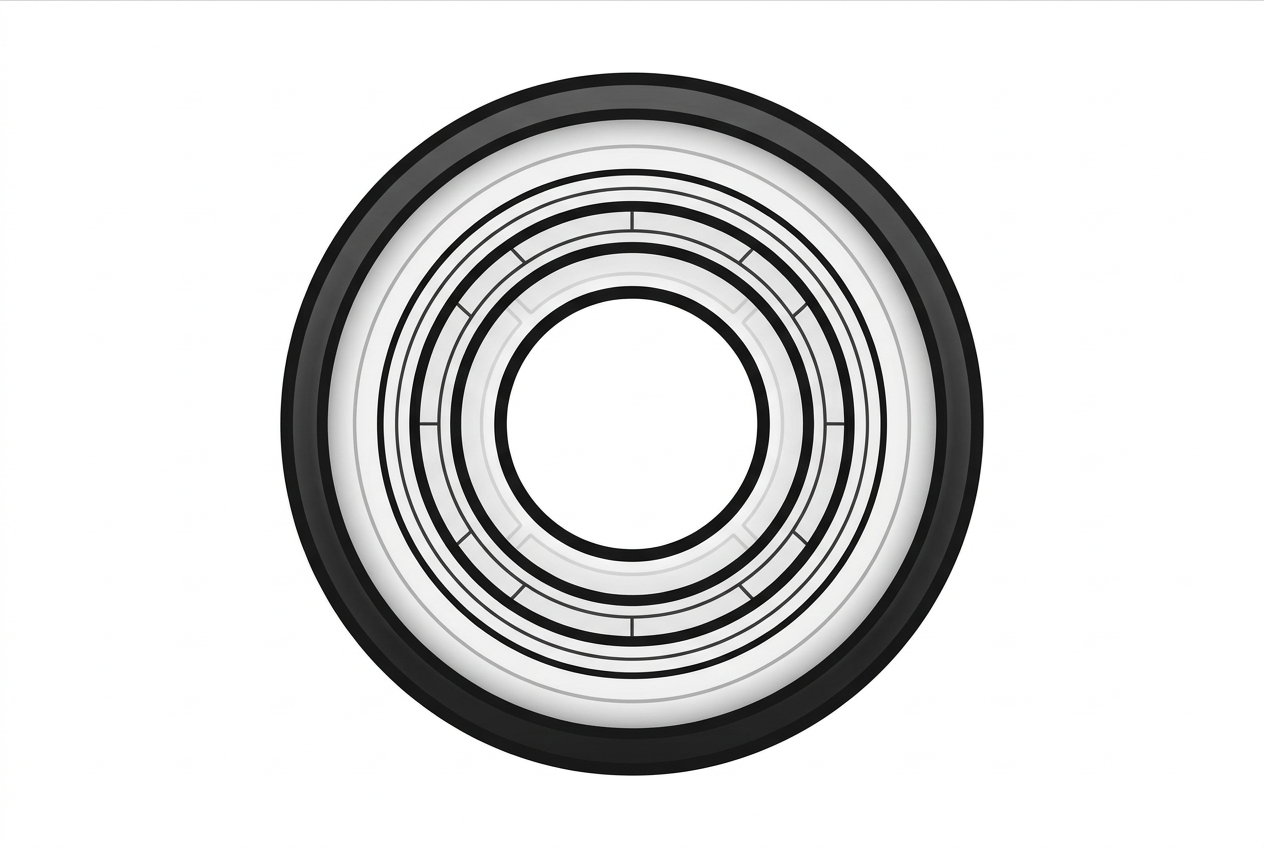
But a sector sitting in a pit is not a vacuum vessel. Nine of them clamped together and welded into a single hermetically sealed torus — that is the vacuum vessel, and it will weigh about 5,000 tonnes.
Welding those seams is the job ITER handed to Westinghouse in June 2025, in what the organization itself called one of the most pivotal responsibilities of tokamak assembly.
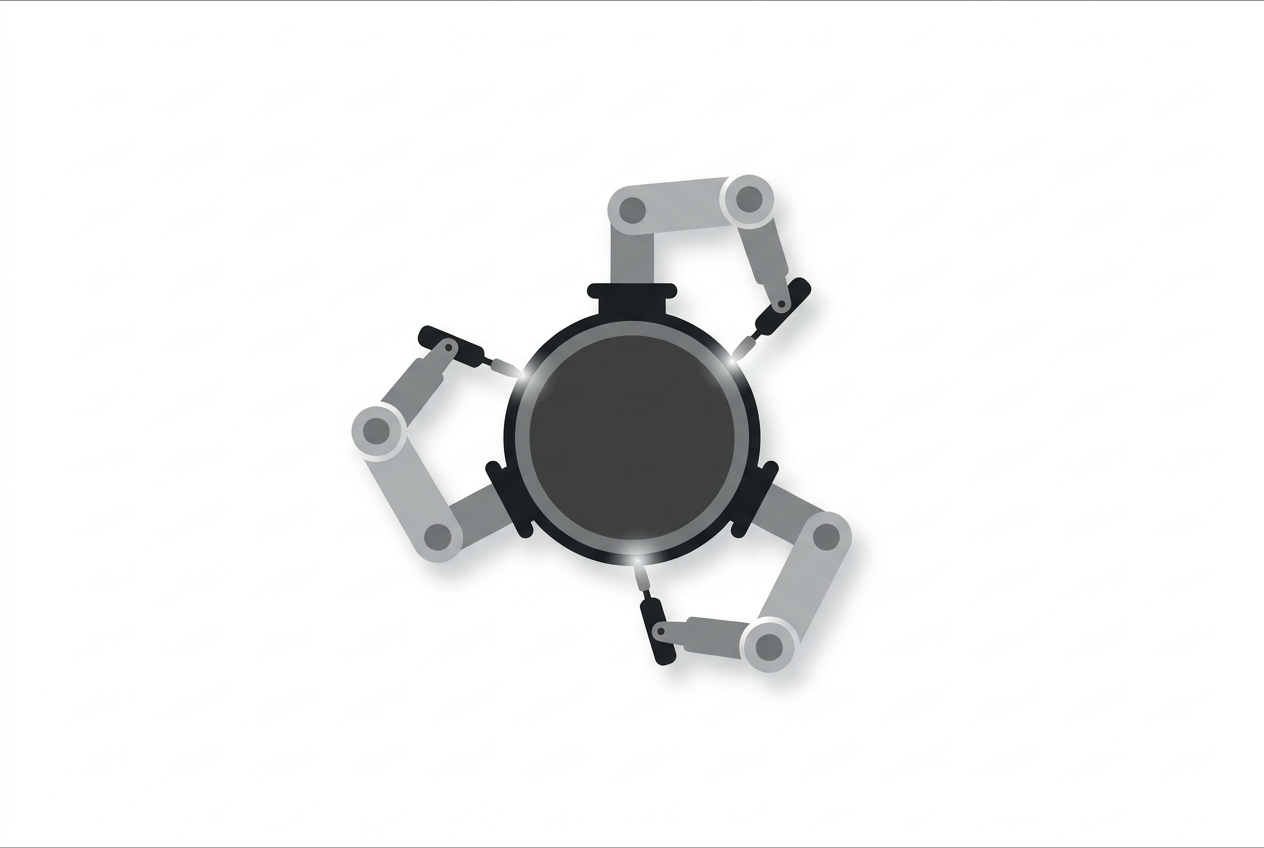
Consider the scale. Each field-joint weld on the outer wall will be roughly 60 millimetres thick and 35 metres long. Three groups of four robotic welders will work simultaneously on joints spaced 120 degrees apart, then shift 40 degrees, then again, until the circle closes — and then the entire operation moves inside the chamber to do it all over again on the inner wall.
Welding deforms steel. Welding steel at this scale and volume threatens to deform it unpredictably — and a fusion chamber that isn't geometrically regular won't hold plasma properly.
That risk is why Director-General Pietro Barabaschi threw out the original plan. ITER had intended to weld sectors into groups of three, then join the triplexes. Barabaschi rejected it, judging the deformation too uncontrollable.
The new approach: weld nothing until all nine sectors are in the pit and firmly clamped together, so deformation distributes uniformly across the whole vessel.
Once it begins in 2027, the process runs 24 hours a day, three shifts, six days a week, pausing only for radiographic and ultrasonic tests. About 60 Westinghouse experts per shift — 180 in total — will sustain that pace for 30 months.
Alessandro Bonito-Oliva, who leads ITER Tokamak Delivery, did not undersell it: "Even at ITER, where we are accustomed to singular, first-of-a-kind activities, this welding of the vacuum vessel will be quite unique. To sustain such a level of intensity, at the required level of quality and precision, will be a challenge."
So no — ITER does not "near completion." It nears the starting line of its hardest lap.
And here is the genuinely surprising part, the fact that got buried under the ceremony: ITER is running ahead of schedule.
After a decade in which the pandemic and the repair of key components piled up delays, vacuum vessel assembly is not merely back on track. The CNPE Consortium — the China-and-France industrial team now handling sector module sub-assembly — has driven the time to complete one module — from the arrival of the sector in tooling to its landing in the tokamak pit — from 7.4 months down to 5.5.
That compression matters concretely. The expected date for transferring the final sector module into the pit has moved up from December 2027 to June 2027 — six months of recovered margin.
As Machine Assembly Program Manager Jens Reich put it, those extra six months "create flexibility for the overall baseline and will serve as a margin to deal with any future technical challenges." On a project this size, banked margin is oxygen.
The gains came from experience, not luck. Sector #9's pre-assembly preparation — bosses, studs, sensors, cables welded onto the walls — took just over three months, despite twice the sensor work of earlier sectors. The first European sector, #5, had needed more than six months for half as much.
This is what a maturing industrial base looks like: the same teams, doing the same tasks, getting faster because they've done them before.
Which brings us to the reframing worth sitting with. The reflex is to score ITER against the private-sector clocks — the startups promising net energy on venture timelines.
But ITER isn't losing that race so much as running a different one. Its job is to de-risk the physics and the industrial base at government scale — to prove that a 5,000-tonne torus can be welded to tolerance, that 100-million-degree plasma can be confined in a chamber that, per ITER, will be six times larger than any tokamak before it.
Every private fusion venture that follows will draw on the supply chains, the welding qualifications, the tooling, and the hard-won lessons that a project like this generates. HD Hyundai learned to build these sectors using capabilities from shipbuilding; that expertise, arguably, doesn't evaporate when ITER is done.
The fast clocks and the slow grind are, arguably, converging, not competing. Someone has to establish that the industrial base can do this at all, and, arguably, no venture-backed startup was ever going to spend two decades and seven governments' budgets finding out.
Still, momentum is fragile, and the honest question is whether ITER's recovered pace survives contact with the welding gauntlet.
Sub-assembly efficiency and torus welding are different beasts. Shaving months off module preparation is a coordination problem the CNPE Consortium has now solved repeatedly. Sustaining 180 experts and robotic welders across 30 months of first-of-a-kind seams, with every joint subject to radiographic scrutiny, is a problem no one on Earth has solved yet.
ITER knows this, which is why an intensive R&D and qualification program is running now — the stated goal being to reach 2027 with fully qualified equipment, processes, and personnel.
So the real test isn't the plaque handed out in Cadarache. It's whether the discipline that clawed back six months of schedule can hold when the robots start welding a torus that has to be perfect the first time.
That answer won't arrive until deep into 2027. But for the first time in a long while, ITER approaches its hardest task with time in the bank rather than time to make up — and that, not the ceremony, is the milestone.