Article — "Fusion's fuel-cycle gamble: tritium breeding advances even as funding cracks and ITER slips": Here is the contradiction most fusion boosters never say out loud: the industry sells its fuel as inexhaustible, and it is right about half the fuel. Deuterium is everywhere—one in every 6,500 atoms in the ocean. Its partner isotope is the problem.
Only about 7.5 kilograms of tritium exist naturally on Earth at any given moment, made when cosmic rays strike nitrogen in the upper atmosphere. A single 1-gigawatt fusion plant would burn close to 55 kilograms in a year.
So the "inexhaustible fuel" line is a promissory note, not a fact. It only comes true if breeding works—and breeding has never been demonstrated at scale.
The 'inexhaustible fuel' line is a promissory note, not a fact. It only comes true if breeding works—and breeding has never been demonstrated at scale.
Last week this column looked at the regulatory and licensing pathways that fusion startups must clear before they can operate. This week the bottleneck moves upstream, to the fuel itself, and to the financing structures that may decide who ever gets to burn it.
Start with the civilian stockpile. Roughly 25 kilograms of non-military tritium exists worldwide, most of it owned by Canada and squeezed out as a byproduct of aging CANDU fission reactors. Those plants produce about 2 kilograms a year combined. The United States reportedly makes roughly another 2 kilograms annually at Watts Bar—but that supply is reserved entirely for nuclear weapons.
And tritium does not wait for you. With a half-life of about 12 years, any stockpile shrinks by roughly 5 percent annually. You cannot warehouse your way to a fuel supply.
Worse, most of that civilian 25 kilograms is already spoken for. It is earmarked for ITER. So a startup that plans to run on deuterium-tritium—and about 70 percent of surveyed fusion companies do—cannot simply buy its way to a fuel supply. It reportedly has little choice but to make its own.
The only credible route is breeding: line the reactor's inner wall with a blanket rich in lithium-6, let the fusion neutrons strike it, and the lithium reacts to produce fresh tritium you can extract and feed back in. In theory the margins work. A running reactor can approximate a closed fuel loop.
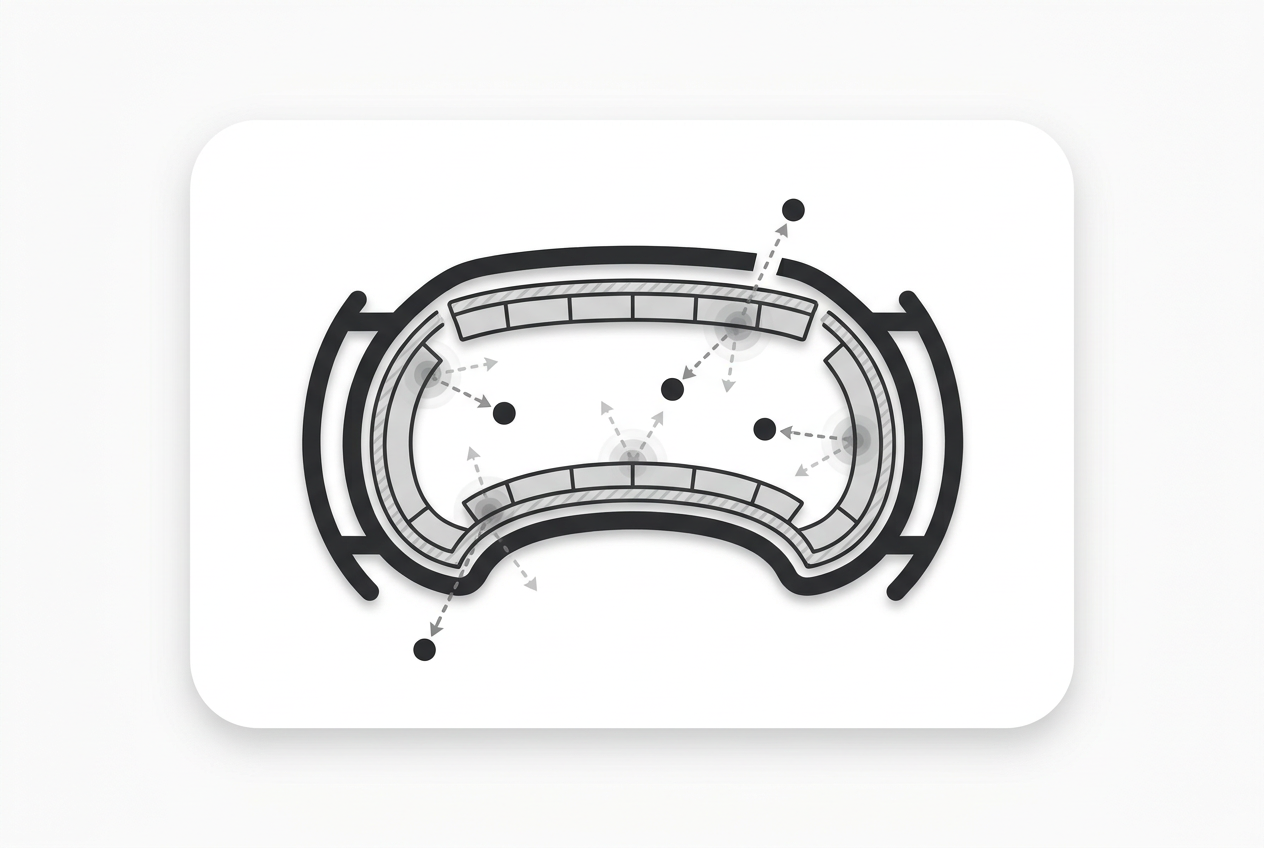
The catch sits inside that sentence: a running reactor. Breeding requires an intense neutron flux that only an operating fusion machine produces. You need fusion to make the fuel for fusion.
This is where the genuine progress lives, and it is real. Commonwealth Fusion Systems says it will be the first organization to use the UK Atomic Energy Authority's Lithium Breeding Tritium Innovation program—LIBRTI—to test a blanket built around FLiBe, a molten mix of lithium fluoride and beryllium fluoride, in a realistic neutron environment.
That matters because "realistic neutron environment" is the phrase that separates a spreadsheet from an experiment. FLiBe is central to the design of CFS's planned ARC power plant, and validating net tritium production at engineering scale before you commit to a full plant is exactly the kind of de-risking the field has too often deferred.
The institutional scaffolding is thickening too. The UKAEA and Japan's National Institutes for Quantum Science and Technology signed a Memorandum of Cooperation covering, among other things, fuel cycle and safety—the unglamorous plumbing of a working plant, built through shared facilities and joint research rather than press-release optimism.
And the hardware keeps arriving. In late June, China's Institute of Plasma Physics announced that two core superconducting magnets for its EAST tokamak had passed full-parameter testing at 100 percent domestic production.
The centerpiece is a toroidal-field magnet 21 meters long and weighing 582 tonnes—reportedly the largest of its kind ever built, with 1.3 times the volume of ITER's TF magnets and three times the stored energy. This is fusion moving from paper to steel.
So the hardware is moving. Now look at the anchor tenant for the world's tritium, and the picture darkens.
ITER was reportedly once scheduled for first plasma around November or December 2025—a date its own council had reportedly validated as "challenging but technically achievable." That date is gone. First plasma has slipped to 2034, and the deuterium-tritium campaign, the phase that actually burns tritium and, per the article's reading, tests breeding-relevant conditions, is now expected in 2039.
The causes are the ordinary pathologies of a first-of-a-kind megaproject: vacuum vessel sectors that arrived with dimensional non-conformities, leaks and stress-corrosion cracking in thermal shield piping, regulatory scrutiny, and re-sequenced assembly. Overoptimistic planning met underestimated manufacturing risk, and the schedule paid.
Here is the collision. The reportedly largest planned consumer of civilian tritium—the machine whose D-T campaign the world's fuel stores are reserved for—will not burn a gram of it until 2039. The clock on that stockpile keeps ticking down 5 percent a year regardless.
Meanwhile, the money is running on a completely different timetable.
At The Economist's Fusion Fest, the mood was reportedly buoyant—$1.6 billion raised across the sector in the past year—but the tension underneath was about IPO timing. TAE Technologies and General Fusion have both announced plans to merge with publicly traded companies, a route to hundreds of millions in fresh capital and an exit for long-committed investors.
Neither has reached scientific breakeven—the point where a reactor design produces more energy than it consumes. No fusion startup has. CFS is reportedly among the companies expected to hit that milestone next year, which is precisely why its LIBRTI work reads as substance rather than theater.
Set the two timelines side by side and the problem is stark. Closing the fuel loop is inherently a multi-year, capital-hungry, reactor-dependent slog. Going public before scientific breakeven rewards the story, not the loop.
It is the same failure mode this issue flags elsewhere in a different arena: a narrative outrunning the fundamentals. Public markets can price a compelling story for a while. They tend to lose patience precisely when the hardest, least photogenic engineering—tritium extraction, blanket lifetime, breeding ratios above unity—demands the most sustained investment.
That is the trap. A company can raise on the promise of fusion power and then face quarterly pressure exactly during the years it most needs to spend patiently on a fuel cycle that produces no revenue and no press release until it works.
Some firms are hedging by selling magnets or moving into nuclear medicine—CFS and Tokamak Energy among them—to fund the marathon. Others, like Inertia Enterprises, insist on staying laser-focused on the power plant. Both instincts are defensible; neither resolves the underlying mismatch between financing cycles and breeding cycles.
Strip away the excitement and one question decides the field. Whoever demonstrates a closed tritium loop first—breeding at least as much fuel as they burn, and extracting it reliably—controls their own fuel destiny in a world where the natural supply is 7.5 kilograms and the earmarked civilian stockpile is 25.
Everyone else is a customer of a market that does not yet exist, waiting on a reactor that will not burn D-T until 2039.
LIBRTI, the UKAEA-QST fuel-cycle work, China's 582-tonne magnet—these are the right moves, the physics finally being tested where neutrons actually fly. The danger is that the financing structures reward the wrong milestone.
If public markets keep paying for IPO timing instead of closed-loop proof, they may starve the very work that determines who survives. Fusion's fuel problem is solvable. Its funding problem is that the money and the fuel are running on divergent clocks—and the fuel does not care about the quarter.