Article — "Nvidia's Open-Source Endgame: A Reported $13B Hugging Face Deal and $3.5B MediaTek Bet": Article — "Nvidia's Open-Source Endgame: A Reported $13B Hugging Face Deal and $3.5B MediaTek Bet": Two things Nvidia said this year cannot both be true, and yet here we are.
The first: Jensen Huang co-signed a letter, along with 24 other companies, urging Washington not to restrict open models — a full-throated defense of AI decentralization.
The second: Nvidia has reportedly agreed to spend roughly $13 billion to buy the open-model movement's crown jewel and $3.5 billion to bankroll the design house helping hyperscalers stop buying its chips.
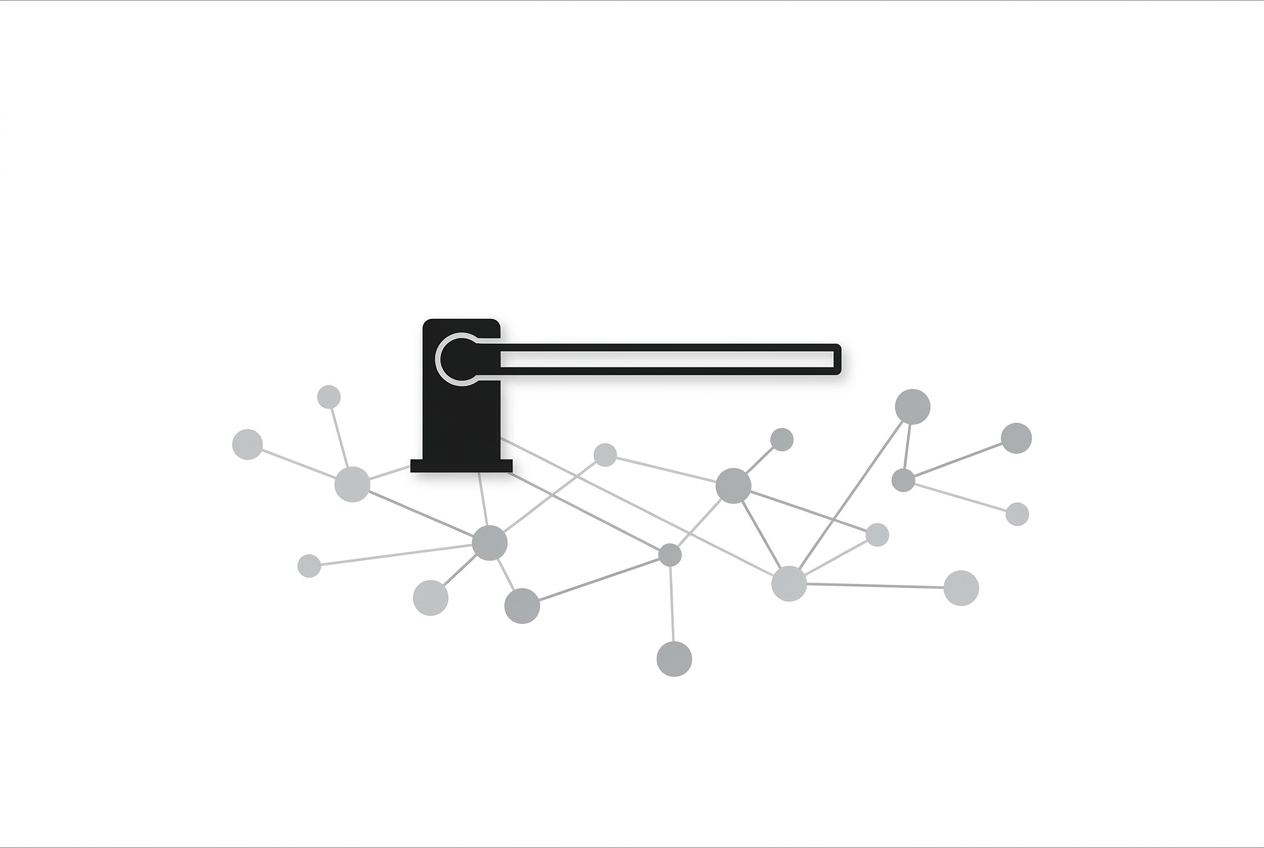
Reconcile those, and you find the actual strategy. Nvidia isn't defending openness. It's buying the tollbooths that openness and custom silicon were supposed to route around.
Nvidia isn't defending openness. It's buying the tollbooths that openness and custom silicon were supposed to route around.
Start with the arithmetic of contradiction. Nvidia controls an estimated 70 to 90 percent of AI chip sales. This month it reportedly committed about $16.4 billion to the two things designed to end that grip: an open-model hub it once championed keeping neutral — a deal that reportedly had not yet produced a signed agreement — and a custom-chip pipeline whose pitch is helping Amazon, Google, and Microsoft design silicon that isn't Nvidia's.
A company buying its own obsolescence. Read the deal structures, and that's exactly the point.
Last week, we tracked the Hugging Face story as a $13 billion sale with multiple circling buyers — Salesforce among them. This week it resolved: The Information reports Nvidia as the acquirer, at $12.9 billion. And a second pincer appeared — the MediaTek convertible bond, the interconnect leg of the same play.
Take Hugging Face first, because the price is where the strategy leaks.
Hugging Face recently generated about $150 million in annual revenue. Nvidia is reportedly paying roughly 86 times that — a multiple you do not pay for a business. You pay it for a position.
The position is developer neutrality. Hugging Face sits where millions of coders download and deploy open-weight models, and open models are chip-agnostic by design — the developer picks the hardware.
Nvidia wants to be the default pick. Owning the hub means owning the moment of that choice, plus a route back into cloud: DGX Cloud, which Nvidia reportedly scaled back a year ago, gets a second life renting compute to Hugging Face's users. There's even a hedge inside the hedge — Nvidia has promised to cover tens of billions in customer cloud commitments, and Hugging Face becomes a place to offload any unused capacity.
Now the tell. Last year, Hugging Face rejected a $500 million Nvidia investment at a $7 billion valuation, on the explicit grounds that it didn't want a dominant backer swaying its decisions.
"I said it and will say it again: Concentration of power is the biggest risk in AI!" co-CEO Clem Delangue said in 2024.
This year, Delangue spent months publicly aligned with Nvidia's open-source push — citing that same Huang-signed letter on Face the Nation, and in a separate CNBC interview warning that China is "clearly dominating" open source. The man who called concentration the biggest risk became one of its most useful advocates, right up until the $13 billion offer.
You can read that as a sellout of the open-source movement, and Bloomberg's Parmy Olson essentially does. But the sharper reading is structural: Nvidia figured out that "open" was never a threat to it. Closed labs building their own chips are the threat. A thriving open ecosystem keeps customers choosing hardware freely — and Nvidia intends to win every free choice.
That's the first tollbooth. The MediaTek deal is the second, one layer down, and its mechanics are more brazen.
Nvidia put $3.5 billion into MediaTek — not equity, convertible bonds, part of a record $3.9 billion offering with Alphabet quietly taking the rest. The terms matter more than the dollars: MediaTek adopts NVLink Fusion and becomes a design partner for hyperscalers building custom AI accelerators.
Those accelerators can use whatever compute die a hyperscaler wants. But the die connects via an NVLink Fusion chiplet into Nvidia's NVLink fabric, sitting inside Nvidia's MGX rack architecture, running Nvidia's system software.
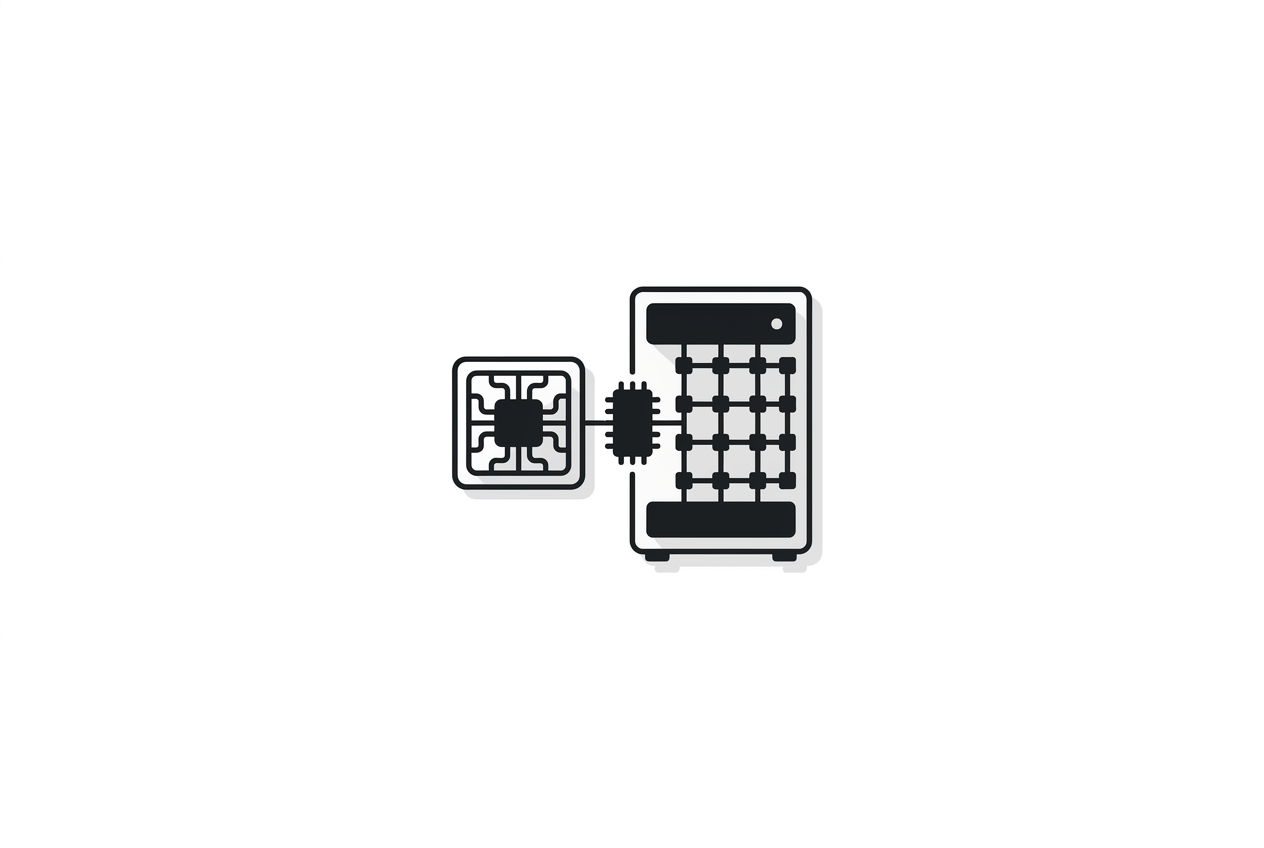
Custom on top. Nvidia underneath.
The bond structure is the elegant part. If MediaTek's custom-chip business struggles, Nvidia is a creditor holding debt. If it succeeds — if hyperscalers rush to MediaTek to escape Nvidia's GPUs — the bonds convert to equity.
Nvidia captures the upside of the very defection it is financing. Forbes reportedly called it a tollbooth: "If the deal works, every escape from Nvidia's margins gets built on Nvidia's plumbing."
And the defection is real, not theoretical. Custom AI chip shipments are growing 44.6 percent year-over-year in 2026 — nearly triple the 16.1 percent for merchant GPUs. Amazon has deployed over a million Trainium chips; Microsoft's Maia 200 runs GPT-5.2 in production; OpenAI built Jalapeno, with early tests reportedly beating some of Nvidia's best, per Bloomberg's Parmy Olson.
Nvidia's counter is not to cut GPU prices. It's to make sure every one of those chips still buys its interconnect, its networking, its racks. As VP Dion Harris put it: "Every cloud, every model builder is deploying our platform in some shape, form, or fashion."
The historical parallel analysts reportedly reach for is Intel. Rival x86 chips came and went for 30 years, and each one reportedly strengthened Intel because it still plugged into Intel's bus standards. Own the bus, and you don't need to win every socket.
This is Gavin Baker's whole thesis, stated from the other side of the table. Baker calls Nvidia "vertically integrated but horizontally open" and tells chip startups the only rational move is to plug in and be grateful: "Just try to find a way to plug in, but just be nice to him. Be nice. It's all personal."
Baker even predicts the open-source future runs through Nvidia — that the best open model will soon be an Nvidia model, that chip companies can fund the training. "It's trivial to do a $50 to $100 billion training run for Jensen." Buy the hub, fund the models, own the interconnect. Baker isn't describing a market. He's describing a moat.
Which brings us to the one crack.
There is an open alternative to NVLink Fusion: UALink. It is backed by AMD, Google, Intel, Broadcom, and Microsoft — precisely the companies with the strongest incentives to deny Nvidia the interconnect standard.
These are not minor players hedging bets. Google and Microsoft are the two hyperscalers with both the custom silicon and the balance sheets to refuse the tollbooth outright. If UALink gets ecosystem adoption, the platform lock weakens considerably — as analyst Matt Kimball put it, "heterogeneity is the future of AI."
NVLink Fusion has a running start: MediaTek, Marvell, Samsung, and Astera Labs are already committed. But a standard becomes a monopoly only when the biggest customers stop building the exit.
And that's the uncomfortable question buried inside Baker's "be nice to Jensen" advice. His thesis works beautifully for a lone chip startup with 1 percent share to gain. It works far worse when the captured coordinate.
Platform capture assumes the captured act alone, each choosing to plug in rather than fight. UALink is what happens when they stop acting alone — when Google, Microsoft, AMD, and Intel decide the smarter move isn't gratitude but a shared escape hatch.
Nvidia has built two tollbooths this month, and they're beautifully engineered. The open question is whether the people expected to pay the toll are also the people building the road.