
"You essentially pay for intelligence twice, once with money, and again with something even more valuable: the proprietary knowledge you must reveal to make that intelligence useful."
That's Satya Nadella, in a blog post published Sunday, warning every company that builds on OpenAI or Anthropic that, in his telling, they are paying twice and handing over valuable data. Microsoft has invested in both.
The timing was awkward for one Indian fund in particular.
You pay for intelligence twice: once with money, and again with the proprietary knowledge you must reveal to make that intelligence useful.
The same week, Elevation Capital reportedly closed a $500 million Fund IX, its ninth India vehicle, with what appears to be a wager on AI's app layer, on top of the labs' models.
"We believe AI is unlocking expertise on top of the connectivity and payments infrastructure India has already built," Mukul Arora told Mint. Expertise, he added, "remains severely undersupplied."
His framing is clean. Financial services stay the core focus — credit, insurance, wealth, payments — and "AI represents another access layer" on rails India already laid.
It's a confident thesis. And within days a sitting hyperscaler CEO handed every skeptic the ammunition to argue that the app layer is exactly where value leaks out.
This week the argument gained a validator no one expected: the CEO of a company that has invested in both OpenAI and Anthropic, making the lab-distrust case in public.
Nadella's mechanism is worth stating precisely, because it's the whole ballgame.
Models learn from "exhaust," he writes — "the prompts people write, the tools agents use, and especially the corrections people make when the model is wrong. Every correction is distilled into institutional know-how."
That is, he says, "the kind of knowledge a competitor could never buy." And enterprises are handing it over for free, on top of what they already pay in tokens.
So the buyer pays twice. Once in money, once in the proprietary knowledge that made the intelligence useful in the first place.
If that's true, then a startup whose entire product is a thin wrapper around GPT-class calls isn't building a moat. It's building a training pipeline for its own eventual competitor.
Here's the complication for Elevation's clean thesis: the market is already voting with its feet, and it's voting against lab dependency.
Open models accounted for 29% of all traffic routed through Vercel's gateway last month. Not a rounding error — nearly a third.
Idit Levine, CEO of Solo.io, whose customers include T-Mobile, ADP and SAP, hears the same refrain after enterprises finish experimenting with proprietary models. "Can I take an open source model and run it on-prem? It will do almost 90% of what the big one's doing. It will cost way less."
Almost 90% of what the big one's doing, a fraction of the cost, and — her word — control. That's a brutal comparison for anyone charging a premium to sit between the enterprise and a frontier lab.
Then there's the money moving into open source itself. Nous Research, maker of the open-source Hermes agent, is reportedly finalizing a round of at least $75 million at a $1.5 billion valuation, led by Robot Ventures with significant participation from USV, according to three sources with knowledge of the deal.
Hermes carries roughly 214,000 GitHub stars and nearly 40,000 forks. It ships with built-in skills — web search, coding, image understanding — and, crucially, it was designed to "automatically learn from people's usage and build more skills without manual intervention."
Read that against Nadella's warning and the point lands hard. The learning-from-usage flywheel he says the labs are stealing is precisely what the open-source agent gives you to keep.
So does this bury Elevation's bet? No. It sharpens it.
The app-layer thesis fails only if you read it as "float above the labs and collect rent." It survives — comfortably — if you read it as an ownership thesis.
Because notice what Nadella actually recommends. Not "stop building on AI." He tells companies to retain ownership of their data — prompts, feedback, corrections — and to build "orchestration layers" that let them swap models at will.
That is a specification for an app-layer company, not an argument against one. Own the data-and-orchestration layer, and the model underneath becomes a swappable commodity you route around.
The gateway tools proving this out already exist and are surging. Vercel added model-switching; OpenRouter routes requests across providers; Solo.io's tech powers the Linux Foundation's Agentgateway project. The 29% open-model figure is what model-switching looks like in production.
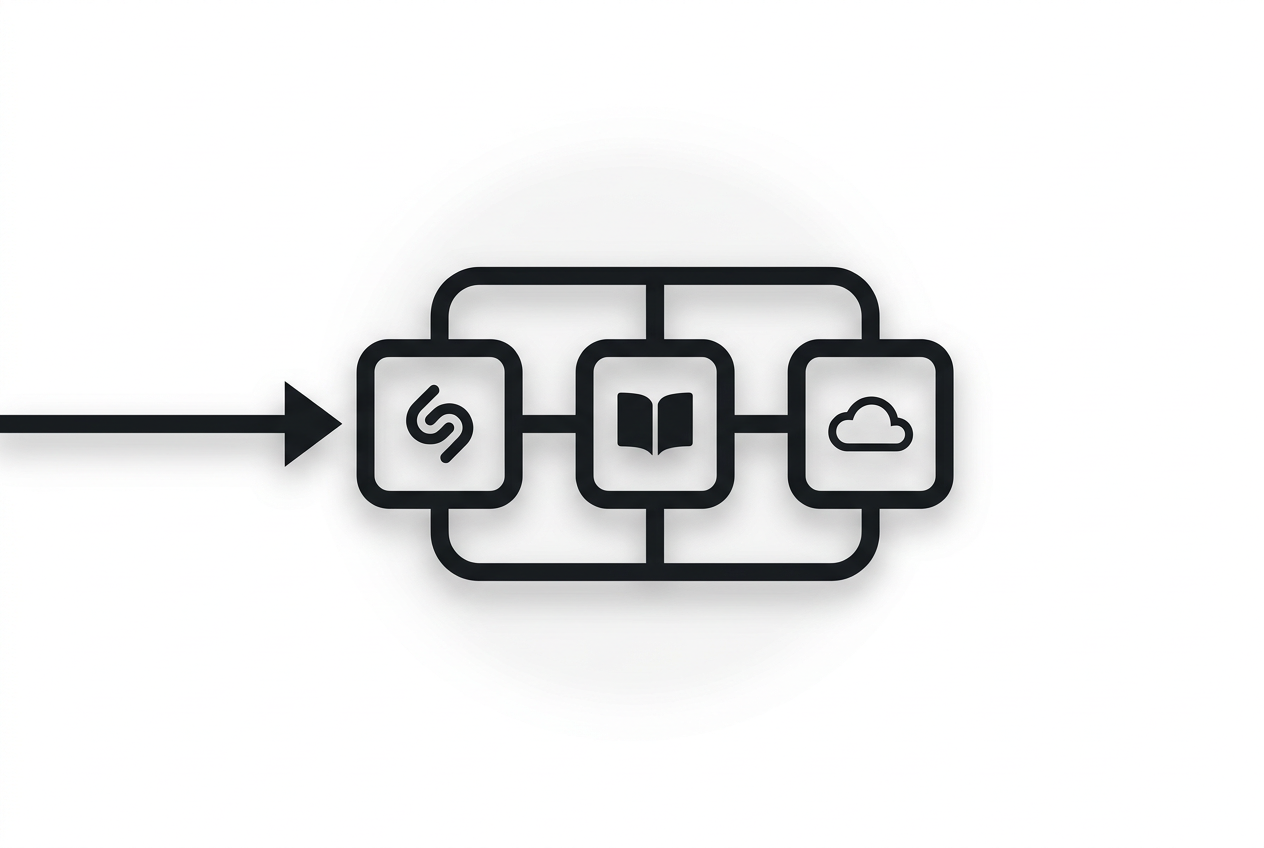
Which means the app layer isn't one bet. It's two, and they have opposite risk profiles.
The vulnerable version is the prompt wrapper: a product whose only asset is a clever call to someone else's model, feeding institutional know-how upstream with every correction. It pays twice and owns nothing. Nadella just described its obituary.
The defensible version owns the exhaust. It captures the corrections, the domain-specific feedback, the workflow data, and holds them in an environment it controls — then treats the model as interchangeable plumbing.
The tell for which one you're funding is simple: what happens when the underlying model changes? If the switch is painless and your data stays yours, you own something. If a model swap guts the product, you were the training pipeline.
This is where Elevation's actual focus starts to look shrewd rather than exposed.
Financial services in India — credit, insurance, wealth — is not a domain you win with a raw frontier model. Mukul Arora's own pitch names the moat: navigating regulation, understanding Indian consumers, solving operationally complex problems.
That is proprietary, domain-specific, regulated data and workflow — the "institutional know-how a competitor could never buy," accumulating on the app side rather than leaking to a lab. If a portfolio company holds that and orchestrates models on top, the 90%-as-good on-prem open model isn't a threat. It's a cost saving.
The risk sits elsewhere in the portfolio math. A $500 million early-stage fund will back founders across the spectrum, and the general-purpose "we built an AI assistant" pitch is exactly the thin wrapper Nadella's warning targets.
So the diligence question for Fund IX — and for anyone writing app-layer checks right now — is no longer "is this a good product." It's "who owns the exhaust, and does the value survive a model swap."
Set that against the broader frame and the stakes are obvious. Open models are at 29% of gateway traffic and climbing. Enterprises are going on-prem for 90% at a fraction of the cost. Open-source agents that learn from usage are raising at $1.5 billion.
Every one of those signals points the same direction: intelligence is commoditizing, and the value is migrating to whoever owns the data and the orchestration around it.
Nadella put the whole thesis in one sentence, and it doubles as the test Elevation's founders now have to pass. "In consuming intelligence, you are creating intelligence. And what you create should belong to you."
The app-layer bet is defensible. Just not as an app-layer bet. Only as an ownership one.