Mobileye paid $900 million for Mentee Robotics—a company valued at $162 million in its March 2025 round, ten months earlier. That's a 5.5x markup, $612 million of it in cash, for humanoid robots that don't reach series production until 2028.
Nobody pays 5.5x for pre-revenue humanoids unless they're buying something other than the humanoids.
So what did Mobileye actually buy? Read the fine print. Mentee's whole pitch is "human-to-robot mentoring"—few-shot learning and a simulation-first architecture that slashes the demonstration data a robot needs to learn a task. And Mobileye brings the one thing that makes that architecture work at scale: a perception dataset grounded in 150 million EyeQ vehicles on the road worldwide.
That's the tell. The robots are the theater. The dataset is the asset.
The robots are the theater. The dataset is the asset. Nobody pays 5.5x for pre-revenue humanoids unless they're buying something other than the humanoids.
Last week we argued that physical AI had pulled $12 billion into the venture pipeline and asked the open question: does the money bet on generalist humanoid platforms or on specialist layers underneath them? This week the Mentee datapoint and a fresh YC cohort answer it. The specialists win.
Start with the humanoid theater itself, because it's loud enough to drown out the signal.
Tesla is testing a pedals-and-wheel-free Cybercab in Austin, targeting 50,000 Optimus Gen 3 units in 2026 at $20,000–$30,000. Figure AI was valued at $39 billion last May. Neura Robotics raised $1.16 billion at a $10 billion-plus valuation. Unitree's G1 ships today at $16,000.
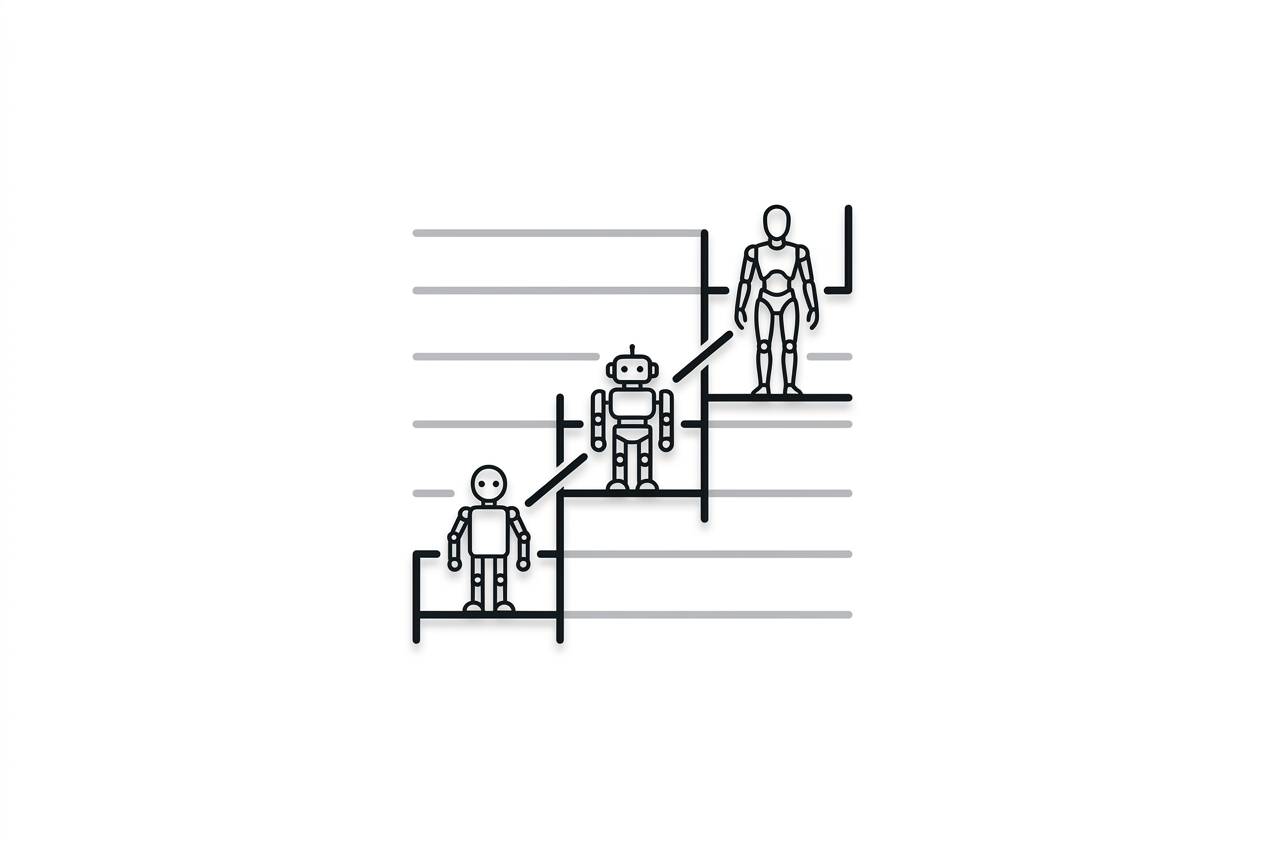
Look at that price spread—$16,000 to Boston Dynamics' $140,000–$150,000 Atlas—and you see a hardware market racing toward the smartphone endgame: commodity pricing, thin margins, a bottom that keeps falling. Hardware is not where the moat lives. Everyone building humanoids knows it.
The moat lives in whether the robot can actually operate without a human hidden behind it. Most "autonomous" humanoids demoed through early 2026 were quietly teleoperated. Genuine autonomy requires the thing Mobileye has been compounding for 25 years across billions of driving miles: real-time 3D scene understanding, intent prediction, unstructured-environment navigation. Every problem that makes autonomous driving hard is the same problem that makes a warehouse humanoid hard.
That's why Amnon Shashua could frame the deal as creating "leaders in physical AI in two groundbreaking markets: autonomous driving and humanoid robotics." He's not diversifying into robots. He's declaring his perception stack portable—and betting the scarce input is data, not chassis.
Now turn to Y Combinator's W26 batch, which reads like the same thesis written by 199 founders instead of one CEO.
One in eight companies is building something physical—robots, drones, wearables, space hardware. Against YC's historically software-heavy mix, that's a hard-tech concentration that stands out. Industrials and defense, the third-largest category, doubled from 17 companies in the prior cohort to 35 in W26.
But the interesting part isn't the robots. It's the cluster building the picks and shovels underneath them.
One Robot builds world models that simulate gripping, assembling, and manipulating flexible objects. Asimov collects diverse real-world human-activity data at scale and turns it into annotated datasets that teach robots to understand the physical world. Fern lets robotics teams run evaluations on high-fidelity simulation environments built from their own training data.
Here's the premise that unites them, and it's the whole ballgame: earlier robotics software assumed training data would follow hardware adoption. W26 founders are building on the assumption that it won't.
That's a bet against the humanoid crowd's implicit theory of the world. The optimists assume you deploy fleets, the robots generate data as they work, and generalization follows automatically. The data-infra founders are saying: no—the data is the bottleneck, it's scarce now, and it will stay scarce, so whoever owns proprietary real-world datasets captures the value while the hardware commoditizes.
You can see the same logic in the raw batch listing. Humanarchive.ai calls itself a "human intelligence data lab for embodied AI." Shofo.ai sells "AI data sets for AI labs." The scarce input is being productized before the fleets that would supposedly generate it even exist.
This is the reframe of Mentee. Mobileye isn't racing Unitree to the price bottom. It's doing at corporate scale what Asimov and One Robot are doing at seed scale—assembling a proprietary perception layer that any robot can train against. The 150 million EyeQ vehicles are the asset. The 2028 robots are the delivery vehicle.
Now the uncomfortable arithmetic.
Robotics and physical AI startups raised roughly $16 billion across just under 500 deals in Q1—an all-time high on both axes. Versus the 2021–2025 run-rate, deal count is up about 2x and deal value up 4.5x. Layer on the $1.2 trillion in US manufacturing investment announced in 2025, and the capital case looks overwhelming.
The problem is that the money is running ahead of the hardware's reliability. Sim-to-real remains unproven: W26 teams excel in digital twins and simulation but have yet to prove they hold up in the heat and vibration of real heavy industry. That gap is precisely why the sim-and-data layer is where the value concentrates—but it's also why betting on the robots themselves right now is betting on a bridge that hasn't been built.
The market knows the froth is real. On the a16z chart showing robotics funding surging, one founder captured the vibe exactly: "raising money in robotics 14 months ago: this is interesting and you're cool but robots?? seems too early. raising money in robotics today: hey i know you already closed the round but would you consider reopening another one for us?? please???"
Sentiment on the record-quarter post ran 100% negative. "It's 2021 all over again," one reply read. "VCs love a robotics bubble but most can't survive real supply chain stress."
They're half right. A lot of the $16 billion is chasing hardware that will commoditize and platforms that will get outrun by the next $16,000 chassis. If that's what you bought, 2021 is a fair comparison.
But the half they miss is where the durable returns actually sit. Not the robot on the CES stage. The dataset the robot trains against.
Consider the tell inside the deal structure. Mobileye also announced roughly 200 layoffs—5% of its workforce—the same week it committed $900 million to Mentee. That's not a company diversifying for fun. It's a company reallocating hard from a margin-pressured ADAS business into what it believes is the scarce, defensible layer of physical AI.
The strategic logic and the seed-stage logic converge on the same point: perception and data are the moat; the chassis is a cost center.
So here's the read as the money floods in. The pivot to embodied AI is real and structural—$16 billion in a quarter and a YC batch this hard-tech aren't a fluke. But the headline bet and the smart bet are not the same bet.
The headline is humanoids. The smart money is buying the world models, the annotated real-world datasets, and the sim environments that make any humanoid generalize—the layer that stays scarce no matter how cheap the hardware gets.
Mobileye didn't spend $900 million on robots. It spent it on the one thing the price war can't erode. Watch who else is quietly doing the same.