Here is the contradiction most stockholders are missing.
President Trump, on Wednesday, said he'd "absolutely" want a data center in his community "because the jobs are enormous and the money paid, the taxes paid, are just enormous."
Three-quarters of Americans disagree with him. And so does his own party's base.
The buildout timelines baked into every AI capex forecast quietly assume the public says yes. The public just moved 33 points toward no.
That gap between what the industry assumes people will feel and what people actually feel is not a messaging problem. It's a permitting problem, and it's about to show up in the one number no AI capex forecast contains: how long a gigawatt actually takes to build.
Last week this column tracked the "Data Center Bill of Rights" and the scattered moratorium threats as an early-stage regulatory risk. This week the thread moved into ads, ballots, and Luntz-grade polling — which is to say, it stopped being early-stage.
Start with the absurd part, because the absurd part is the leading indicator.
Earlier this summer, comedians and staff at the beverage company Liquid Death sat in a brainstorm and landed on a question: "what if we used pee to cool data centers instead of water?"
That became a 90-second video, made with Garage Beer — the brand owned by Jason and Travis Kelce. In it, Jason Kelce walks through a field toward a data center holding a jar of urine, singing "We want your pee, please give us your pee. Let's pee on computers together, to save humanity."
The clip pledges to "send your pee to the AI data center of your choice." It dropped Tuesday.
Here's why the date matters. Tuesday was also the day Florida voters went to the polls in the gubernatorial primary, where the leading Republican candidates had made data centers a central issue.
A beverage company that says it tries to "stay out of political things" made data-center water use its punchline on primary day. That is not a coincidence — it's a read on the room.
Liquid Death's creative VP, Andy Pearson, put it plainly: "You literally can't turn on the TV or radio without hearing about it." He called it an issue "uniting people across political and cultural spectrums."
Satire is a lagging emotion but a leading metric. Brands don't build campaigns around contempt until the contempt is safely mainstream. The joke is the tell.
Now the numbers that make it material.
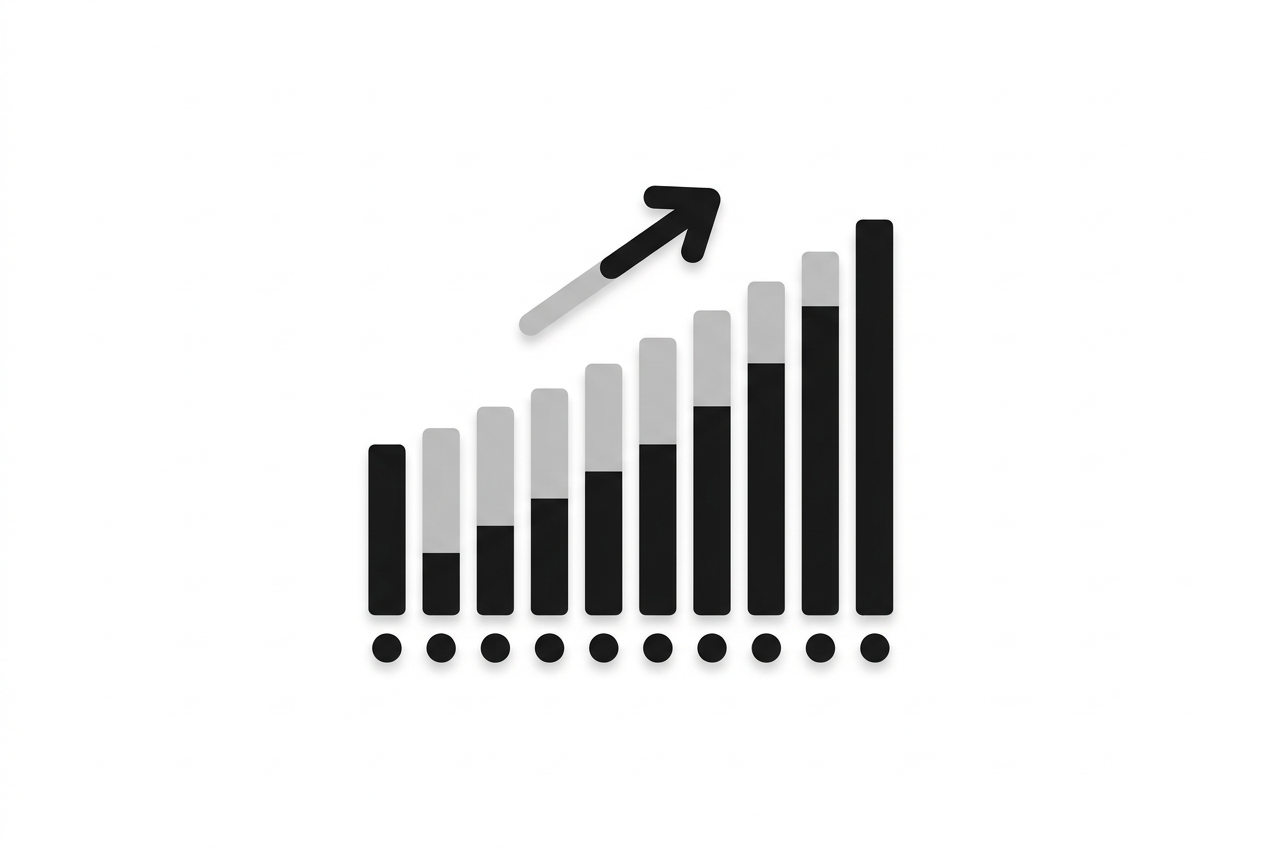
Heatmap Pro, polling the identical question four times over 12 months without changing a word, found 75% of Americans now say they'd oppose a data center built near them. More than six in ten would "strongly" oppose it.
A year ago, Americans were roughly split — 43% support, 42% oppose. That's a 33-point swing against, in twelve months, on a question that didn't move because the wording moved.
The pollster who ran it called it a faster, deeper shift than he thought possible on any issue.
The single most dangerous number for the industry is buried in the strong-support line. In August of last year, 13% of Americans "strongly" supported a nearby data center. Now it's 4%.
The people who would show up to a zoning hearing to defend your project have all but vanished. The people who'll reportedly show up to kill it are 60%-plus of the room, per Heatmap.
And this is not a blue-state story. Data centers are 43 points underwater with Republicans, 65 with independents, 75 with Democrats.
Rural voters — the GOP base that has trended right for a decade — are 63 points underwater. There is no demographic escape hatch here; urban and suburban voters are only a few points more supportive.
Politicians read polls faster than analysts read footnotes.
In Pennsylvania, Governor Josh Shapiro — a Democrat with a rumored 2028 interest — signed an executive order Tuesday that stops fast-tracking data-center permits and tax exemptions unless projects clear new bars.
The order forces developers to pay for all new electricity generation, transmission, distribution, and infrastructure their project requires. It also mandates community benefit agreements, local hiring, and strict water and environmental standards.
Shapiro once welcomed these projects. He said he changed course after hearing from "many residents across our Commonwealth who are concerned about what data center development could mean for our communities, our environment, and our utility bills."
His Republican opponent, Stacy Garrity, isn't defending the industry either — she's calling for a pause on future development.
That's the political tell that should worry stockholders most: both candidates are competing over who's tougher on your buildout.
The pattern repeats. New York's Kathy Hochul declared a one-year moratorium last month. Texas's Greg Abbott — Greg Abbott — froze some projects pending a mandatory audit. In Wisconsin's governor's race, candidates from both parties are reportedly racing to distance themselves, per Heatmap.
And underneath the headlines, the hard number: more than 530 counties and municipalities have already restricted or banned construction, per Heatmap Pro.
That's the constraint. Not a poll, not an ad — 530-plus jurisdictions where the ground itself is now legally harder to build on.
So why is the industry losing a fight it didn't know it was in? Frank Luntz has the cleanest diagnosis.
The builders, he says, "are not explaining how the populations will benefit. They simply assume that they just offer it and the public says yes."
That assumption is the load-bearing flaw. It treats local consent as a formality — the last checkbox before the concrete pours — when it has become the gate.
And the public isn't a blank slate. As one widely-shared investor put it, even if the shared benefits were trustworthy, most people wouldn't want to live next to a data center and gas plant — but "after promises around fracking, chemical plants, and industrial waste in the past, taking developer numbers at face value seems impossible."
That's the real terrain. Developers arrive with spreadsheets of jobs and tax revenue and walk into an electorate that was promised the same things by the last industrial tenant and remembers how it ended.
Trump himself conceded Wednesday that data centers "can use a little public relations help." The industry's problem is that PR doesn't move a fracking-scarred voter, and the polling shows the persuasion window may already be closed.
Now the investor takeaway, and I want to be precise about what this is and isn't.
This isn't about demand. It isn't about financing, electricity economics, or the bond market. Those are separate questions with separate answers.
This is about execution risk on the ground — the one variable capex forecasts silently assume away.
Take the concrete example, and only as an example: OpenAI reportedly announced Monday it secured 8 gigawatts of a roughly 10-gigawatt, $500 billion-plus campus in Pike County, Ohio, backstopped by a $105 billion Nvidia commitment, per CNBC.
Ten gigawatts is roughly the annual power of 8 million U.S. households. That project sits in a state where the Ohio Senate race has made data centers a centerpiece — Sherrod Brown is reportedly running against them; the NRSC's own memo warns that if Republican Jon Husted loses over it, "the industry will be blamed," per CNBC.
The point isn't the capex math. The point is that a headline gigawatt figure is a demand number wearing a supply number's clothes.
Every one of those gigawatts now has to win a local-consent fight the industry is, per Heatmap, reportedly losing by margins ranging from 63 points with rural voters to 75 points with Democrats.
Two ways that consent gets priced in. One is Shapiro's route — developers pay for all new generation and transmission, sign community benefit agreements, absorb costs the model assumed a utility or ratepayer would carry. That's a margin hit.
The other is Hochul's route — a moratorium, or a 530th, 600th, 700th local ban. That's not a margin hit. That's a schedule that slips indefinitely, and no earnings model has a line item for a project that simply can't break ground.
Call it the consent premium. It shows up as higher cost or as delay, and right now most forecasts price it at zero.
The NRSC called data centers a "sleeper issue" for the entire midterm cycle. For anyone who owns these stocks, the more useful framing is simpler.
The buildout timelines baked into every AI capex forecast quietly assume the public says yes. The public just moved 33 points toward no — and started mailing jars of urine to make the point.