
Bond investors are pricing doubt into the same paper equity investors are, per the BIS, buying with a level of comfort that isn't warranted. Hyperscaler corporate bond issuance topped $100 billion in 2025, mostly long-term debt locked in for multi-year data center builds. In the same period, credit default swap spreads on those bonds rose.
That divergence is the whole story, and almost every headline missed it.
The Bank for International Settlements did not say the AI trade is overvalued. That's what the bubble-watchers say, and they've been saying it for years. The BIS said something narrower and stranger: it does not know whether AI pays off, and that's not the question keeping it up at night.
The question is who is left holding the debt if it doesn't.
That single pivot is the difference between a valuation debate and a financial-stability warning. A valuation debate is about price. A stability warning is about plumbing—where the money came from, who lent it, and how fast it can run.
TheStreet caught the tell precisely: the surprising thing in the BIS Annual Economic Report, published June 28, "is the specific mechanism the BIS is worried about: not whether AI pays off, but who will take on the debt if it doesn't."
Start with why there's debt at all. Hyperscalers historically ran with less leverage than typical companies, funding growth from their own profits. That model is breaking.
The five largest are on track to commit more than $1 trillion to AI capex across 2025 and 2026. Per the BIS bulletin, free cash flow has recently lagged capital expenditures in absolute dollar terms.
Read that slowly. The companies are now spending more building AI infrastructure than the entire business generates in cash. The gap has to be financed. And financing is exactly where the story turns from a P/E argument into a systemic one.
The companies are now spending more building AI infrastructure than the entire business generates in cash. The gap has to be financed.
The rotation crowd looks at that same crossover—capex overtaking cash flow—and argues the market is rationally front-running it, selling the funders before the bill comes due. The BIS is worried about the identical crossover for the opposite reason. Not that the funders get sold. That the debt already financed the crossover, and it went somewhere regulators can't see.
The $100 billion in bonds is the visible layer. It's on balance sheets, it trades, the CDS market can price its risk—and it is, upward.
The bigger shift is happening off the books. Hyperscalers are increasingly using joint ventures and special-purpose vehicles, capitalized by private credit firms, to build data centers without the debt appearing on their own balance sheets.
The debt doesn't vanish because it's harder to see. It moves.
Private credit funds have, per BIS research, originated more than $40 billion in loans to AI-related borrowers. That's a different animal from a corporate bond. There's no daily mark, no liquid CDS, no continuous repricing—just a fund, a borrower, and a loan agreement.
Then there's the circular financing the BIS flagged directly: chipmakers and cloud giants take equity stakes in AI labs, and those labs commit to buying the chips and compute back. Money recycles from investor to revenue and back to investor. It inflates the top line of exactly the companies whose stocks are pricing certainty.
Layer these together and you get the actual architecture the BIS is describing. A concentrated ecosystem of hyperscalers, suppliers and private lenders, linked by debt and increasingly opaque financing, with much of the funding flowing through hedge funds and private credit vehicles that face lighter scrutiny than banks.
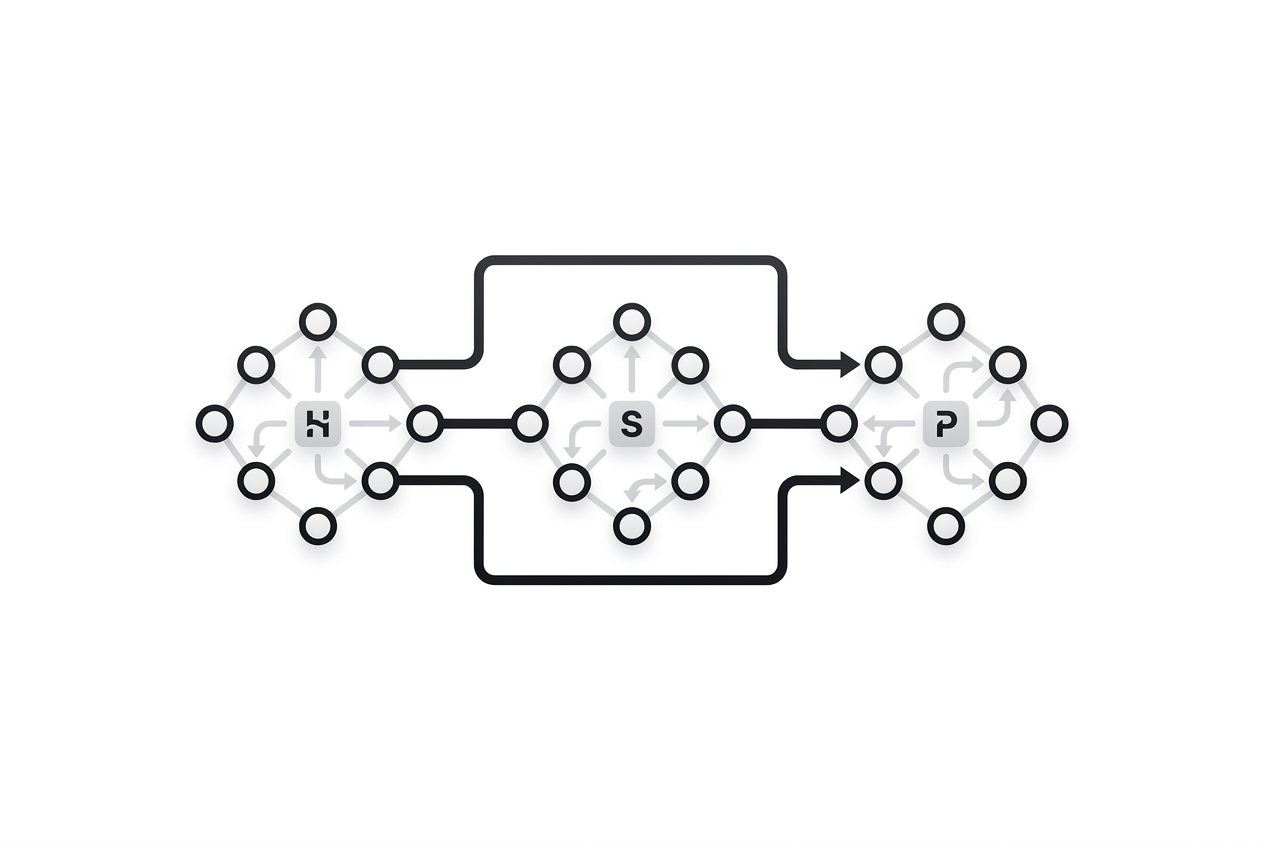
That last clause is the load-bearing one. Lighter scrutiny than banks.
After 2008, the entire apparatus of financial regulation was rebuilt around the banking perimeter—capital rules, stress tests, resolution regimes. The BIS is telling you the AI buildout was financed almost entirely outside that perimeter.
Zhang Tao, the BIS chief representative for Asia and the Pacific, reportedly put the consequence bluntly: according to Euronews' paraphrase, reliance on non-bank channels means an AI downturn could unwind into a sharper, faster crash than a traditional banking crisis.
Sharper and faster because there's no lender of last resort standing behind a private credit fund, no deposit insurance, no orderly resolution. When redemptions hit, the fund sells what it can.
And redemptions have already started. Axios reports that direct-lending funds with exposure to AI borrowers have begun facing redemption requests, forcing some to liquidate assets and return capital.
That is not a forecast. That is the mechanism running, quietly, before the correction the headlines are waiting for.
Here's how a fire in the non-bank world spreads. If investors question AI's payoff, hyperscalers pull back on spending. The engineering firms, data center developers and suppliers that expanded—and borrowed—to serve the boom struggle to service that debt. Stress moves into the private credit market. Funds facing redemptions sell. Selling begets marks, marks beget more redemptions.
None of those steps run through a regulated bank. Every one of them runs through a vehicle a supervisor cannot see clearly or backstop quickly.
Now connect the debt plumbing to the part of the BIS warning that should genuinely alarm anyone who owns these stocks—not because their stock falls, but because of what a falling stock does to everyone else.
Household equity exposure has grown significantly relative to both total wealth and income. That's the transmission wire. A sharp correction wouldn't just erase paper gains; it would hit consumption harder than past tech busts, because households are more levered to equities than they've ever been.
And it doesn't stop at the water's edge. As the BIS wrote, with US stocks accounting for an outsized share of global equity markets, "the wealth impact from a U.S.-led repricing could propagate globally."
So trace the full chain. Opaque non-bank debt financed a capex boom that outran cash flow. That boom held up equity prices. Those prices sit on household balance sheets at record exposure. A repricing drains consumption. And the fastest-moving fuel in the whole system—the private credit and SPV structures—unwinds through channels no regulator is watching in real time.
A stock correction becomes a consumption recession. That's the fear. Not the P/E.
Which brings us to the sting the BIS left implicit. Equity valuations, it said, reflect a level of comfort with risk that isn't warranted. Investors are pricing complacency.
Part of that complacency is a memory of 2008: the assumption that if things break badly enough, a backstop appears. The Fed shows up, liquidity floods in, the system gets cushioned.
But the whole point of the BIS warning is that this crash, if it comes, is engineered to slip the backstop. It's off balance sheet. It's non-bank. It's in private credit funds and SPVs and circular equity deals that don't trip a single one of the tripwires regulators built after the last crisis.
Central Banking reported this June that, on a panel discussing the networks that commercial banks rely on, a supervisor said "we don't know" how to regulate them.
That's the real indictment. Not that AI won't pay off—the BIS explicitly refuses to make that call, and even allows that AI could lift the fundamental constraint on long-run growth.
The indictment is that the buildout was financed in a way that made the downside invisible to the people whose job is to catch it. The bond market is already pricing the doubt in rising CDS spreads. The private credit funds are already meeting redemptions.
The equity market, and the households behind it, are pricing certainty. The BIS is asking the only question that matters when those two views collide: who's holding the debt when the doubt wins.
Right now, the honest answer is that no one supervising the system can fully see.