
"The answer was, of course, yes, because developers always want to be able to unlock the full power of their GPUs."
That is Jaiveer Singh, the engineer who leads Isaac ROS, explaining the founding logic of NVIDIA's open-source robotics stack. Not "developers want portable software." Not "developers want to avoid lock-in." They want to unlock the full power of their GPUs — the ones NVIDIA sells.
Hold that quote. It is the tell for everything else.
The headline number NVIDIA wants you to repeat is bigger and friendlier: "19 million developers can now do more with frontier physical AI tools." That figure folds NVIDIA's 3 million robotics developers into Hugging Face's 16 million AI builders — the combined reach of the LeRobot integration announced alongside GR00T 1.7 and Isaac Teleop.
What the tweet doesn't say is where the tools actually run. Not one of them completes its full loop off NVIDIA silicon.
Start with what genuinely is open, because it is real and worth naming precisely. GR00T 1.7 is an inspectable, forkable, commercially usable vision-language-action model. Isaac Teleop is an open framework for capturing human demonstrations in standardized formats. LeRobot itself is Hugging Face's open library for training, running, and sharing robot policies.
The dataset is real too: the largest open physical AI dataset, downloaded more than 15 million times, 350,000-plus trajectories, 57 million grasps. You can pull it, study it, retrain on it. None of that is fake openness.
So the API layer — the recipes — is free. The question is what kitchen you have to cook in.
Read the LeRobot integration list again and the pattern surfaces. Isaac Sim and Isaac Lab for simulation and validation. Isaac Lab-Arena for policy evaluation, registered into LeRobot's Environment Hub. Jetson Thor for deployment onto the Reachy 2 humanoid.
Every open recipe silently assumes a substrate: CUDA to run, Isaac Sim to validate, Jetson to deploy, OpenUSD to describe the world. You can fork the policy. You cannot fork the ground it stands on.
Singh is unusually candid about why this was always the plan. Isaac ROS, he says, started as an experiment: "We wanted to see what would happen if we just released some software as open source that uses the NVIDIA Jetson platform and NVIDIA CUDA libraries for robotics. Would there be any value there?"
The value was demand generation. Open-sourcing the glue makes the GPU more useful, which sells more GPUs. Openness here is not a hedge against lock-in — it is the delivery mechanism for it.
Openness here is not a hedge against lock-in — it is the delivery mechanism for it. The recipes are free; the kitchen is not.
Singh describes the stack as "LEGO bricks" you assemble however you want. True, as far as the bricks go. But every brick clicks onto the same CUDA baseplate, and there is no other baseplate on the table.
Now walk up the toolchain, because the real moat is not the edge chip — it's the simulation and the world model, and they all funnel to one place.
Newton physics ships inside Isaac Sim 6.0. DreamDojo, from NVIDIA Research, is a generalist robot world model pretrained on 44,000 hours of egocentric human video, post-trained on robot data, then distilled to run at 10 FPS for live teleoperation and policy evaluation. It is a genuine world model — and it feeds the Isaac loop.
SimFoundry, from NVIDIA GEAR, turns a single image or video into a simulation-ready world. Its code will be open-sourced. The worlds it builds are for the same simulator.
Then there is the cheapest, cleverest on-ramp of all. Niantic's Scaniverse now exports USDZ: a $500 360-degree camera does a five-minute scan and produces a Gaussian splat plus aligned collision mesh, replacing tens of thousands of dollars of RGB-LiDAR rigs.
That is a real cost collapse for building digital twins. Read the last line of the announcement: the output is "designed for use with NVIDIA Isaac Sim."
The cheap on-ramp terminates in one simulator. You save the money on capture and spend it back as dependency.
This is the architecture NVIDIA states plainly in its own Omniverse post: "OpenUSD provides the common framework that standardizes how 3D data is shared across these physical AI tools," and "NVIDIA Omniverse libraries, built on OpenUSD, serve as the source of ground-truth simulation that feeds the entire stack."
Ground truth. That is the word that matters. Not "a rendering option," not "one of several backends" — the source of ground truth.
Look at who has already internalized it. NEURA Robotics trains its 4NE1 humanoid in Isaac Sim and Isaac Lab inside OpenUSD digital twins, post-training GR00T with Isaac GR00T-Mimic. AgiBot uses Cosmos Predict 2 as its world-modeling backbone, then combines it with Isaac Sim before transferring policies to Jetson Thor robots. LEM Surgical's FDA-cleared spinal robot uses Cosmos Transfer for synthetic data, Isaac Sim for the twin, and Jetson AGX Thor for compute.
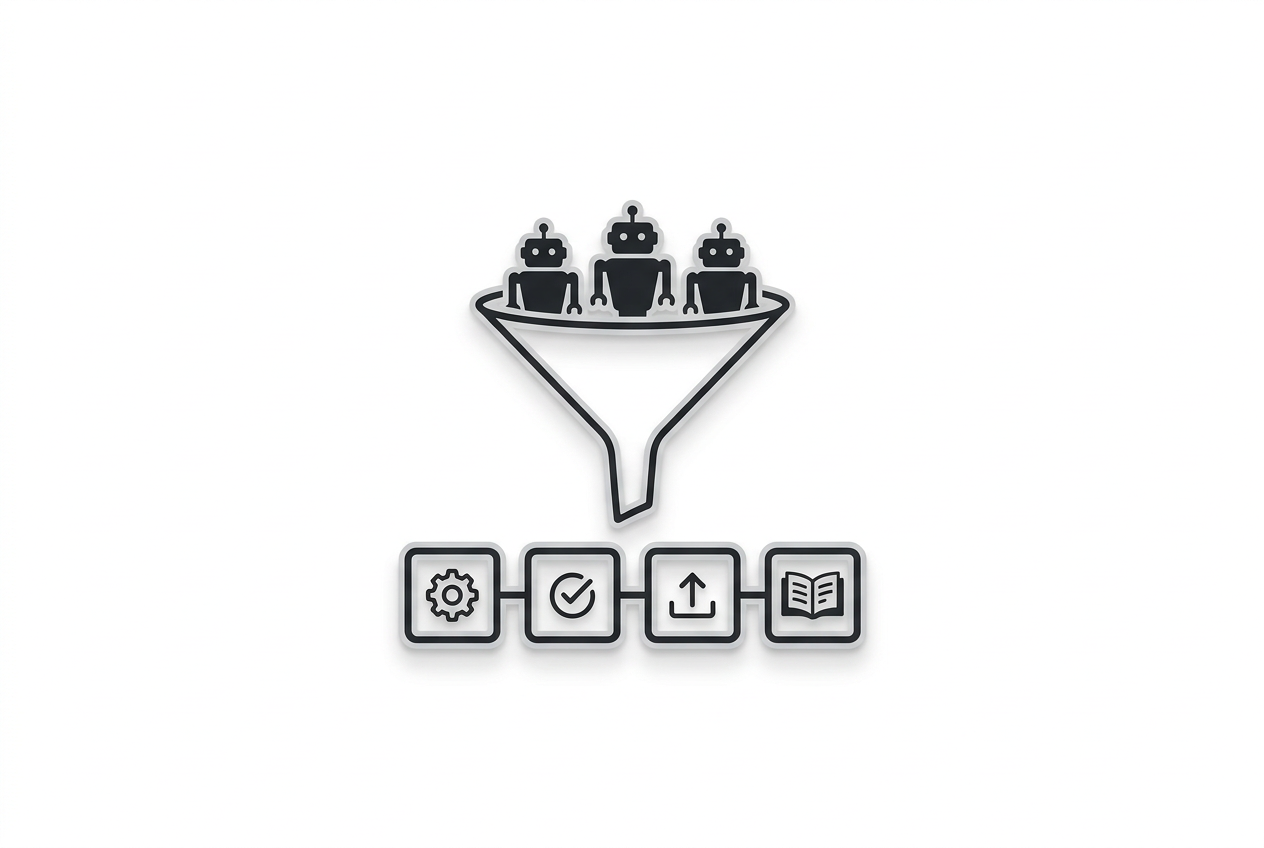
Different companies, different embodiments, one pipeline: Cosmos or DreamDojo generates, Isaac Sim validates, Jetson deploys, OpenUSD describes it all.
Here is the distinction that matters to a working roboticist. The compute monopoly you can, in principle, escape — port your inference to another accelerator, eat the performance hit, move on. The training-data provenance you cannot.
When your policy is validated against Isaac Sim physics and trained on data generated inside NVIDIA's world models, the assumptions of that simulator are baked into the weights. The sim-to-real gap you tuned against is Isaac's gap. Move to another simulator and you are not porting — you are revalidating from scratch.
That is a deeper moat than owning the chips, because it lives inside the artifact you thought you owned. You can hold the forked GR00T checkpoint in your hands and still be unable to certify it anywhere but where it was born.
A sibling piece notes that GR00T lost on efficiency benchmarks to a Chinese model. That is orthogonal to this argument, and worth saying why: a model can lose on FLOPs-per-token and still deepen lock-in, because the moat isn't the model's efficiency — it's that NVIDIA owns the only end-to-end pipeline from data generation through simulation to edge deployment. Winning the benchmark doesn't give a competitor the kitchen.
None of this is an accusation of bad faith. GR00T is really open. The dataset is really downloadable. Singh's LEGO bricks really do snap together, and 19 million developers really can do more today than yesterday.
But "open" here is doing narrow work. It describes the surface area with no switching cost — the code you can read, the weights you can fork, the recipes you can copy.
The part with switching cost — the CUDA runtime, the Isaac ground-truth physics, the Cosmos and DreamDojo world models, the Jetson silicon, the OpenUSD interchange — is exactly the part that stays NVIDIA's.
So take the number NVIDIA wants you to repeat and finish the sentence it leaves off. Nineteen million developers can now do more with frontier physical AI tools — inside one company's simulator, validated against one company's physics, deployed to one company's chips, and trained on data one company's world models produced.
The recipes are free. The kitchen is not. And portability off the stack is precisely what none of these releases delivers.