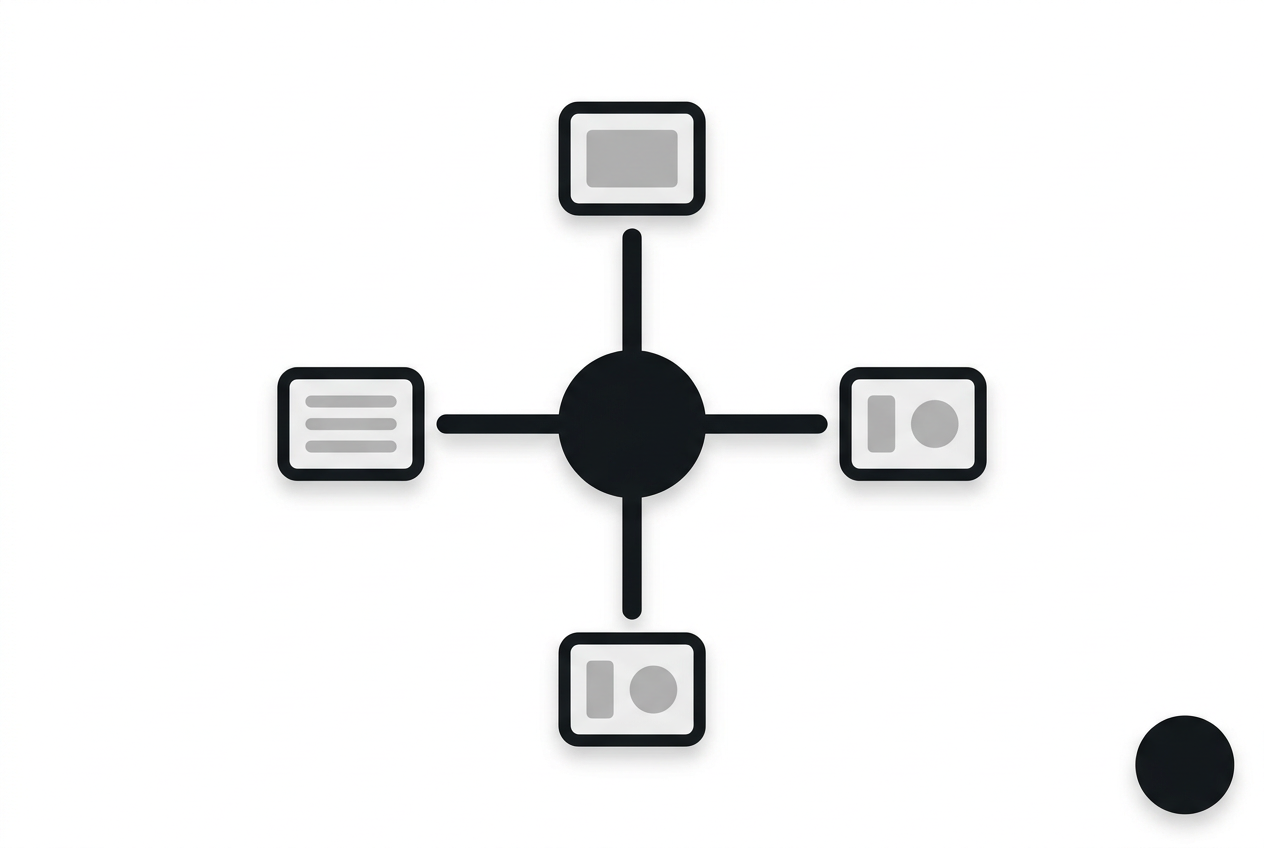
Look at two engineers a spreadsheet apart and you'd swear they were building opposite things.
At Ramp, the founding team of Inspect will describe a coding agent that runs inside a Modal sandbox, refreshes its environment image every thirty minutes to match what a human engineer has locally, and then verifies its own frontend work by taking screenshots and querying feature flags. More than 150 people at Ramp reportedly contributed to it. Per Ramp, seventy-five percent of merged PRs are reportedly now raised by Inspect — with no adoption mandate.
Now shift the camera to Ryan Carson, solo founder of Untangle, sitting in front of eight monitors. He reportedly runs 10 to 15 Devin agents at once, ships around 40 PRs a day, and spends about $20,000 a month doing it. And the thing that keeps all of that from flying apart is a handwritten priority list on a piece of paper beside the screens.
One is a fintech pouring principal engineers into custom infrastructure. The other is one person renting a fleet and tracking it in pen. This is the build-versus-rent spectrum the whole industry keeps arguing about, and here are its two extremes.
Except they aren't extremes of anything. Look closer and Ramp and Carson built the exact same thing.
The distance between Ramp and Carson isn't build-versus-rent. Both of them have a control plane, and most teams don't. Most teams have open tabs.
Both built a control plane.
Ramp's is code: Modal sandboxes, images refreshed on a timer, hooks into Sentry, Datadog, LaunchDarkly, Buildkite, GitHub, and Slack (per SourceFeed), plus a verification loop that closes itself against production telemetry. Carson's is folders — P0, P1, P2, Bugs — and a paper list, and a homegrown workflow called Watchdog that sweeps every law-firm account, pulls recent errors from Sentry, surfaces the three biggest problems, and checks whether a recent PR already fixed each one.
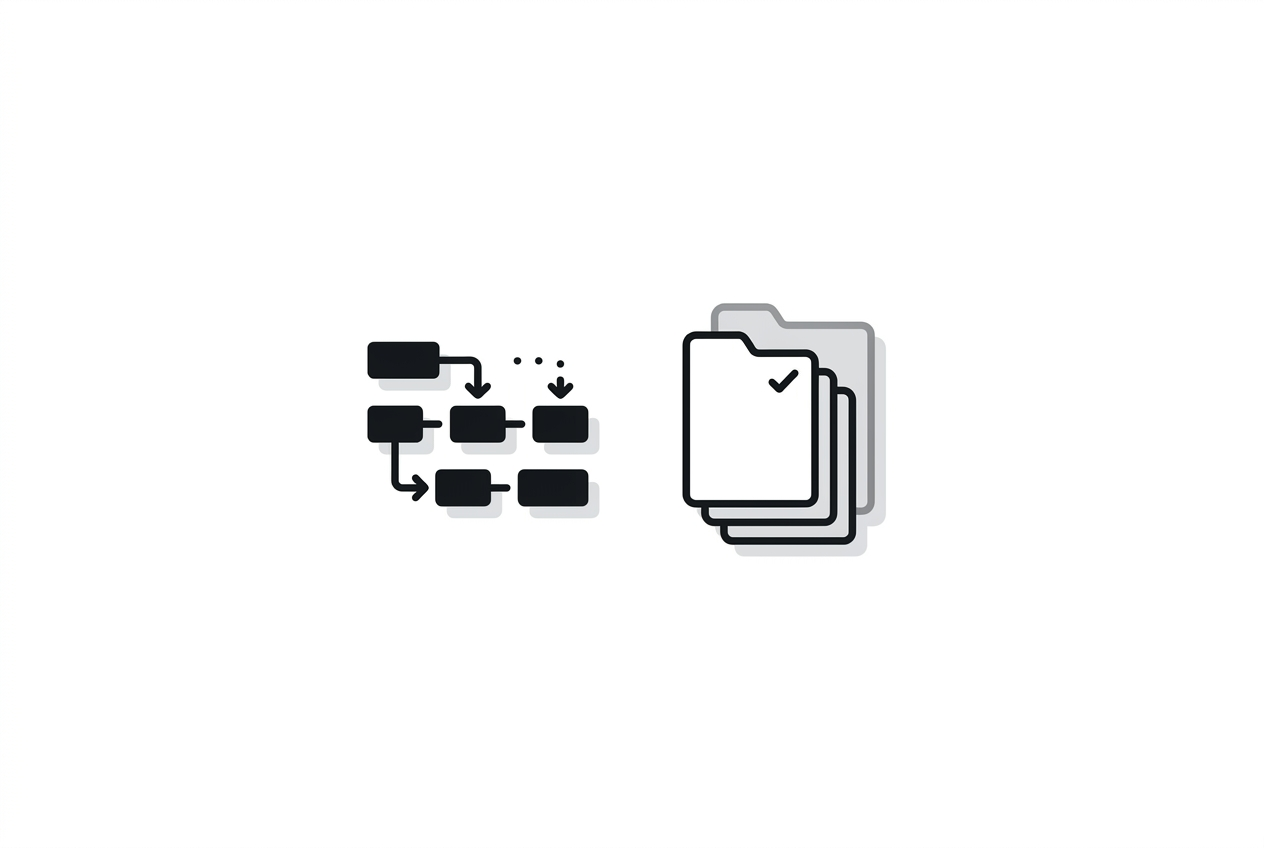
Different materials. Same organ. Both sit between the operator and the models, deciding what runs, in what order, at what priority, and whether the output is actually good.
That's the thing most people get wrong about "build vs. buy." They think the question is whether you wrote the harness. It isn't. Ramp wrote theirs; Carson rents every agent he touches. Neither of them trained or fine-tuned a model. The model is a rented engine in both stories. What each of them owns is the layer above it — the routing, the priorities, the verification, the memory of what's in flight.
And that layer is where the leverage lives, for a reason that has nothing to do with taste and everything to do with tokens.
Microsoft Research reportedly found that autonomous agentic tasks can burn on the order of 1,000× more tokens than an interactive code chat — with input tokens, context, retries, and re-reads dominating the bill. Background agents are token infernos, and their consumption swings wildly even across identical tasks. You cannot budget that from a vendor dashboard. You can only control it if you own the gateway.
Coinbase is the proof. Brian Armstrong reportedly reported the company cut its AI spend by roughly half while token usage kept growing — not by capping people (91% of employees never hit their limits anyway) but by owning the layer between developers and models: pushing prompt-cache hit rates from 5% to 60%, and, per SourceFeed, routing frontier models to planning while cheaper models handle execution.
Every one of those levers requires sitting in the middle. None of them require asking a single engineer to switch tools. That's the tell: the control plane is where both the money and the leverage accrue, and it's structurally invisible from any product you merely rent.
Which reframes the whole spectrum. The distance between Ramp and Carson isn't build-versus-rent. It's that both of them have a control plane, and most teams don't. Most teams have open tabs.
That distinction — control plane versus open tabs — is the one that actually separates the founders getting leverage from the ones just accumulating output. Carson himself draws it. He treats each Devin thread the way a good manager treats a direct report: clear goal, right priority, minimal hand-holding. The paper list isn't a quirk; it's the artifact that keeps him anchored to the three things that matter before Devin drags him into whatever it surfaced overnight.
The counterintuitive part is that more output makes this worse, not better. Both Carson and Claire Vo are openly skeptical of letting agents run unconstrained overnight. Frontier models can generate an enormous volume of code; they have no idea what customers actually need. Carson found product-market fit for Untangle not by shipping more but by landing one customer meeting. The control plane exists precisely because raw generation is cheap and judgment isn't.
You can see the same instinct in places that look nothing like a coding shop. Yana Welinder builds an AI-native fashion brand with no engineers, and before she generates a single image she writes a "fashion prompt" — a detailed spec covering silhouette, how the fabric moves, even the sound it makes. That spec is her control plane. She uses Codex to operate CLO, professional 3D software she's never learned, because the AI is the orchestration layer and the specialized software is the execution layer. The prompt is the spec, and the spec is everything.
Strip the domains away and Ramp, Carson, and Welinder are running the same play: own the layer that defines what "good" means and what runs next; rent everything below it.
This is why the convergence at the top end is so striking. Per SourceFeed, Coinbase built Forge, Shopify built River, Ramp built Inspect — three companies with no reason to talk to each other, arriving at nearly identical architectures: durable execution, prod-faithful sandboxes, deep hooks into internal systems, automated verification. When three teams independently build the same shape, that's not a trend. That's the pattern stabilizing.
And critically, none of them stopped paying Anthropic. Per SourceFeed, half of Ramp's engineers still reportedly use Claude Code weekly, right alongside Inspect. The split that emerged isn't build-or-buy — it's a seam. Internal agents own the asynchronous work: anything that starts in Slack or a ticket, needs credentialed access to internal systems, and can verify itself against production telemetry. Commercial assistants own the interactive loop in the editor. You build where your proprietary context is the moat, and you rent where raw model quality and daily ergonomics are the moat.
That seam scales down cleanly. Carson's version of "proprietary context" is Watchdog and his folder taxonomy. Welinder's is her fashion prompt. Neither needs a platform team. What they need is the same thing Ramp needs: a place that owns priority, verification, and memory, so the agents serve the plan instead of generating it.
So here's the actual question for your team, and it isn't the one the spectrum implies. Stop asking whether to build or buy a coding agent. That framing hides the decision that matters.
Ask instead: do you have a control plane, or do you have open tabs? Is there a layer — code or folders or a single ruthlessly maintained spec — that owns what runs, in what order, and how you know it worked? Or are your agents just a pile of sessions somebody eyeballs?
Because the money and the moat were never in the model, and they were never in the harness either — Anthropic's stickiest asset in this whole story is Claude Code, a harness, which enterprises are busy making swappable. The leverage is in the orchestration layer you own.
Ramp owns it with 150 contributors and a Modal fleet. Carson owns it with a pen. The gap between them is smaller than the gap between either of them and a team that has neither.
That's the divide. It was never build or rent. It's whether you're in control of the loop, or just watching it run.