The PM playbook rewrites itself: leaner generalist pods, blended roles, outcome roadmaps
Two of the most-shared reorg stories this month describe the same week, the same class of company, and the exact opposite hiring instinct. One says the future belongs to the generalist. The other says leaders have stopped hiring them.
Adam Mosseri, reportedly running an app with over 3 billion users, describes the canonical product team collapsing from baker's-dozen specialist teams into lean pods of four to six generalists. He goes further, naming a new role: "product staff," a blending of PM, design, data science, and research into one operator.
That headline writes itself. Specialist squad is dead. Long live the generalist pod.
Then read the reporting from the Product-Led Summit, where a dozen product leaders from Nvidia, Amazon, Microsoft, and a few enterprises describe how they're rebuilding teams. The line that lands: leaders "aren't hiring generic product managers anymore." And the sharpest one: "the generalist who does a little of everything is the profile that leaders are worried about."
So which is it? Last week we covered the IC-work and builder-hiring threads—who's doing the making, who's getting hired. This week the formal team-restructuring playbook arrives in print, and it arrives contradicting itself.
Here's the reconciliation, and it's the whole point: "generalist pod" describes the shape of the team. It does not describe the value of the person inside it. Mistake one for the other and you walk yourself straight into the diminished half of a workforce that is now, measurably, splitting in two.
'Generalist pod' describes the shape of the team. It does not describe the value of the person inside it. Mistake one for the other and you walk into the diminished half.
Start with what Mosseri actually means. The pod shrinks, reportedly, because AI ate the coordination overhead. When one person can move across PM, design, data, and research surfaces, you don't need thirteen people passing artifacts between functions. You need four to six who can each hold more of the surface.
But holding more surface is not the same as being shallow across all of it. That's the trap. "Generalist pod" gets misread as "each member does a little of everything," when the operating model actually demands the reverse: fewer people, each carrying real depth, with AI covering the seams between them.
The Summit reporting makes the depth requirement explicit by showing exactly where the depth has to go. The single "PM" title, they report, is fracturing into four distinct profiles.
The PM who builds with AI lives in speed of learning—prototyping, synthesizing feedback, shipping in hours instead of sprints. Most leaders described this less as a specialty than as the new baseline everyone has to clear just to stay in the room.
The PM who builds AI products lives in risk management. When the model is the product, the job becomes evals, routing, and context boundaries—designing for outputs that can be trusted rather than outputs that merely compile.
The platform PM lives in economics. They own the model, eval, and cost layer everyone builds on top of—the token costs, latency, and margins that used to be somebody else's line item.
And the forward-deployed PM doesn't get to pick. Their focus is the customer, turning one messy enterprise rollout into a repeatable product, which means carrying all three at once.
I'm naming these as career specializations, not playbooks. Whether outcome-based pricing beats usage, or how you actually build an eval harness, are separate crafts with their own depth. The point here is narrower: each archetype is a place to go deep. Not a menu to sample.
Look at what these profiles share. Every one is organized around a single superpower—economics, risk, or speed-of-learning—drawn straight from the frontier equation the Summit leaders describe: great product equals core intelligence times economics times speed of learning times risk management.
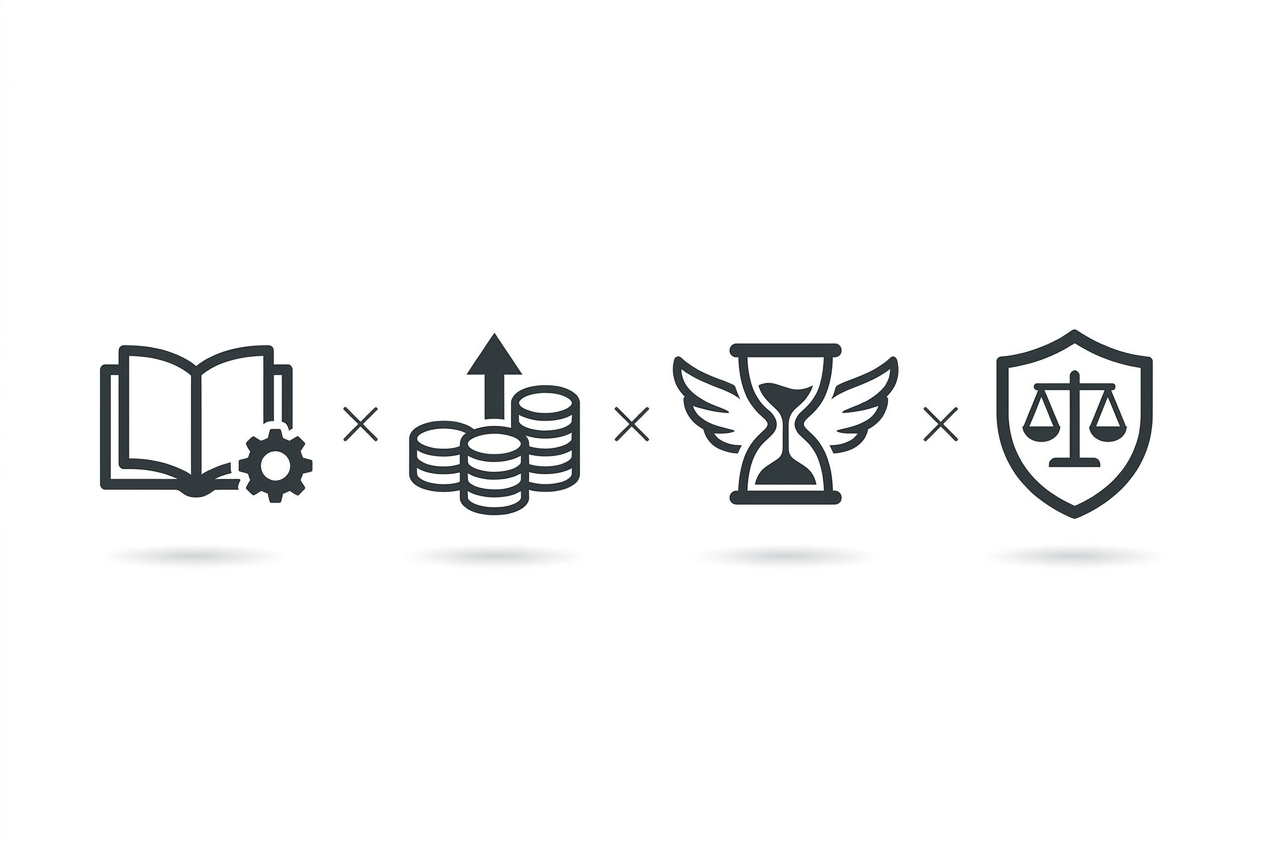
The old equation was problem understanding times good UX times feature velocity. Those are exactly the tasks AI now commoditizes—synthesizing feedback, extracting themes, drafting requirements. If your value is spread evenly across the commoditized layer, your value is an API call.
So the pod got leaner and the individual got deeper, at the same time, for the same reason. That's not a contradiction. That's cause and effect. AI collapses the coordination work that justified specialist headcount, and it commoditizes the execution work that justified generalist breadth—leaving depth on one axis as the only thing that isn't a weekend project for a competitor.
This is why the language matters so much. What reads as role-blending is actually role-fracturing. Mosseri's product staff blends functions on the surface; the Summit leaders fracture the PM title underneath it. The person who thrives in a pod of four is not a diluted version of thirteen specialists. They're one specialist who can operate across the seams because AI holds the seams.
The generalist who does a little of everything is not that person. They're the API-glue between deeper operators—and glue is the thing AI is best at replacing.
Now the career stakes, because this is where the abstraction stops being an abstraction.
Per Lenny's 2026 workforce survey, the workforce is splitting into two realities: roughly half feel amplified by AI (49.0%), while a smaller share feel destabilized (13.9%) or diminished (5.0%), with others reporting their role is redefined or unchanged. And the single question that best predicts which side you land on is not your title, your level, or your company size. It's what AI has done to your sense of who you are as a professional.
The numbers are not subtle. Per Lenny's survey, AI-identity stance was the strongest predictor of career optimism in the entire dataset—standardized β of +0.39—and of whether you'd recommend your field at all, β of +0.60, stronger than role, level, and company size combined.
The gap between the amplified and the diminished, measured as an effect size, is Cohen's d of roughly 1.55. The famous "founder effect"—per Lenny's survey, founders being the happiest people in tech—clocks in at d of about 0.56. The AI divide is roughly three times larger. It is, by a wide margin, the biggest effect they found.
Here's how those two datasets fuse. The Summit leaders describe an external market that pays for depth and worries about breadth. The survey describes an internal experience where the people who feel diminished are collapsing on every measure at once.
The through-line: choosing a superpower is how you end up feeling amplified, because it's how the market keeps treating you as essential. Staying a little-of-everything generalist is how you drift toward diminished—less sure what's really yours, precisely because AI can now do a little of everything too.
One last thing you shouldn't miss, because it's doing quiet double duty. "Leaner teams" is a real operating model—Mosseri's pods are a genuine structure, not a slogan.
It is also, in a year when four in ten survey respondents fear losing their jobs, a very comfortable euphemism for cuts. A pod of four to six generalists is both an org-design insight and a headcount reduction wearing the language of empowerment.
Which is exactly why you can't afford to be the generalist in the generalist pod. The pod is the shape. Your superpower is the reason you're in it. Pick economics, risk, or speed-of-learning—and go deep enough that when the coordination work vanishes, you're not what vanishes with it.