Read these two Fin statements back to back and something breaks.
The first, from weeks ago: "those who remain closed and protectionist will accelerate their demise." Fin was announcing it could run on top of HubSpot and Freshworks — live in under an hour, no migration, no lock-in — and declaring that open agent platforms would win because customers "do not want to be locked into a single vendor or closed ecosystem."
The second, from June 15: Fin signed a definitive agreement to sell itself to Salesforce for roughly $3.6 billion — what the author would characterize as the definitional closed ecosystem, the company whose entire moat is that your data lives inside it.
The openness pitch and the exit are the same story told twice: a standalone agent can't capture the value it creates without owning the systems it acts inside.
The openness pitch and the exit are not two contradictory stories. They are the same story told twice. Both are Fin admitting that a standalone customer agent, no matter how good its model, can't capture the value it creates without owning the systems it has to act inside.
Start with McCabe's framing, because it's doing a lot of work. In his statement to his cofounders and exec team about what they built, he called it "the greatest and arguably only late stage software company pivot to AI." And to customers: "little will practically change. I'll still be CEO."
That's the language of a triumphant pivot. But you don't stay CEO of a category you're leading independently — you stay CEO of a business unit inside someone else's platform. The pivot narrative and the loss of independence are hard to hold in the same hand.
So read the recent Fin blog posts not as a victory lap but as a confession. The most revealing one is the case Fin made for giving your AI agent system access.
Their own support team ran the experiment. They took four high-volume workflows that had been running as scripted "Tasks" and rebuilt them as "Procedures" — workflows with real access to backend systems.
The "Bounce list" workflow reportedly went from 9.3% as a scripted Task to 79.9% as a system-connected Procedure, per Fin's own data. That's +70.6 percentage points.
"Report a bug" jumped +57.3 points. The gains weren't uniform — "Messenger installation" barely moved, +2.2 points, because it was already a simple linear flow that didn't need backend access.
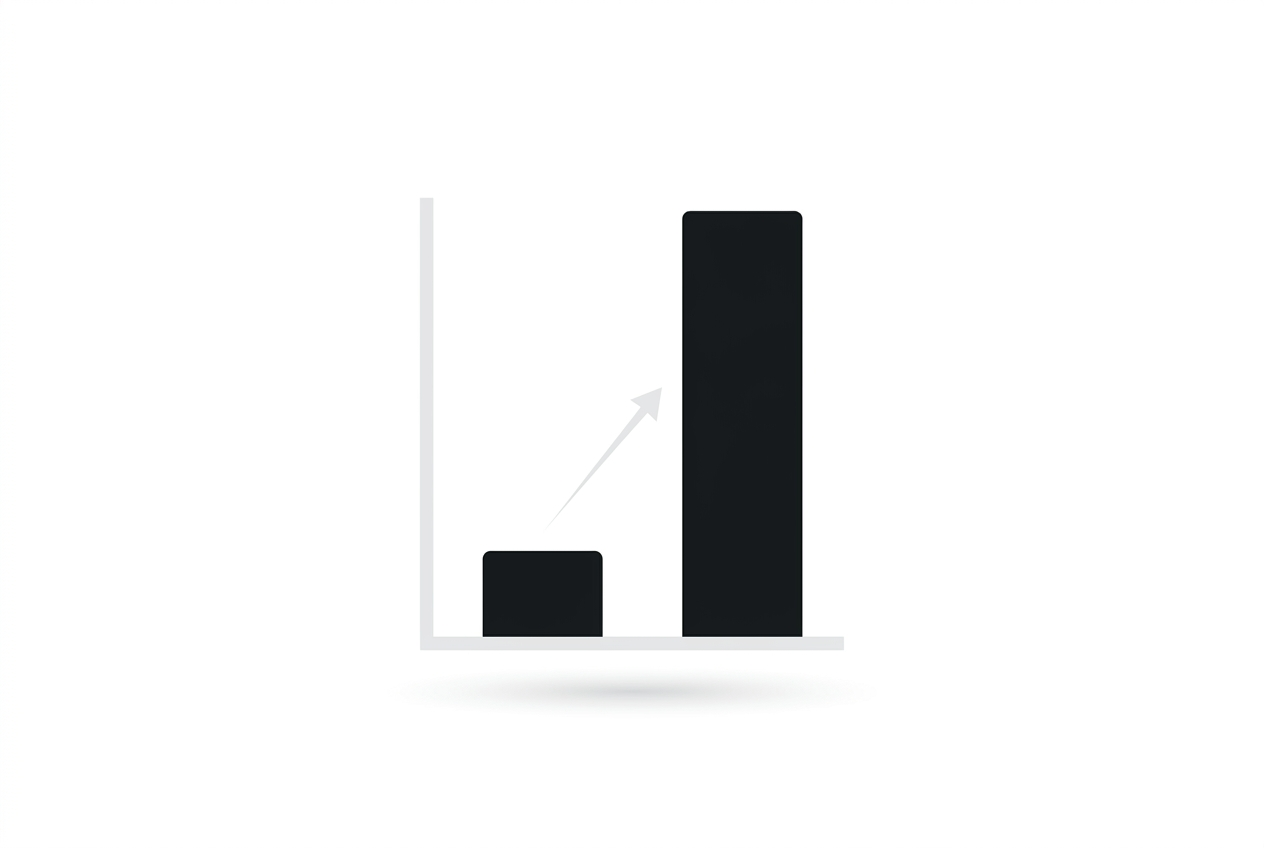
That non-uniformity is the tell. Where the work required judgment, live data, and writing to systems, connection was almost the entire story. Where it didn't, the model was already enough.
Fin's own words: "That move from answering to acting is where the economics of AI-first support change." An agent that can only answer tells a customer how to submit a damaged-order claim. An agent with system access processes the claim, checks order status in the database, and confirms the replacement — in one conversation.
The variable that separates those two outcomes is not model quality. It's access to the CRM, the billing platform, the order management tool. It's the backend.
And here is the thing Fin didn't own. Fin built Apex, a proprietary model. It built Operator. It shipped voice. It could reach 76% resolution. But the systems where resolution actually lives — the customer records, the subscription data, the payment rails — those belong to the platform vendors.
That's why the "open platform" announcement was quietly an admission. Running on HubSpot and Freshworks was Fin renting access to backends it would never control, integration by integration, one API at a time. Openness wasn't a philosophy. It was the only move available to a company that owned the agent but not the data it needed to act on.
Salesforce owns the data. That's the whole trade.
Look at what Salesforce actually says it's buying. Not the model, primarily. It's buying speed — "fast-to-value deployment options," packaged offerings "especially well-suited for SMB and some commercial organizations that need to launch quickly."
Agentforce already reached $1.2 billion in ARR in Q1 FY27, up 205% year-over-year. But the consistent critique of Agentforce Contact Center is complexity — a steep ramp for businesses without deep Salesforce experience or clean data.
Fin closes that gap: an agent packaged to go live fast, sitting on top of the one thing Fin never had at scale — Salesforce's unified customer data foundation. The model that resolves 76% on rented backends, now pointed at the CRM that owns the backend outright.
At $3.6 billion, this is what the author would call a bolt-on. Salesforce's largest-ever deal was more than $27 billion for Slack. Fin is a rounding error next to that — the price of buying a fast-deploy front end for an agent platform that already has the data underneath.
And it's not an isolated move. A year ago NiCE bought Cognigy, an agentic conversational AI platform, for $955 million. Add Fin and that's $4.55 billion in acquired agentic CX in a single year, as CMSWire tallied it.
The pattern is incumbents with backend control absorbing agent-native players who have the model but not the systems. Cognigy into NiCE's contact-center stack. Fin into Salesforce's CRM. In every case the acquirer supplies the one asset the target couldn't build: access at scale.
So what should a buyer take from this?
First, the evaluation battleground has moved. Fin's own POC guidance warns that "any Agent can look impressive in a demo environment" and that teams over-index on "accuracy scores, resolution rates, and benchmark tests on curated datasets." That advice is now sharpened by Fin's own data — a demo resolution score tells you almost nothing when the same workflow swings 70 points depending on whether the agent can touch the backend.
Second, end-to-end resolution is gated by system access, and system access is controlled by whoever owns your systems of record. If your CRM, billing, and order data live in Salesforce, an agent that can write into Salesforce natively has a structural advantage over one bolting in through APIs — regardless of which model is technically better.
Third, "openness" is a losing hand once the outcome depends on data the platform vendor controls. Fin's argument that "in an open world, the best product will win" assumes the product and the data are separable. The system-access data proves they aren't. When value migrates to the backend, the vendor who owns the backend wins — and the open agent's best exit is to be bought by one of them.
Note where Fin landed its pricing, too, not as a pricing lesson but as a signal. Fin charges per outcome — per query the agent resolves with no further help. They chose that metric because, in their words, buyers "want to pay for results." An outcome-based model is a bet that resolution is the unit of value. And resolution, their own numbers show, is a backend function. They priced the thing they didn't fully control.
The honest reading of June 15 is not that a category leader chose to accelerate. It's that a category discovered its ceiling. A standalone customer agent can define the patterns, build the best model, and still hit a wall the moment resolution requires writing to systems it doesn't own.
McCabe is right that Fin defined the category. He's just describing the exit, not the coronation. The customer-agent category didn't graduate. It got acquired — by the companies that had the one thing it couldn't build.
So when you evaluate an agent, stop asking what it scored in the demo. Ask who owns the systems it has to act inside. That answer, not the resolution rate, tells you who's going to capture the value — and increasingly, who's going to own the vendor.