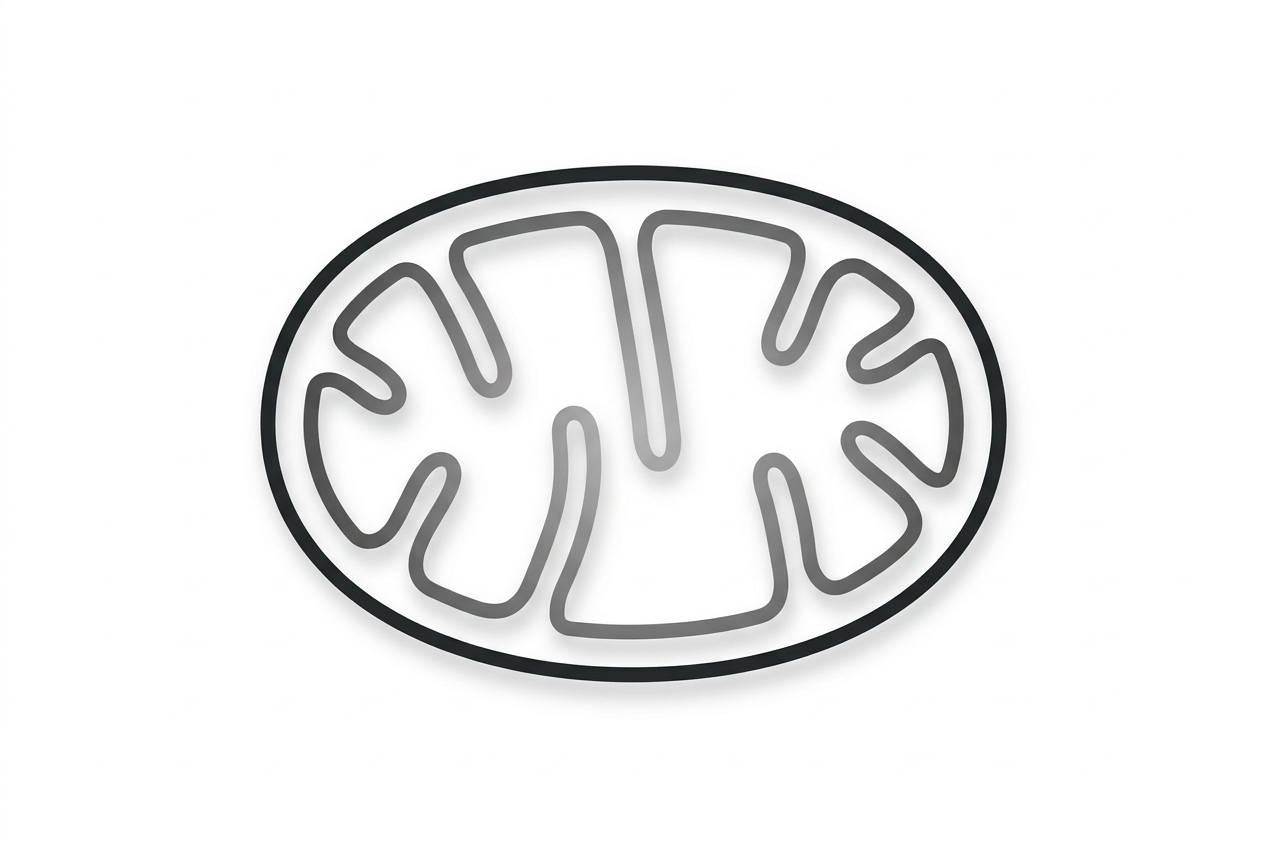
Article — "Sedentary but 'Healthy': Hidden Mitochondrial Decline and the Reversibility of Inactivity Damage": A 42-year-old man walks into a clinic, and every number on his panel comes back clean. Then a needle pulls a plug of muscle from his thigh, and the picture inverts: reportedly, based on the group-average difference between sedentary and active cohorts, his mitochondria carry 49% less MPC1 — the protein that ferries the end-product of sugar breakdown into the mitochondrion to be burned — than the muscle of an active man the same age.
Half the sugar-transport machinery, gone. And that is not the worst of it.
"If you are 40, healthy and sedentary, it is likely that you already have something going on inside your cells that will likely come back to haunt you in 10 or 15 years," says Iñigo San Millan, the physiologist who ran the biopsies and, incidentally, has spent years optimizing the metabolism of Tour de France champion Tadej Pogačar.
If you are 40, healthy and sedentary, it is likely you already have something going on inside your cells that will come back to haunt you in 10 or 15 years.
The phrase on the label — "healthy sedentary" — is where the argument starts, because inside the muscle it has already stopped being true.
Consider the rest of what San Millan's team found when they compared nine sedentary men against ten active ones, all around 42. Complex I respiration down 36%. Complex II down 28%. Total electron transport capacity down 34%. The respiration actually coupled to ATP production — the useful part — down 30%.

Roughly a third of the mitochondrial engine, missing, in men whose bloodwork says they are fine.
The fat side of the ledger is no better. CPT1, the enzyme that loads fatty acids into the mitochondria, ran at about half activity — a 51% drop — with fatty acid oxidation itself down 32 to 35%.
So the cell has lost the ability to burn sugar efficiently and the ability to burn fat efficiently. San Millan calls this the erosion of metabolic flexibility: the seamless switching between fuels that defines a metabolically healthy cell.
His framing is sharper than "out of shape." He argues this is a shift in cellular identity — that the sedentary muscle has begun moving toward disease, and the 49% MPC1 collapse may be one of the earliest visible signs of the traffic jam that eventually becomes insulin resistance and type 2 diabetes.
That is the case for reframing inactivity as a subclinical disease: something already present, already measurable, years before it shows up as a diagnosis.
The strongest part of the story is that you do not need a biopsy to see it. In San Millan's cohort, mitochondrial function tracked tightly with whole-body exercise performance — correlations of 0.57 to 0.78 between the muscle measurements and whole-body exercise performance.
Sedentary men showed 38% lower VO2 max, 35% lower fat oxidation, and over 60% higher blood lactate during exertion. Those last two you can capture with a mask and a fingerstick.
That is San Millan's clinical pitch: cardiopulmonary exercise testing plus lactate — CPELT — as a cheap, non-invasive proxy for what the biopsy shows. Catch the mitochondrial decline early, prescribe targeted exercise, potentially head off the disease.
And here is why the decline being real is not a life sentence: the cellular deficit that defines sedentary muscle is precisely the thing exercise reliably moves.
Untrained adults lose roughly 1% of VO2 max per year from their 30s, and, per Catalyst Performance's reading of the exercise-physiology literature, the loss is reversible at every age studied — with adults aged 50 to 80 reportedly adapting to training at the same relative rate as younger people.
The mechanisms San Millan measured — capillary density, mitochondrial density and enzymatic capacity — are the mechanisms endurance training is best documented to rebuild.
Reversibility holds even in genuinely sick populations. In end-stage renal disease patients, 36 weeks of cycling (24 weeks supervised plus 12 weeks home-based) at 50 to 60% of peak power lifted VO2peak — and, remarkably, improved mitochondrial bioenergetics in their platelets, boosting Complex I- and II-linked oxidative phosphorylation and raising the bioenergetic health index. The gain in aerobic capacity tracked the gain in platelet mitochondria.
If dialysis-bound patients can recover mitochondrial function through training, the case that a sedentary 42-year-old can is not a stretch.
Now the brakes.
The flagship study is nineteen men. Nine sedentary, ten active. No women — a companion study is only being planned. Every headline figure in this piece rests on a sample that small, and the underlying preprint, per bioRxiv, "was not certified by peer review" — a disclaimer that, if this is the same work, would apply before the study's reported 2026 journal publication.
Nineteen people cannot tell you how the distribution of MPC1 varies across a population, or whether the effect holds in women, or older adults, or anyone metabolically unlike a fit Colorado volunteer.
Then there is the cancer scare, which deserves particular skepticism. A separate UK Biobank study of 91,292 people found that every extra hour of prolonged, uninterrupted sitting raised cancer mortality risk by 9%.
That number sounds alarming until you read the fine print from Kyung Hee University's Lee Sang-yeol: the 9% is a relative risk, and the absolute 12-year cancer mortality in the cohort was only about 1.9%. A large relative bump on a small base is a small absolute change. The figure "leaves room for overinterpretation," and it was observational — people who fidget and stand may simply have been healthier to begin with.
The most seductive mechanism of all — that active muscle out-competes tumors for glucose — is mouse work. At Yale, exercised obese mice reportedly grew tumors 60% smaller than sedentary ones, apparently because working muscle grabbed the glucose first and starved the cancer.
Compelling, conserved across mammals, and untested in humans as a therapy. The researchers themselves say the obvious thing: "Of course, we need clinical trials."
So here is the graded verdict.
The mechanism is real: sedentary skeletal muscle carries a distinct, measurable mitochondrial deficit — roughly a third of oxidative capacity and half the key fuel-transport machinery — and it correlates tightly enough with non-invasive markers that CPET-plus-lactate is a plausible early-warning tool. Treat that as well-supported, if from a tiny sample.
Reversibility of fitness is well-established: VO2 max and the underlying mitochondrial adaptations respond to training into the eighth and ninth decades, and even in dialysis patients.
But the specific claim that closes the loop — that MPC1 and CPT1 themselves rebound with an exercise or drug intervention — has not been tested. San Millan's own team lists those trials as future work.
Until those results exist, treat CPELT as a promising research probe, not a validated clinical screen. The reframe is earned: inactivity is a detectable subclinical process, not a neutral preference. The screening test that would prove it deserves the intervention trials before it goes on the menu.