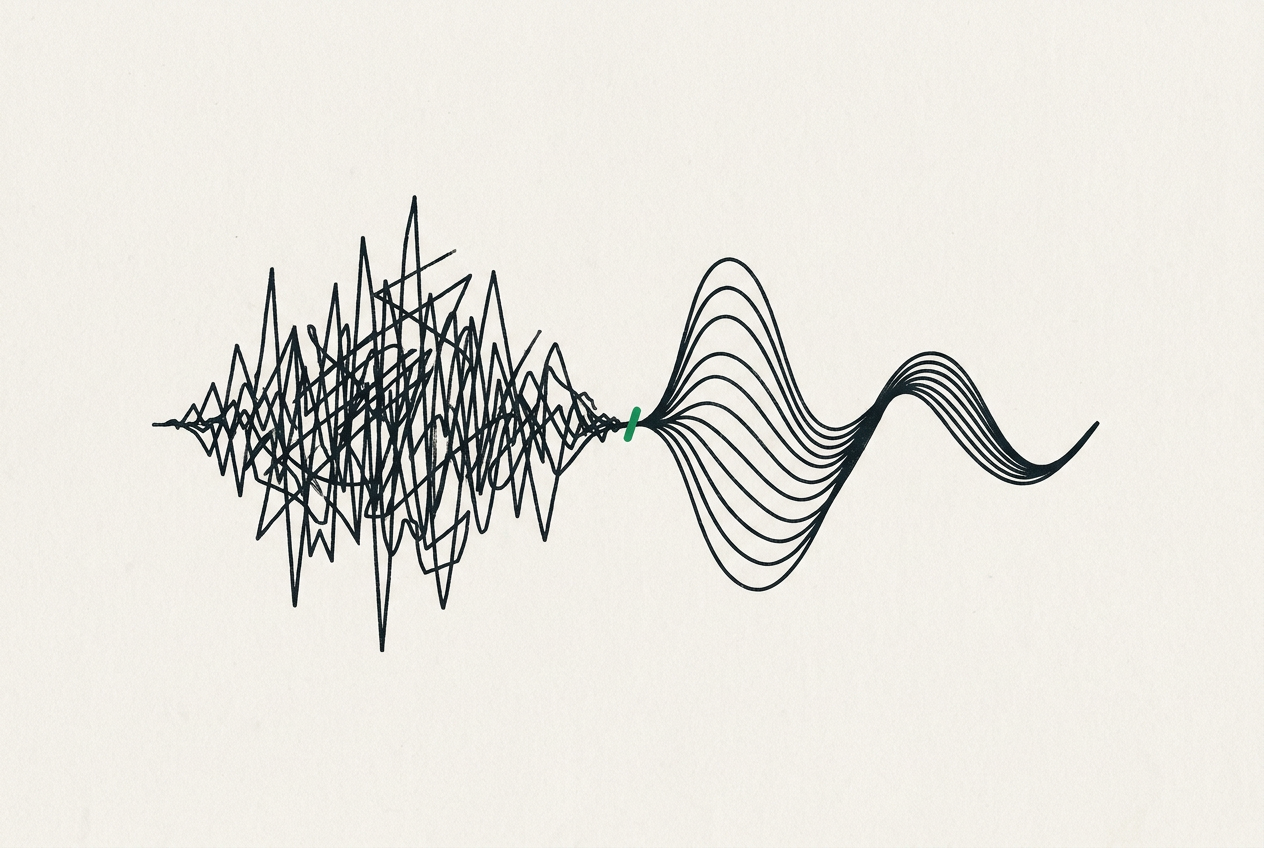
Last week we covered environmental design over discipline—how structuring context outperforms willpower in behavior change. This week, we're drilling into the foundational layer beneath all productivity systems: energy management. Scott Young's new course on Everyday Energy frames a provocative thesis that our productivity problems are actually energy problems. One in three people report feeling fatigued; one in eight feel tired most days or every day. At work, 76 percent feel burnout at least sometimes, with nearly a third experiencing it very often or always. This represents a crisis not of time management or motivation, but of biological infrastructure.
The paradox is striking. We're materially richer than ever, with machines washing our clothes and dishes, food delivered ready-to-eat, and physical effort at historic lows in most occupations. Describe contemporary life to anyone plucked from history and they would imagine ease. Yet researcher Robert Hockey argues that fatigue itself—the unpleasant experience of feeling drained—is an invention of the modern age. People in past societies felt tired after work, but they didn't face our epidemic of burnout and exhaustion. Something about how we work has fundamentally broken our relationship with energy.
Young identifies three root causes. First, modern lifestyle imposes heavy burdens on biology: indoor lighting and always-on entertainment disrupt sleep; sedentary habits undermine health; poor diets leave us simultaneously overfed and undernourished; chronic psychological stress drains body and mind. Second, our work culture is unnatural and unhealthy. For most of human history, work followed natural rhythms of effort and recovery. Hunter-gatherers worked hard but rested throughout the day. Even medieval peasants got more days off—as much as a third of the year was restricted by feast days and religious observations. Third, social trends have stripped work of meaning, leaving us oscillating between unhealthy obsession and escape fantasies of dream jobs or early retirement.
Burnout is not just being tired. If it were, sleep would fix it. Instead, burnout happens when exhaustion becomes entrenched. The research shows burnout develops through three stages: First, demands exceed our ability to cope or recover, producing fatigue. This leads to feeling a lack of control and diminished competence—we feel helpless and impotent. Finally, exhaustion and helplessness give way to increased cynicism about the work itself. Work feels not simply too much but ultimately meaningless. These three components—exhaustion, cynicism, and inefficacy—explain why vacation doesn't fix burnout. By the time burnout sets in, beliefs about work and our ability to cope have soured.
The opposite of burnout isn't relaxation on a beach. It's flourishing—a state characterized by healthy balance between effort and recovery, confidence in abilities, and stable security about work's meaning. When these conditions are met, the effect is resilience: more capacity to dig deep in crisis, ability to take on bigger efforts without feeling overwhelmed. Flourishing creates an enduring wellspring of energy. The fantasy of fleeing from all work—counting days until retirement, buying lottery tickets, escaping in video games—is a coping mechanism, not thriving. Flourishing embraces challenges in a way that brings vitality.
Exercise represents perhaps the most underrated productivity tool. Young notes it extends life, boosts cognition, improves mental health, helps sleep, and reduces illness—it's hard to find a habit with higher return on investment. Yet nearly half of people don't even meet standard guidelines, and evidence suggests most who claim to meet them actually don't. Young admits that prior to a few years ago, he thought he was getting enough exercise but wasn't. He was busy and unmotivated. Exercise stayed on his should-do list but wasn't achieved in practice. The shift that made daily exercise relatively easy wasn't automatic—he never finds himself jogging spontaneously—but it became no harder to stick to than cooking meals or cleaning the kitchen.
The behavioral recipe Young followed was simple: make exercising regularly a committed priority for at least a month, preferably two to three; aim for some exercise every day, not just X days per week; start easier than seems necessary and ramp up intensity slowly. The rationale for daily exercise is that inconsistent schedules lead to constant decision-making. Every day you ask: should I exercise today? If the answer is always yes, there's nothing to think about. Daily exercise forces creative problem-solving—you can't always do an hour at the gym, but you can fit in twenty minutes. The slow ramp-up is critical because any change leaves you feeling sore or physically tired. By keeping early workouts well below what you feel capable of, you prevent physical symptoms from becoming obstacles.
But Young emphasizes that mindset shifts mattered more than habit changes for long-term stickiness. His habits have changed multiple times since he started exercising daily, and they'll likely turn over again—life is too chaotic to expect the same routine to work perpetually. Belief changes, in contrast, are more durable. His biggest shift was changing his belief about how much exercise he ought to be getting. He exercises more now largely because he believes he should be exercising a lot more. But he doubts he could have adopted that belief when getting far less exercise—it would have made him feel guilty, and he would have rationalized it away. The behavior changes came first; the mindset followed.

The concept of rhythmic productivity offers a more humane alternative to hustle culture. Nature works in rhythms; machines work non-stop. Many psychological difficulties with work—procrastination, burnout, strain, exhaustion—reflect a misguided attempt to use machine logic instead of nature's logic in guiding human effort. Anthropological research into the Hadza in southern Africa shows they engage in a little more than two hours of moderate-to-vigorous physical activity daily—roughly four times the standard health recommendation and as much as fourteen times what we typically get in Western countries. But while laborious, it isn't unceasing. Other researchers found a !Kung tribe only worked an average of two and a half days per week.
The invention of clock time fundamentally changed our relationship with work. Before clocks, understanding of time was intrinsically tied to nature's rhythms. Even the length of an hour could vary depending on daylight in each season. With clocks came a new understanding of duration—fixed, unvarying, untethered from the natural world. This enabled new possibilities to regulate labor and demand machine-like adherence to schedules. Clock time's dominance became complete during the Industrial Revolution, when workers put in twelve to sixteen hour days with few breaks and no vacations. A medieval peasant might have worked 1200 to 1800 hours yearly; an early factory worker might have put in over 3000 hours.
The margin between a productive day and an exhausting one depends less on how many hours you put in and more on when and how you deploy them.
Energy management recognizes that not all hours are equal. Research shows working memory capacity declines with age, the prefrontal cortex becomes more sensitive to interference, and recovery windows narrow. The margin between a productive day and an exhausting one depends less on how many hours you put in and more on when and how you deploy them. Performance depends on aligning demanding work with biological peak windows—typically late morning for cognitive work—and scheduling routine tasks during natural energy troughs. This is based on two intersecting rhythms: the twenty-four hour circadian rhythm governing alertness and hormone release, and ninety to one-hundred-twenty minute ultradian rhythms governing cycles of high and low neural activation.
The neuroscience reveals cognitive fatigue has biological, not just psychological, roots. Neural mechanisms studies show mental fatigue is associated with deviated reorganization of functional connectivity among brain regions. The striatum of the basal ganglia, the dorsolateral prefrontal cortex, the dorsal anterior cingulate cortex, the ventromedial prefrontal cortex, and the anterior insula comprise a motivational fatigue network. This network monitors internal bodily states, evaluates the value of pursuing current action, and decides whether to continue exerting effort based on perceived value. As fatigue increases, relative reward ascribed to action decreases, and additional incentives—external rewards or intrinsic motivation—are required to maintain performance.
Fatigue builds up in widespread brain areas, feeding as interoceptive stimuli into core areas with the anterior insula functioning as central node.
The through-line is clear: sustainable output requires treating energy as the constraint, not time or willpower. This means three practical shifts. First, create new fuel by cultivating deliberate practices of sleep, exercise, consumption, and stress-management to restore full capacity for energy and vigor. Second, design new flow by crafting rhythms of work and recovery that avoid exhaustion while actually getting more done. Third, cultivate flourishing by choosing work with greater meaning and developing attitudes that enrich work already chosen. These aims aren't easy, and cultural trends don't help. But they're achievable, provided we take them seriously—and recognize that vitality is infrastructure, not luxury.