"$0." That's the number T-Mobile puts next to the iPhone 18 Pro when you preorder — a phone that carries a $1,199 sticker at Apple's own store.
Read the fine print and the word buckles. That "free" iPhone is $1,200 doled out over 36 monthly bill credits, which is a polite way of saying a three-year leash. Leave before month 36 and the remaining balance snaps back onto your account.
So the phone isn't free. It's financed, subsidized, and quietly locking you into a plan tier called Experience Beyond 2.0 or Go5G Next.
But here's the thing: that trap is also the deal of the year. And it tells you exactly what Apple is doing at this launch.
Apple wants your eyes on the $1,999 iPhone Duo, the folding phone that ate the keynote. Fair enough — it's new and it's shiny. It's also not what most people are going to swipe a card for.
What they'll actually carry home is an iPhone 18 Pro that a carrier will pretend to give them for nothing. And once you understand the economics underneath that pretense, the whole buying decision gets simple.
Start with the sticker. The iPhone 18 Pro is $1,199 for 256GB; the Pro Max is $1,299. Those are real numbers if you walk into an Apple Store with cash and no trade-in.
Almost nobody does that. T-Mobile will knock $1,200 off any 18 Pro with an eligible trade-in — in any condition — or a line switch to the right plan. AT&T matches it: $1,200 off with an eligible iPhone trade-in and an upgrade or switch. Verizon does $1,200 too, if you add a myPlan line and bring a qualified trade-in.
Even Apple, going direct, will hand you a free 18 Pro or a $99 18 Pro Max when you trade an iPhone 14 or later through a partnered carrier.
The pattern is unmistakable. The Pro's $1,199 price is a fiction for anyone with an old phone in a drawer and a willingness to sign a 36-month commitment. Apple and the carriers aren't chasing margin on this device — they're buying volume, trading a subsidized handset for three years of your service revenue.
The Pro's $1,199 price is a fiction for anyone with an old phone in a drawer and a willingness to sign a 36-month commitment.
That's the first jaw of the pincer. Here's the second, and it's the one nobody put on a keynote slide.
The AirPods 5 cost $129. The step-up model with wireless charging and stem controls is $149 — which is reportedly $20 cheaper than the equivalent AirPods 4 model that came before it, per PCMag.
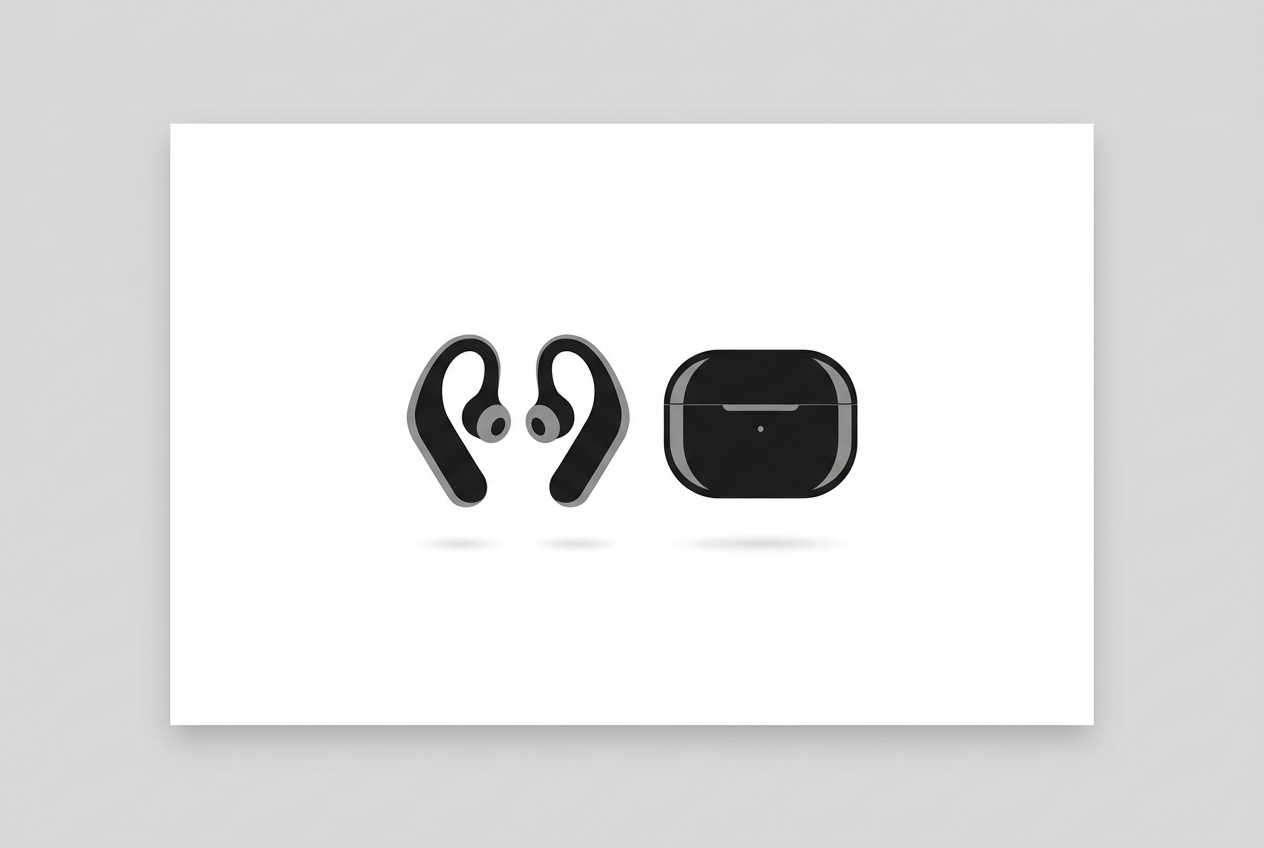
Let that land. Apple made the new AirPods better and dropped the price. Active noise cancellation, which used to cost an extra $50 to unlock on the base line, is now standard across both AirPods 5 models.
And it's not token ANC. Apple claims the AirPods 5 offer up to 50% more noise reduction than their predecessor, calling it the "best ANC on the market" for an open-ear design.
They also picked up an IP57 rating — effectively dustproof and waterproof, submersible — up from the AirPods 4's splash-only IP54. You can run in a downpour or rinse them in the sink.
So the same logic applies to both ends of the launch. On the Pro phone and the base earbuds, Apple is spending its own money to move units. Foldable for the headlines; a subsidized Pro and a cheaper-than-last-year AirPod for the register.
Which brings us to the actual decision most people are agonizing over, usually the wrong one: AirPods 5 or AirPods Pro 3?
For most of you, the answer is the $129 pair, and it isn't close.
The Pro 3, at $249, are genuinely better — that's not in dispute. They have a physical in-canal seal, which no open-ear design can beat for bass and isolation. Apple says they deliver "up to 3x more" ANC than the AirPods 5, and they reportedly run eight hours of ANC listening versus four.
They also carry heart-rate tracking that plugs into the Fitness app, plus hearing tests, hearing protection, and a hearing-aid mode. That's a real feature stack.
But price it out. PCMag's own verdict is that the AirPods 5 give you "75% of the Pro experience for half the cash." Seventy-five percent of the experience for fifty percent of the money is a rout on value.
Physics is the honest tiebreaker here. The AirPods 5 don't seal your ear canal, so noise leaks in no matter how clever the processing gets, and deep bass has a ceiling. If you're a commuter who wants the vacuum-quiet of a sealed bud, or an athlete who wants heart rate in your ears, the seal and the sensors are worth the stretch.
Everyone else — desk work, walks, calls, podcasts, the gym without the heart-rate obsession — is buying capability they'll never miss. Get the AirPods 5, pocket the $120, and don't look back.
Now stack the two decisions together, because they interact.
Route the iPhone 18 Pro through the carrier deal that fits your plan and your trade-in, and the effective out-of-pocket on the phone collapses toward zero. Take the $120 you saved by skipping the Pro 3, and you've paired a flagship phone with excellent noise-cancelling earbuds for something close to the cost of a case and a plan you were probably going to pay anyway.
That's the whole play. A subsidized Pro plus base AirPods beats almost every other combination on the board this year.
Should you care what's inside the phone? Briefly. The A20 Pro is a 2nm chip with a 7-core GPU Apple says is 40% faster than the A19 Pro, and a redesigned vapor chamber with three times the surface area for sustained performance. That matters if you game or shoot a lot of video; if you don't, it's headroom you'll never touch.
The camera is the one genuinely new toy: a 48MP main sensor with a variable aperture that physically stops down from f/1.48 to f/4 across six blades — a first for iPhone. It's a real photographer's feature, but PCMag's camera reviewer is blunt that it's "not the game-changer Apple would want you to believe," and you'll still want an ND filter for long exposures in daylight. Should-you-care, not spec worship.
Battery is the quieter win — reportedly up to 36 hours of video on the eSIM-only 18 Pro, 45 on the Pro Max. That's the upgrade you'll actually feel every day.
Now the strategic footnote that reframes everything: there is no base iPhone 18 at this launch. The Pro and Pro Max are, for now, the only iPhone 18-named phones you can buy, and the standard model reportedly isn't arriving until spring 2027.
So the usual advice — "just get the cheaper regular iPhone" — has no product to point at right now.
Which means the affordable flagship this cycle isn't a cheaper phone. It's a subsidized Pro.
The trap and the answer are the same object. That "$0" on the T-Mobile page is a three-year commitment dressed up as a gift — but if you were going to hold the phone and stay on the plan anyway, the leash costs you nothing you weren't already spending.
So do the two-part move. Get the iPhone 18 Pro through whichever carrier deal matches your plan and your trade-in, and default to the $129 AirPods 5 unless you specifically need the seal or the heart-rate sensor.
Ignore the Duo. Ignore the "free." Do the math on the pincer, and this is the cheapest a flagship-plus-earbuds bundle has looked in years.