The Memory Squeeze Hits Home: RAM Shortage Forces Google's App Crackdown and PC Price Hikes": Here's the thing most people get wrong about the RAM shortage: they think it's a hardware story. Pay more for the laptop, buy the phone with 12GB instead of 16GB, move on.
It isn't. It just became a software story too — and that's the part that reaches into your pocket whether or not you buy anything this year.
Last week in "The Quiet Squeeze," we traced how rising memory costs were creeping into the price of everything. This week the mechanism got specific and it got teeth: Google is now policing how much RAM your apps are allowed to use, and HP is telling investors, out loud, that laptop prices are going up again.
Two companies. Same shortage. Two completely different ways of passing the pain to you.
Two companies. Same shortage. Two completely different ways of passing the pain to you — one through software rules, one through rising laptop prices.
Start with Google, because it's the more surprising move. On August 27, the company published a developer memo announcing new memory rules for every app on the Play Store. The framing wasn't subtle. "An ecosystem-wide memory crisis is imminent due to rising RAM costs," Google wrote in its own technical documentation.
That's not a company hedging. That's a company declaring an emergency.
The rules kick in starting February 2027, and they cover three areas. Dynamic memory usage — how much private data an app holds while running or sitting in the background. Bitmap memory — the space images and graphics eat up, which apps aren't supposed to hoard when they're off-screen. And DEX code optimization, which shrinks an app's actual code so it launches faster and runs leaner.
The limits scale to the device. On a phone with 8GB of RAM, an app can use no more than 2.25GB in the foreground and 1.5GB in the background, per The Register, which also notes a separate 1.5GB limit for user-perceived services. Devices with more than 16GB are mostly exempt. Games get more relaxed thresholds, because games genuinely need more room.
Miss the limits and you won't get banned. But per Google: "If your app exceeds these limits, it will be slowed down and may be terminated." Worse for developers, apps that don't comply "may see reduced app visibility and publishing capabilities on Google Play."
Translation: get your memory in line, or get buried in search and lose the ability to ship updates. For an app business, reduced visibility is a slow death. That's real leverage.
Why does Google care so much? Because one greedy app ruins the whole device. As the documentation puts it, a single app "with a runaway memory leak that consumes most of the device memory" causes the phone to stutter and start killing other, well-behaved apps in the background. The goal, stated back in June when this push began, was preventing "one bad actor" from wrecking the multitasking experience for everyone.
Here's the quietly damning detail. Google didn't just write rules for other people — it cut its own specs. The base Pixel 11 Pro and 11 Pro XL reportedly ship with less RAM than last year's models, with the Pixel 11 Pro lineup reportedly dropping from 16GB to 12GB per Digital Trends.
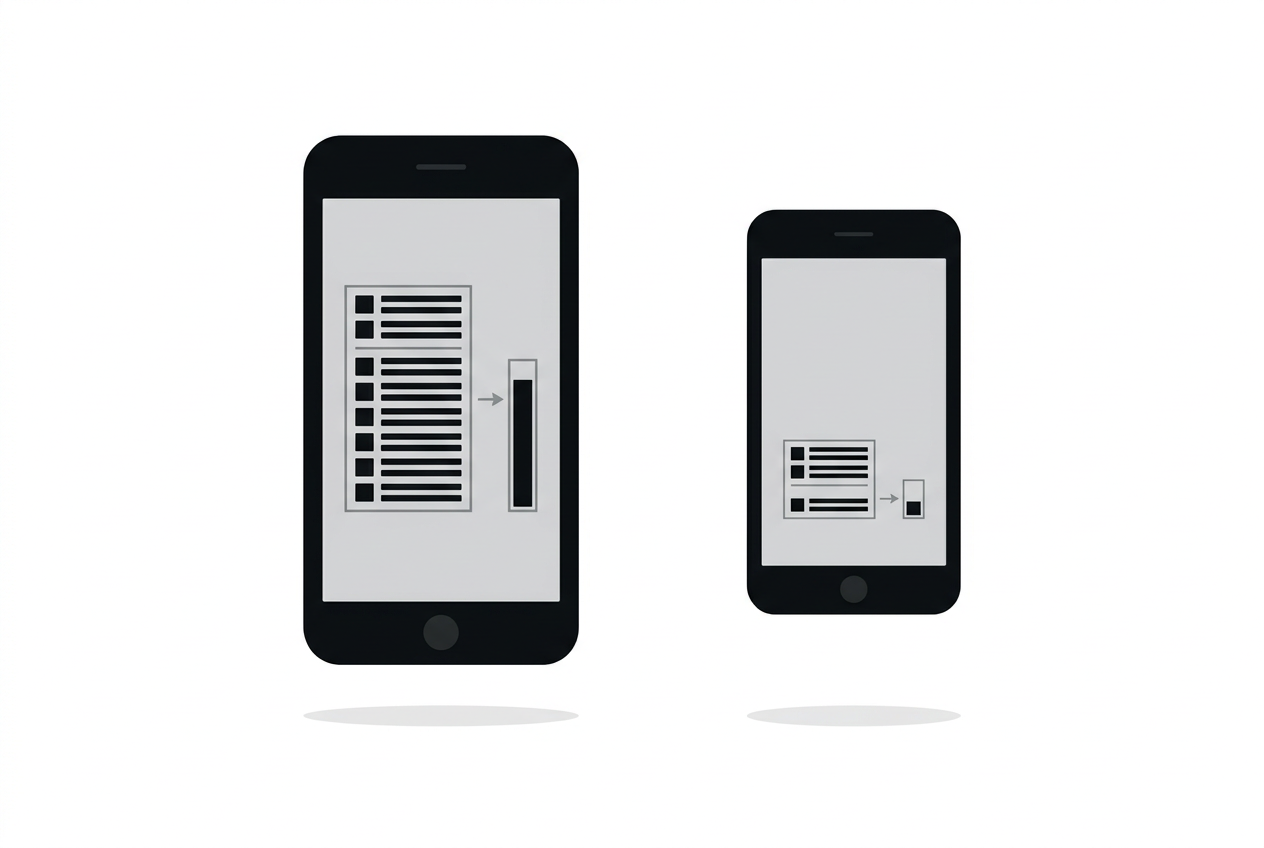
Read those two facts together and the picture sharpens. Google is trimming memory on its flagship phones and simultaneously forcing developers to make apps fit in less memory. The shortage isn't something Google is bracing for. It's something Google is already designing around.
And it's spreading. Google warned developers that "over the coming year, an increasing number of manufacturers will leverage the Android per-app memory limits across their portfolio of device RAM configurations from 4GB to 16GB+ devices." The 12GB Pixel is the preview, not the exception.
There's a genuine upside buried here, so let's be fair about it. Alongside the crackdown, Google is requiring Zero-Tap Sign-In by April 2027 — apps will automatically restore your logins when you move to a new phone, so you don't re-enter every password after an upgrade. Google frames manual sign-in during setup as not just annoying but a security risk that "actively exposes apps to critical security vulnerabilities like phishing and credential theft."
That's a legitimate win. It also happens to make it easier to switch to a cheaper, leaner phone — which is exactly the kind of device this whole shortage is pushing people toward. The convenience and the cost-cutting point in the same direction. That's not a coincidence.
Now the harder-edged half of the week. HP CFO Karen Parkhill, on an earnings call, said it plainly: "We have been increasing pricing. We expect to continue to increase pricing as input costs rise."
She's careful to call price hikes "a last lever, after we have focused on demand shaping and product reconfiguration, and taking costs everywhere we can." But the last lever is being pulled.
The reason is inventory. HP spent the first half of the year burning through cheaper RAM and storage it already had on the books. Now, in Parkhill's words, "you're seeing inventory that is carrying higher costs working through our P&L in the back half." The cheap stockpile is gone.
Sit with the scale of this. Back in February, Parkhill estimated memory would make up 35% of a device's bill of materials this year — up from 15 to 18%. Memory reportedly roughly doubled its share of what a computer costs to build. That's the whole story of your next laptop's price in one statistic.
And the market is shrinking while prices climb. HP agrees with IDC that PC shipments will fall by the "high teens" in the back half of the year.
Yet HP just posted a record $11.8 billion quarter. Personal systems revenue rose 18% year-over-year — even as unit shipments fell 16%.
Fewer computers sold, more money made. That's not a paradox; that's the strategy. Parkhill credited "repricing for higher commodity costs" and a push toward premium, pricier AI PCs. HP is selling less and charging more, and it's working.
Which brings the two stories together. The people hit hardest here aren't the ones buying premium AI laptops or 16GB flagships that dodge the memory limits entirely.
It's the budget buyer. The person shopping for the cheap laptop, where every dollar of RAM cost is a bigger chunk of the price. The person on the 8GB phone, whose apps are the ones about to run into hard ceilings.
The relief valves — leaner apps, smoother budget phones, painless device migration — are real, and they're aimed at exactly those users. But so is the squeeze. Google is engineering the software world to run on less because less is what people will be able to afford.
So should you care? Yes, and here's the practical read.
If you're due for a laptop, the direction of travel is only up — HP said so on the record, and memory's share of the bill of materials isn't coming back down soon. Buying sooner rather than later is defensible in a way it rarely is with tech.
If you're on Android, don't panic-upgrade. The memory limits don't hit until February 2027, they're designed to make your existing phone run better, and Zero-Tap Sign-In genuinely eases the eventual switch. The best move on the phone side right now is patience.
Either way, stop thinking of this as a spec-sheet footnote. The shortage now shapes what your phone is allowed to do and what your next computer will cost. It went from quiet to concrete in a single week.