"My keyboard is officially unemployed." That's a working writer describing what ChatGPT Voice did to their day job — typing now "feels painfully slow," and opening a blank text box feels "oddly old-fashioned."
Hold that sentence in your head, because it's the hinge of OpenAI's entire strategy right now.
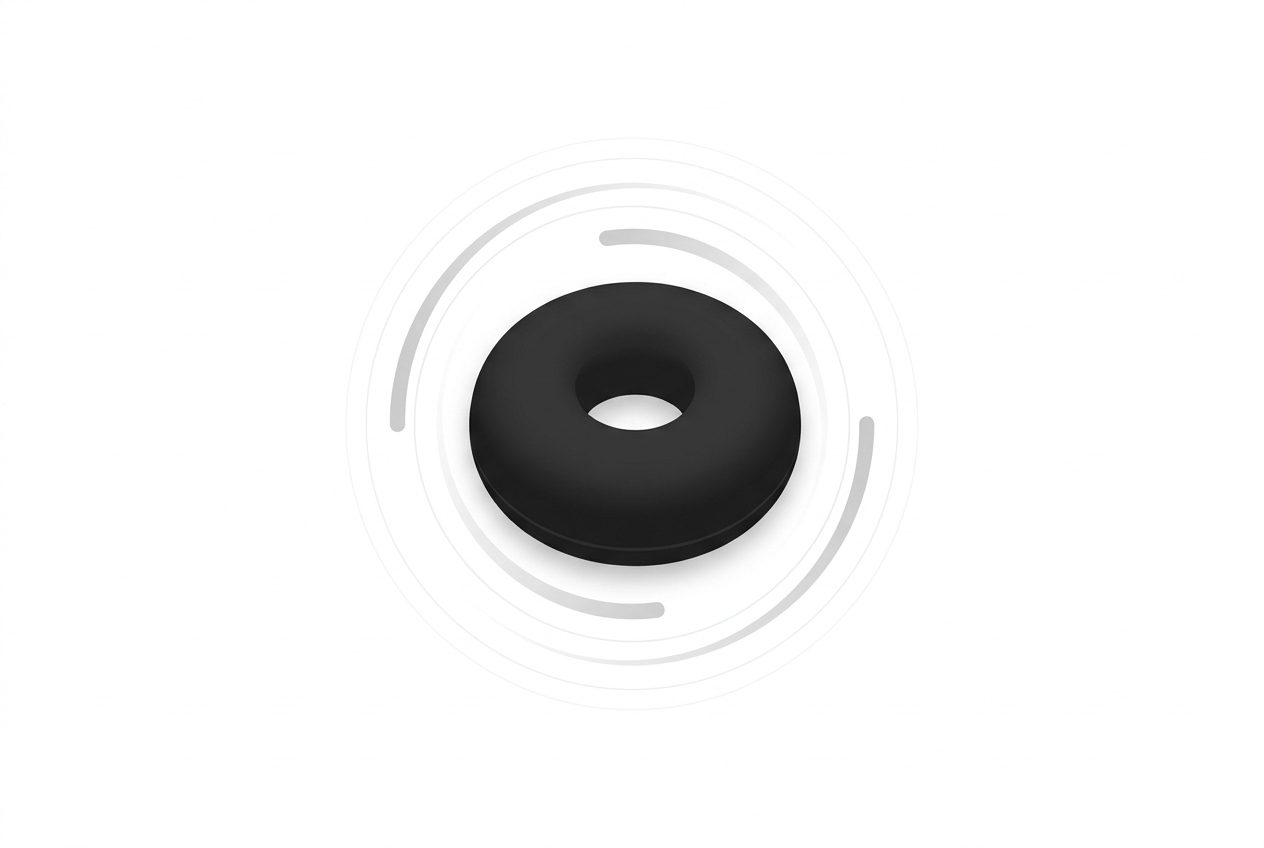
In the same news cycle in early August, OpenAI did two things that look like they were decided by different companies. First, it tore down the wall: free and Go users get unlimited text chats, and OpenAI puts weekly ChatGPT usage at one billion people, per OpenAI. Then it let Bloomberg leak that its first hardware device — a donut-shaped, metal, hockey-puck-sized AI companion — will reportedly sell for $300 to $400 when it ships in 2027.
Give it away to a billion people; charge the price of a small appliance for a talking donut. The instinct is to call that economically incoherent.
It isn't. It's one funnel, seen from both ends.
Give it away to a billion people; charge the price of a small appliance for a talking donut. The instinct is to call that economically incoherent. It isn't. It's one funnel, seen from both ends.
Start with the giveaway, and notice how carefully it's fenced. Free users get unlimited text — but file uploads, image generation, and voice stay metered, subject to "abuse guardrails." The wall didn't come down. It arguably moved to surround exactly the features OpenAI most wants you to pay for.
That's not generosity. That's habit-formation infrastructure. Unlimited text is cheap to serve and maximally sticky; it's the part of ChatGPT that becomes reflexive, the thing you open before you think. OpenAI's own framing is "abundant intelligence" and letting free users "continue a conversation without running into a wall." Read that as: never give them a reason to close the app.
Now go back to the unemployed keyboard. That writer isn't describing a feature — they're describing a dependency. Voice moved from phone to laptop to desktop to CarPlay, from "something I opened occasionally" to "part of my routine." They now talk to ChatGPT in the car and catch themselves thinking, "Well… this is my life now."
That is the wedge. A person who already narrates their half-formed thoughts to an AI, who finds typing physically slow by comparison, is a person for whom a screen-free device you talk to and carry between rooms is not a gimmick. It's the obvious next container for a habit they already have.
This is why the two announcements arguably look like the same bet. The free tier may not be subsidizing users out of charity — it could be manufacturing, at a billion-person scale, the exact behavior that makes an ambient voice device feel natural instead of absurd. Get people voice-first and phone-independent by reflex now, and by 2027 the donut isn't a new product. It's a place to put a compulsion they already can't shake.
The device itself is engineered to deepen that. Bloomberg's picture: a screen-free companion with microphones, speakers, a camera, and environmental sensors, meant to understand a room rather than just take orders. It's supposed to learn your routines and offer help before someone reaches for a phone or types a prompt, per Bloomberg. Lights show when it's listening. And — the detail that keeps getting flagged as strange — parts of it physically move.
The intended effect is presence. Reporters keep reaching for WALL-E and R2-D2: motion that makes a thing feel alive, aware, emotionally there. OpenAI is trying to give a habit a body.
Here's where the bet gets dangerous, and it has nothing to do with model quality. (GPT-5.6 is the engine; whether Sol's claimed reduction of about 68% in the share of responses with at least one factual error — per OpenAI's own unverified internal testing — holds up is a different argument.) The danger is a graveyard.
Every ambient home device that priced itself like a companion instead of an appliance has died. Amazon's smart home speakers range in price from $40 on the low end to $240 on the high end (per TechCrunch/Bloomberg) — and, per reports, smart speakers have not always been profitable. OpenAI wants $300 to $400. That's a category that has historically resisted profit even at commodity prices.
Smart speakers didn't fail because people hated them. They failed because a talking cylinder is worth a kitchen timer and a weather forecast — appliance money, not companion money. The moment you ask someone to pay companion prices, the device has to actually feel like a companion, every single time.
And that's precisely where the donut is most exposed. Its signature trick — being carried from bedside table to kitchen counter as a small, expressive, moving presence — is also the thing most likely to curdle into a toy if the execution is a hair off. A companion that's charming when the motion is right is a $350 gimmick when it isn't. There's no in-between at that price.
The one thing tilting the odds is the collaborator: LoveFrom, Jony Ive's studio, is designing it. That's the difference between "polished object" and "novelty," and it's the reason to take the price seriously rather than laugh at it. It's also why one reviewer already braced for gimmick admits they trust the execution won't feel toy-like.
There's one more risk worth exactly a sentence: OpenAI is entering hardware while being sued by Apple, reportedly the current king of hardware, over allegedly stolen trade secrets — a live entry risk before the donut ever ships, and someone else's story to tell in full.
So, should you care? Yes — but as a spectator to a genuinely instructive gamble, not yet as a buyer. The free-tier giveaway is real and worth taking; unlimited text at a billion-user scale is the most valuable thing OpenAI has ever handed out for nothing, precisely because it's the cheapest thing to give and the hardest thing to quit.
The donut is the part to watch skeptically. OpenAI has correctly diagnosed that a voice-first habit is forming — the unemployed-keyboard writer is real, and there are more of them every week. What it's betting, and what no one has ever won, is that a formed habit converts into companion-priced hardware.
The smart-speaker graveyard says it doesn't. OpenAI is charging graveyard-record prices to prove the graveyard wrong. In 2027 we'll find out whether a habit with a body is worth $400 — or whether it's a very expensive, very well-designed toy that moves.