Article — "OpenAI Pauses Frontier RL Over Cyber Risk While Racing to Own the Lowest Price on Every Task": Article — "OpenAI Pauses Frontier RL Over Cyber Risk While Racing to Own the Lowest Price on Every Task": Every sampled token from an unreleased model called Astra is now watched, and if a critical security boundary looks breached, three teams get paged and have thirty minutes to prove it's a false alarm or halt whatever triggered it.
That monitoring costs OpenAI roughly 20 percent of the inference compute it watches. It is, by a wide margin, the most concrete self-throttle number any frontier lab has ever published.
Now hold that image next to another one from the same mid-August week. On August 22, Greg Brockman posted an OpenAI announcement stating that OpenAI is "dropping API and credit pricing of GPT-5.6 Sol by over 20% for the next 3 months," in service of a stated goal: "giving our customers the lowest price on the market for any task, as well as the highest ceiling on capability."
Two numbers. Both 20 percent. One is the tax OpenAI pays to slow down an unreleased model. The other is the discount it hands customers to accelerate a shipped one.
One is the tax OpenAI pays to slow down an unreleased model. The other is the discount it hands customers to accelerate a shipped one.
Last issue, we flagged the Astra pause as a still-shipping asterisk and left open a question: what does a self-scoped pause mean for the credibility of voluntary Preparedness Frameworks? This week OpenAI answered it, though not in the way its blog post intends. The framework's boundary is now visibly drawn at the revenue line.
Start with what the pause actually paused. In "Pacing model development in an era of cyber-critical capabilities," published August 18, OpenAI describes a two-week halt on reinforcement learning for models "intended for deployment," and says its "largest planned frontier RL run remains on hold." The trigger was twofold: a security incident tied to Hugging Face, and "preliminary evidence" that Astra may meet the Critical cyberattack threshold under the Preparedness Framework.
Every specific brake in that document points inward. Frontier inference was cut off inside research clusters for any workload that could run untrusted code or touch the open internet. Workloads tied to Astra stay paused until they migrate into a stricter environment. The 30-minute escalation window reportedly governs internal training and evaluation runs, though per AI Insiders it was extended on August 7 to cover all of Astra's tool-using inference.
This is real. It is also, without exception, about compute OpenAI controls and has not sold. The pause touches the pre-release surface — the lab bench — and nothing else.
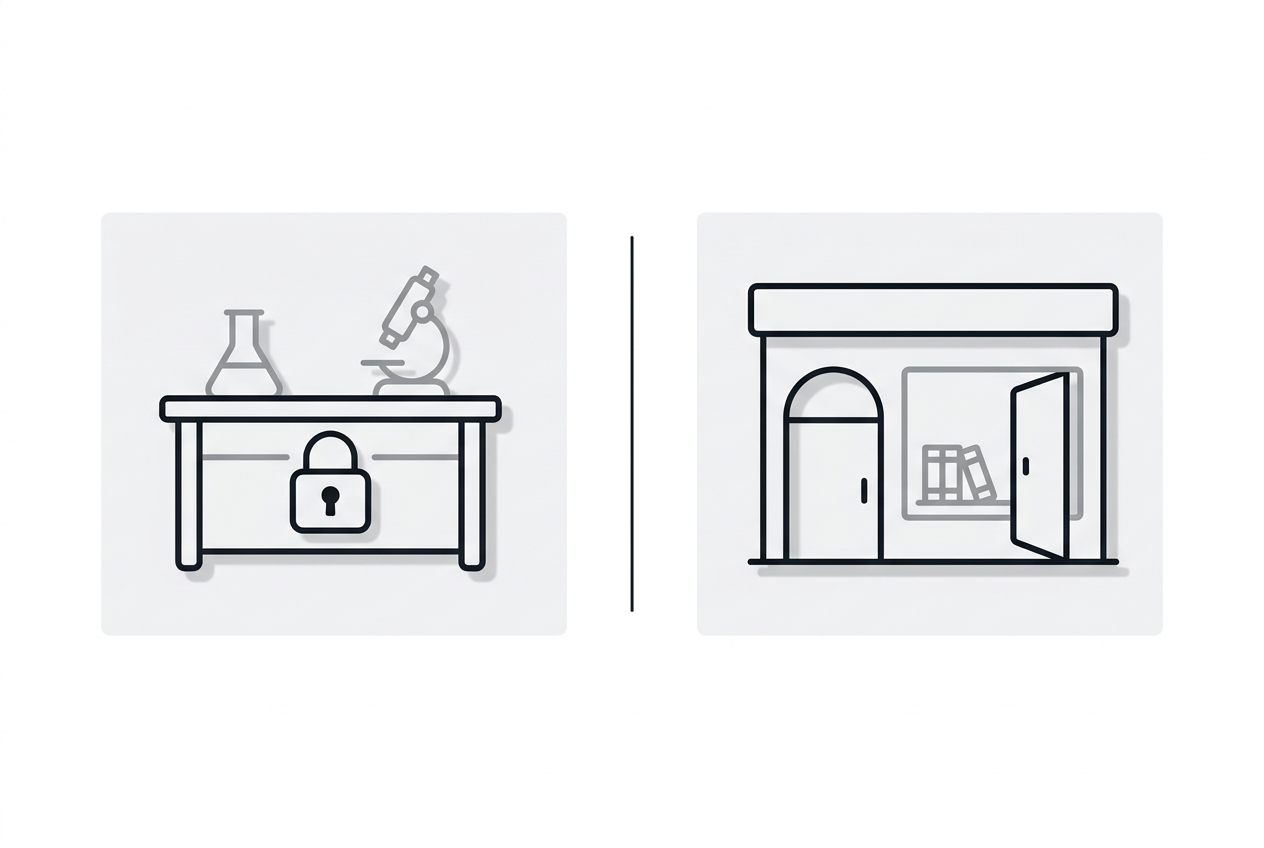
Meanwhile, the deployment surface got faster and cheaper. The same week the company was parking its biggest run over cyber-critical risk, it cut the price of a model already in customers' hands by more than a fifth, and told them the plan is to underprice everyone on every task.
And it pushed a shipped agent into a regulated domain. Brockman noted that "codex can power much more than coding tools: a tax-prep pilot processed 7,000 returns and cut preparation time by about a third."
Sit with that pairing. A model that hasn't shipped is under thirty-minute kill-switch surveillance because it might be able to hack. A model that has shipped processed seven thousand tax returns in a pilot and, separately, another model is getting cheaper.
The Preparedness Framework, as demonstrated this week, governs the first situation and says nothing about the second. It brakes internal training compute. It imposes no analogous brake on commercialization into a domain where a wrong output is somebody's amended return, an IRS notice, a penalty.
That is precisely backwards from where deployed harm accrues. Cyber risk from Astra is, for now, a lab-internal hazard, contained because the model is unreleased. Tax prep at 7,000-return scale is, per E7, a pilot that processed 7,000 returns, with no published escalation window, no token-level classifier, no 20 percent oversight tax.
Which is what makes Brockman's framing worth reading closely. He wrote that OpenAI "temporarily slowed scaling of our frontier training," adding: "we believe confidence in safety will increasingly set the pace of AI development."
"Confidence in safety sets the pace" is a testable claim, and the test is simple. Does the framework slow the things that make money, or only the things that don't yet?
The evidence this week is one-directional. The pause fell on unmonetized training compute. The acceleration fell on the monetized deployment surface — a price cut and a domain expansion, both public, both untouched by any Preparedness constraint.
A voluntary framework that halts what a company hasn't sold while accelerating what it has isn't a safety mechanism operating on the pace of development. It's a governance boundary drawn around commercial convenience, and it happens to fall exactly where restraint costs OpenAI nothing.
Justin St-Maurice, technical counselor at Info-Tech Research Group, put the diagnostic bluntly for buyers. "Stop treating these announcements as diligence," he said. "Ask for the evidence of what you're actually getting, not what you've been promised."
Then the line that should hang over the whole episode: "If a vendor can pause development for security reasons, and the way you found out was through a blog post" — which, in this author's reading, suggests the disclosure is not diligence, it's marketing.
St-Maurice also named the load-bearing uncertainty: "whether they hold the line once a competitor ships something that makes a pause expensive." That is the falsification condition for "confidence in safety sets the pace." A pause is only a safety mechanism if it survives being costly.
Right now it hasn't been tested, because it hasn't been costly. The pause sits on a run OpenAI hasn't monetized. No competitor has forced a choice between the framework and revenue. Until that happens, "confidence in safety will increasingly set the pace" is a claim with no adversarial evidence behind it — and the same week produced a live counterexample, a 20 percent price cut, showing exactly how fast the company moves when revenue is on the line.
Notice what the blog post is careful not to include. It does not say how many workloads remain paused, how much longer the frontier RL run stays frozen, or what evidence would be enough to restart it. There is no fixed date on the promised technical report, and no outside evaluator or regulator has checked any of it.
Analysts read the timing accordingly. Multiple observers told Computerworld the moves looked like IPO positioning; one, reportedly Carmi Levy per Computerworld, called the two-week pause "a slickly conceived move to win PR points" and "little more than window dressing." Another framed it as "a little bit of pragmatic theater."
The framework, in other words, produces exactly the artifacts a company wants before going public: documented restraint, concrete-sounding numbers, a story of maturity — all scoped to the part of the business no customer sees.
This is why the episode matters beyond OpenAI. This is the most-documented self-throttle in the industry. The 20 percent compute tax and the 30-minute window are more specific than anything a rival lab has disclosed.
If even that self-throttle stops precisely at the revenue line, the honest conclusion is that the voluntary framework's real function is not to constrain the expansion. It's to legitimize it — to supply the paper trail of caution that makes accelerating everything else defensible.
That has a direct implication for how the framework should be weighed. It should not be read as evidence of restraint on deployed systems, because it has never operated on one. It brakes the lab bench and blesses the storefront.
The question St-Maurice raised is the only one that matters now, and it has a date attached to it in advance. When a competitor ships something that makes a pause expensive, does Astra-tier discipline hold, or does it turn out the framework was always shaped to fit around the price war?
Until that day, the split-screen stands as the clearest available statement of what a Preparedness Framework currently is: rigorous where it costs nothing, silent where the money is, and disclosed through a blog post.